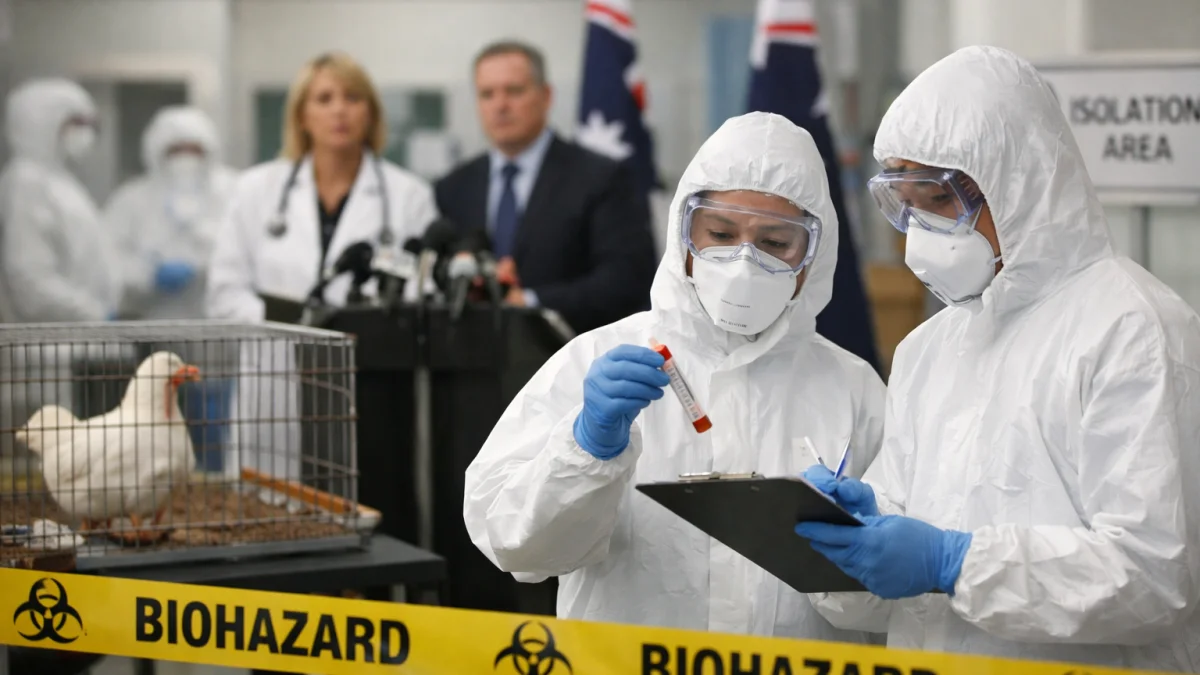


CANBERRA — Australia confirmed its first mainland case of the H5N1 bird flu strain on Saturday, June 20, 2026, after laboratory testing identified the virus in a wild migratory seabird found in Western Australia, according to the Australian government. Agriculture Minister Julie Collins said the infected bird was a brown skua found in the Cape Le Grand National Park area near Esperance, and testing by the Australian Centre for Disease Preparedness confirmed the H5N1 strain.
The confirmation marked the first detected case of the H5N1 strain on mainland Australia, officials said. Australia had previously detected H5N1 in its sub-Antarctic territory of Heard Island, but authorities said the mainland detection represented a new development in the country’s monitoring of the virus.


Collins said the government was responding through existing biosecurity measures and increased surveillance. “What we are doing is making sure that we do whatever we can to restrict the spread,” Prime Minister Anthony Albanese said, according to reports, adding that the government had been preparing for the possibility of the virus arriving through migratory birds.
The Department of Agriculture, Fisheries and Forestry said there was no evidence at the time of the announcement that the virus had affected poultry farms or caused widespread bird deaths in Australia. Officials said investigations were continuing to determine the extent of the virus among wildlife populations.
Authorities also reported another suspected case involving a sick giant petrel found in the same region. Officials said testing was underway to determine whether the bird was infected with the same H5N1 strain.
H5N1 is a strain of avian influenza that has spread among birds and some mammals in multiple regions globally. The Australian Centre for Disease Control said bird flu infections in humans are rare and that the current risk to people in Australia remains low, while advising people to avoid contact with sick or dead birds.
Australian authorities said the immediate response would focus on monitoring wildlife, protecting agriculture, and strengthening biosecurity measures. The government has previously prepared response plans for the possible arrival of H5 bird flu, according to federal environment and agriculture agencies.
As of Sunday, June 21, officials said surveillance and testing efforts were continuing in Western Australia and other areas. Details about the full distribution of the virus in Australian wildlife remained unclear, and authorities said further information would be provided as additional testing results became available.