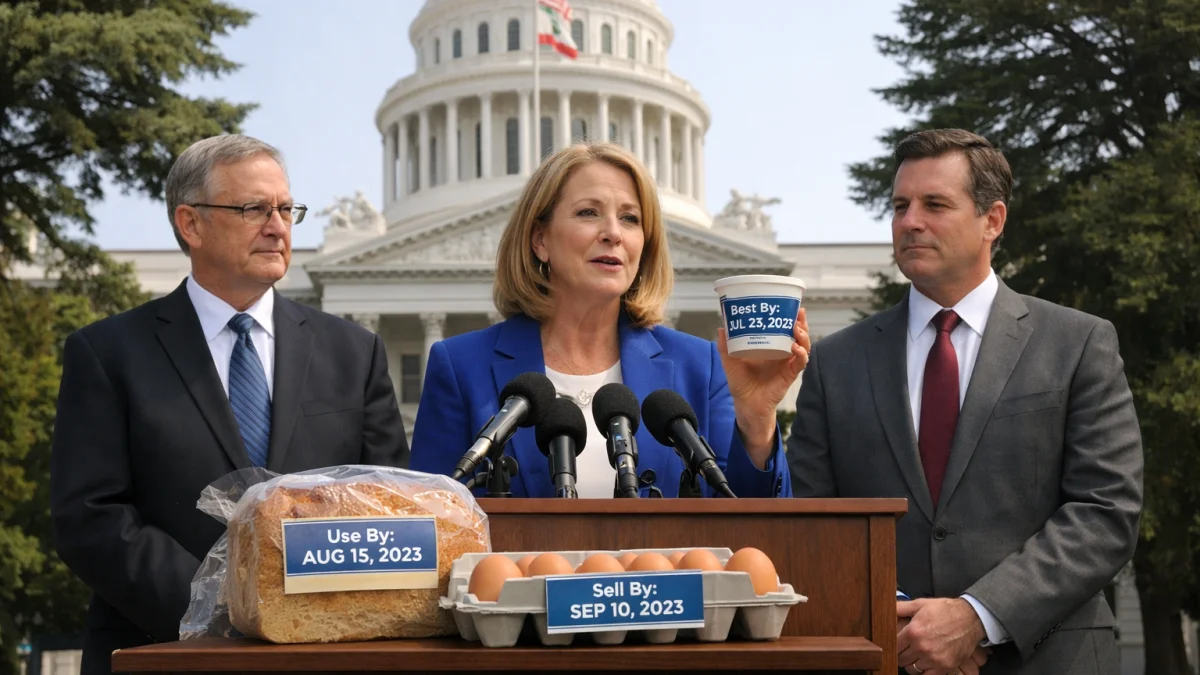


SACRAMENTO — California has enacted a new law standardizing food date labels on packaged products sold in the state, aiming to reduce consumer confusion over terms like “sell by” and “best before.”
The measure, Assembly Bill 660 authored by Assemblymember Jacqui Irwin, takes effect July 1, 2026. It requires food manufacturers to use uniform terminology for quality and safety dates on most packaged foods intended for human consumption, excluding eggs and infant formula.


Under the law, manufacturers must label products with either “best if used by” or “best if used or frozen by” to indicate peak quality, or “use by” or “use by or freeze by” to signal safety. Consumer-facing “sell by” dates are prohibited, though coded versions for retailer inventory management remain permitted.
The California Department of Food and Agriculture (CDFA) oversees implementation. Officials said the changes address longstanding inconsistencies in labeling that have led many consumers to discard safe food prematurely.
“Standardizing date labels will help consumers make informed decisions and reduce food waste,” a CDFA spokesperson said in a statement.
The bill, signed into law by Gov. Gavin Newsom in September 2024, makes California the first state to impose such mandatory standardized labeling. Supporters, including environmental groups like the Natural Resources Defense Council, argued that confusing labels contribute to unnecessary waste, with broader implications for sustainability and household costs.
Industry representatives have noted the need for compliance adjustments. Food manufacturers, processors and retailers selling in California must update labels for products manufactured on or after the effective date. Some groups have highlighted potential costs for reformulating packaging, though exact figures were not immediately available.
The law applies to food items offered for sale in the state. Details on enforcement mechanisms, including penalties for non-compliance, remain subject to further regulatory guidance from state authorities.
As the July 1 deadline approaches, grocers and distributors are preparing for the transition. State officials have encouraged consumers to familiarize themselves with the new terms to better interpret product freshness and safety.
The legislation reflects growing national attention to food labeling clarity, though no comprehensive federal mandate exists. California’s approach could influence similar efforts in other states.