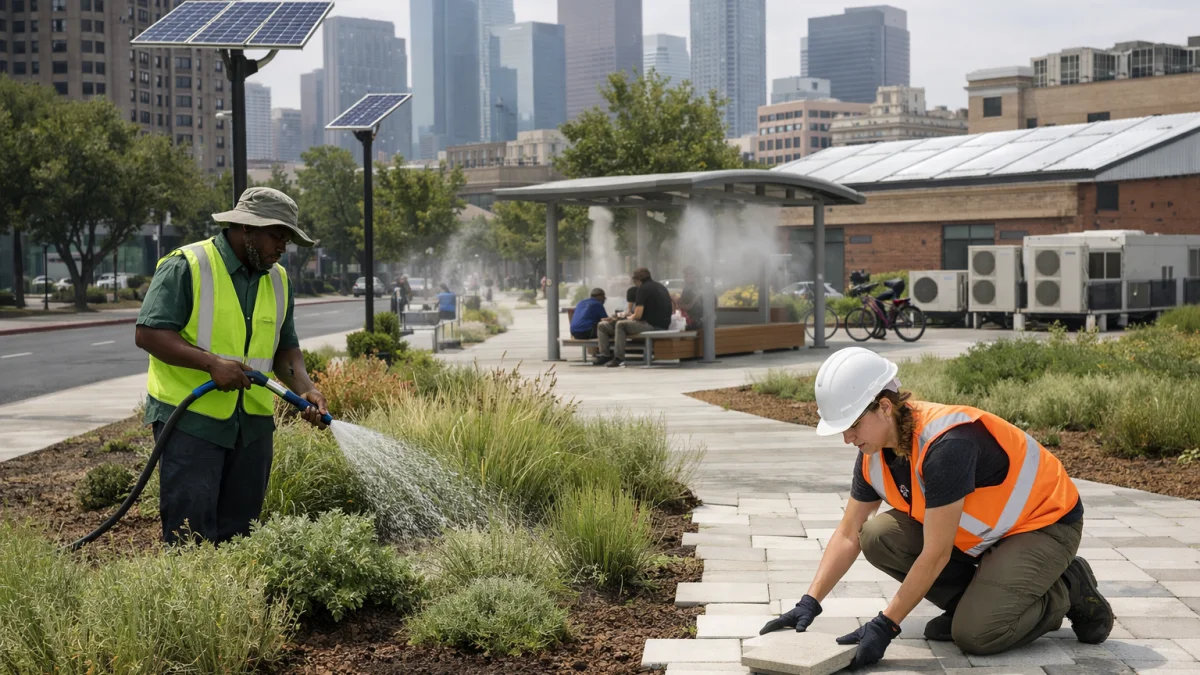
BANJAR, Indonesia — Cities across Asia, Europe and North America are increasingly adopting community-based cooling measures, expanded green infrastructure and climate shelter programs to address rising temperatures linked to the urban heat island effect, according to municipal initiatives, research institutions and international urban climate projects.
The measures come as urban planners warn that densely built environments with extensive asphalt, concrete and limited vegetation can significantly increase local temperatures compared with surrounding rural areas, intensifying heat stress during seasonal heatwaves, according to recent climate adaptation research and municipal planning reports.
In Bengaluru, India, city authorities have launched pilot projects under the Greater Bengaluru Authority to identify heat “hotspots” and convert selected sites into climate-responsive parks while also expanding access to cooling centers in public buildings, including health clinics and community facilities, officials said earlier this year. The initiative is part of broader efforts to integrate public health responses with urban design as extreme heat events become more frequent in South Asia.
European cities have also expanded so-called “cooling shelter” networks, repurposing schools, libraries and museums as temporary refuges during heatwaves. In Barcelona, authorities have developed hundreds of climate shelters within walking distance for many residents, according to municipal programs cited in recent urban adaptation reporting. Paris has combined tree-planting campaigns with the conversion of public spaces into shaded cooling areas, while also upgrading emergency heat-response systems for vulnerable populations.
Researchers say green infrastructure remains one of the most widely adopted strategies, including tree planting, green roofs and water features designed to reduce surface and air temperatures in dense urban districts. A 2026 review of urban heat mitigation strategies found that such measures can reduce local temperatures by several degrees under optimal conditions, though effectiveness varies depending on climate and neighborhood layout.
However, recent studies and urban climate assessments also caution that interventions such as tree planting may have mixed effects in humid regions, where increased moisture can reduce perceived cooling benefits in certain conditions, underscoring the need for location-specific planning.
Some cities are additionally exploring technology-driven approaches, including AI-assisted energy grid management, heat monitoring networks and digital mapping of urban materials to identify high-risk zones. International programs such as the IEA’s ongoing “Sustainable Cooling in Cities” initiative are coordinating research on how building design, infrastructure and policy can be combined to reduce heat exposure while limiting energy demand.
Officials and researchers involved in these programs say most cities are now moving toward layered strategies that combine passive cooling, nature-based solutions and targeted infrastructure upgrades, rather than relying on a single intervention such as air conditioning or greening alone.
As of mid-2026, municipalities in multiple regions continue to expand pilot projects and scale up adaptation programs, with further evaluations underway to assess the long-term effectiveness and cost of different urban heat mitigation approaches, according to city planning agencies and international research collaborations.