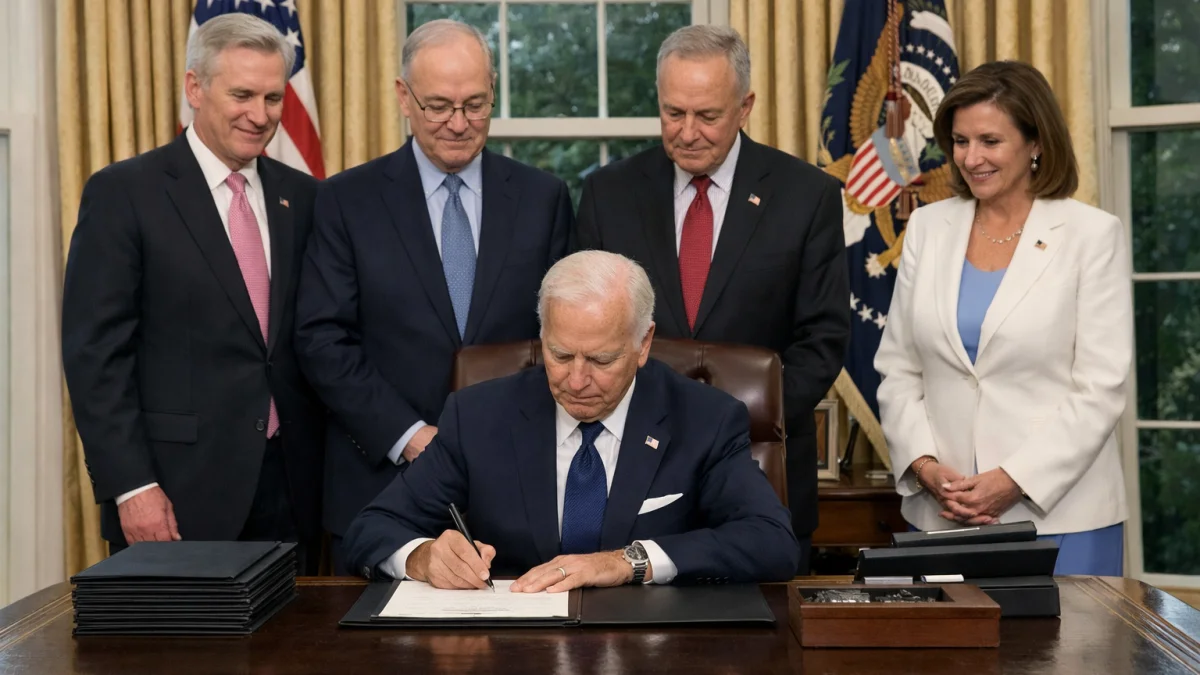


WASHINGTON — President Donald Trump signed into law a debt ceiling increase as part of the One Big Beautiful Bill Act, a sweeping budget and tax package that Congress approved in 2025, removing a key borrowing constraint for the U.S. government and extending the Treasury Department’s authority to finance federal obligations.
The legislation, enacted on July 4, 2025, included a provision raising the federal debt limit by approximately $4 trillion, according to congressional summaries and legal references outlining the measure. The debt ceiling increase was incorporated into the broader reconciliation package, which also made significant changes to tax, spending, immigration and social welfare policies. Federal records identify the measure as Public Law 119-21.


The debt ceiling provision was intended to reduce the risk of a federal borrowing impasse and provide additional capacity for the Treasury to meet obligations authorized by Congress. Treasury officials have previously warned that failure to raise or suspend the debt limit could disrupt government payments and financial markets.
The One Big Beautiful Bill Act passed the House of Representatives by a narrow margin before clearing the Senate with the support of a simple majority under budget reconciliation procedures. The legislation was signed by Trump shortly after final congressional approval, according to White House and congressional records.
In a statement issued when the bill became law, the White House said the legislation would “make good on” administration priorities, including tax changes, border security measures and spending reforms. The administration also described the package as a major fiscal and economic initiative.
The debt ceiling increase drew criticism from some lawmakers and fiscal policy groups concerned about the long-term growth of federal debt. Supporters of the measure argued that raising the borrowing limit was necessary to ensure the government could continue meeting existing financial commitments approved by Congress.
The Congressional Budget Office estimated that the broader legislation would increase federal deficits over the coming decade, though supporters disputed aspects of those projections and pointed to spending reductions included elsewhere in the package.
Debt ceiling increases have historically received bipartisan support at various points under both Republican and Democratic administrations, although debates over federal borrowing and spending have frequently led to political confrontations in Congress.
As of June 12, 2026, the higher debt limit established under the law remains in effect. Treasury operations continue under the revised borrowing authority, and no new debt ceiling legislation has been announced by congressional leaders or the White House.