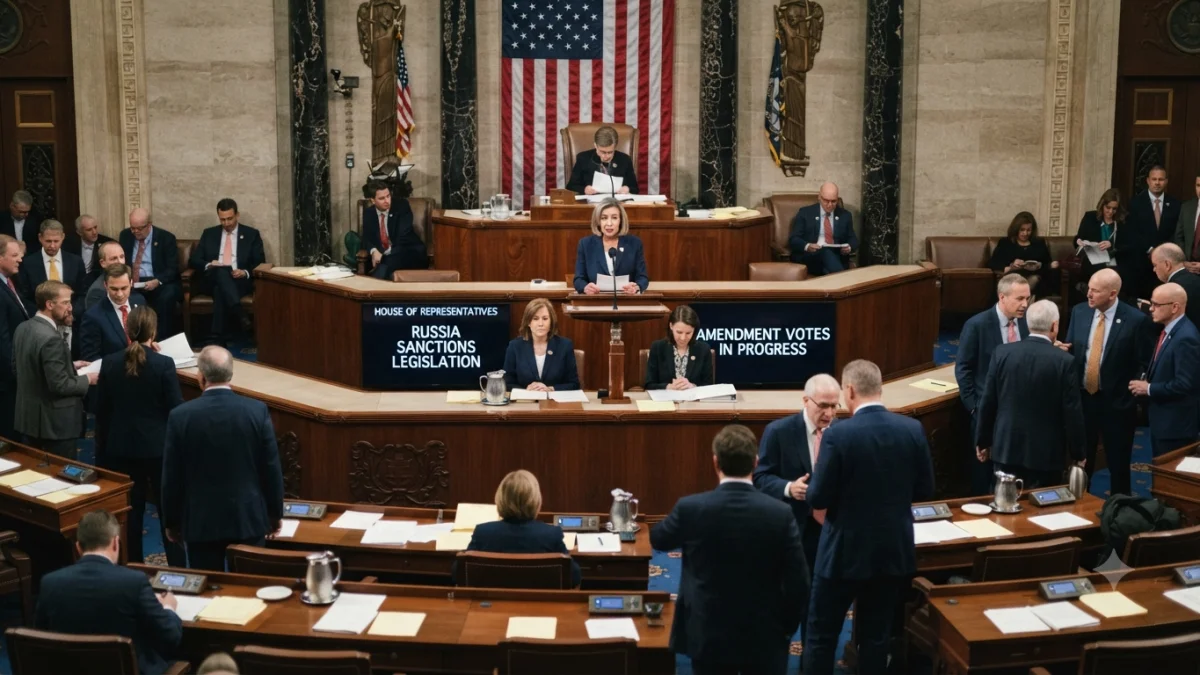


WASHINGTON — The U.S. House of Representatives is set to consider legislation imposing new sanctions on Russia after lawmakers return from their summer recess, following the Senate’s overwhelming passage of the measure aimed at increasing economic pressure on Moscow over its war in Ukraine.
The Senate on Friday approved the Lindsey O. Graham Sanctioning Russia and Iran Act of 2026 by a vote of 86-11, sending the long-delayed legislation to the House. The measure is named for the late Republican Senator Lindsey Graham of South Carolina, who championed tougher sanctions on Russia and died last month.


The bill would impose sanctions on Russian officials, oligarchs, financial institutions and other entities supporting Russia’s war effort, while targeting vessels involved in Russia’s so-called shadow fleet, according to senators who negotiated the legislation. It also includes measures intended to address sanctions evasion.
A central provision would authorize President Donald Trump to impose tariffs of up to 100% on imports from countries among the five largest buyers of Russian oil or gas, as well as on countries facilitating evasion of Russian energy sanctions. The tariffs would be subject to presidential discretion rather than imposed automatically.
The legislation also contains provisions extending U.S. sanctions related to Iran’s energy and weapons sectors, an element sought by the Trump administration.
The House could present a more difficult path for the bill. While the Senate vote demonstrated broad bipartisan support for tougher measures against Russia, some House lawmakers have expressed concerns about the potential economic consequences of giving the president broad tariff authority. Critics have warned that tariffs on major trading partners could increase costs for U.S. businesses and consumers.
The legislation had remained stalled for more than a year as Trump had resisted congressional efforts to impose new Russia sanctions, preferring to retain control over sanctions policy at the White House, according to Reuters. The Senate moved forward after lawmakers reached an agreement with the administration on the package.
The House is currently on its summer recess and is expected to take up the legislation after lawmakers return, with the next confirmed step being consideration of the Senate-passed measure.