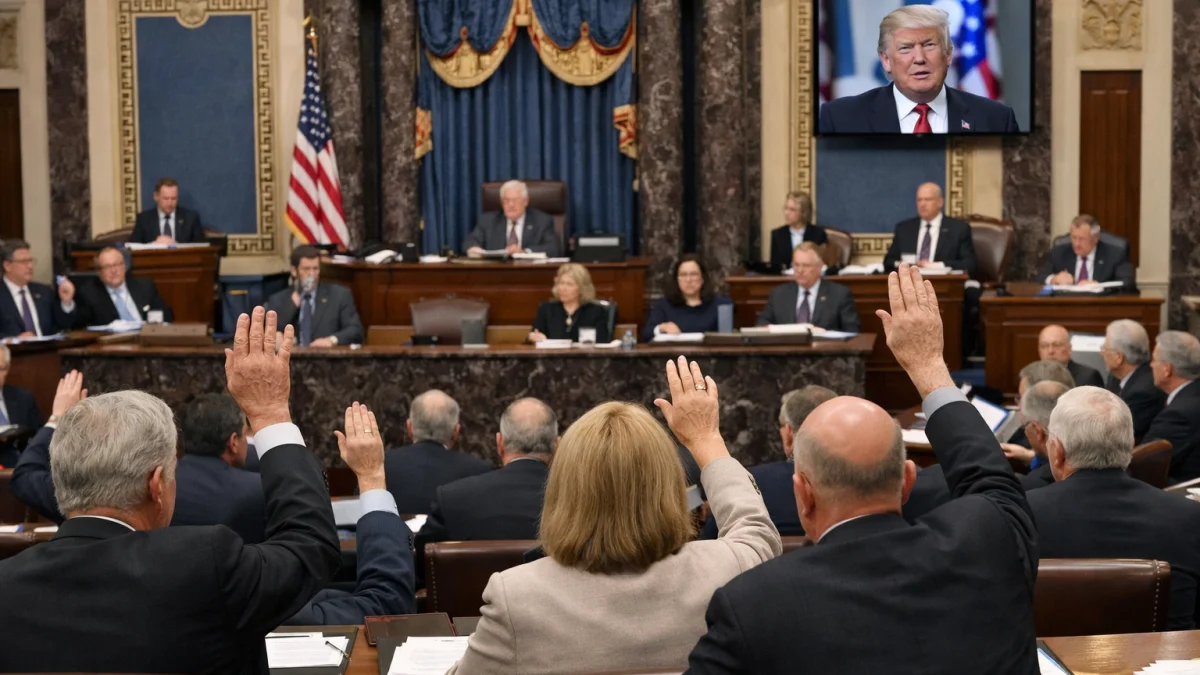
WASHINGTON — The U.S. Senate held a second vote on a war powers resolution late Wednesday after President Donald Trump sharply criticized Republican senators who had joined Democrats a day earlier to support a measure seeking to limit his authority over the U.S. military campaign involving Iran, according to Senate records and lawmakers.
The renewed procedural vote resulted in the resolution being rejected after several Republicans changed their positions following a closed-door meeting with Trump at the Capitol, according to Senate leaders and lawmakers. The move came one day after the Senate had approved a similar measure in a rare bipartisan rebuke of the administration's handling of the conflict involving Iran. The measure is largely symbolic and does not, by itself, carry the force of law.
Trump met Senate Republicans earlier on Wednesday, urging them to oppose efforts that he said could undermine his administration's negotiations and military strategy. After the meeting, he praised senators who reversed their earlier positions, saying on social media that the vote sent "a strong message."
Senate Majority Leader John Thune said the president was satisfied with the outcome of the second vote, while Republican leaders argued that Congress should avoid actions they said could complicate ongoing diplomatic efforts.
Several Republicans who had previously supported the resolution shifted their votes. Senator Bill Cassidy of Louisiana said he changed his position after receiving additional briefings from Vice President JD Vance and presidential envoy Steve Witkoff. Senator Rand Paul voted "present" during the second vote after previously backing the measure.
Supporters of the resolution, led by Democrats, argued that Congress has a constitutional role in authorizing sustained military action. They said the measure was intended to reaffirm lawmakers' authority under the War Powers Resolution and increase congressional oversight of military operations. Opponents maintained that restricting the president's flexibility could affect national security and ongoing negotiations.
The dispute followed weeks of congressional debate over U.S. military operations and administration requests related to the conflict. The issue has exposed divisions within the Republican Party, with a small number of GOP senators expressing concern about the scope of presidential war powers while most remained aligned with the White House.
As of Thursday, the Senate had adjourned after the second vote. No additional action on the war powers measure had been announced, and administration officials said diplomatic contacts concerning the conflict were continuing.