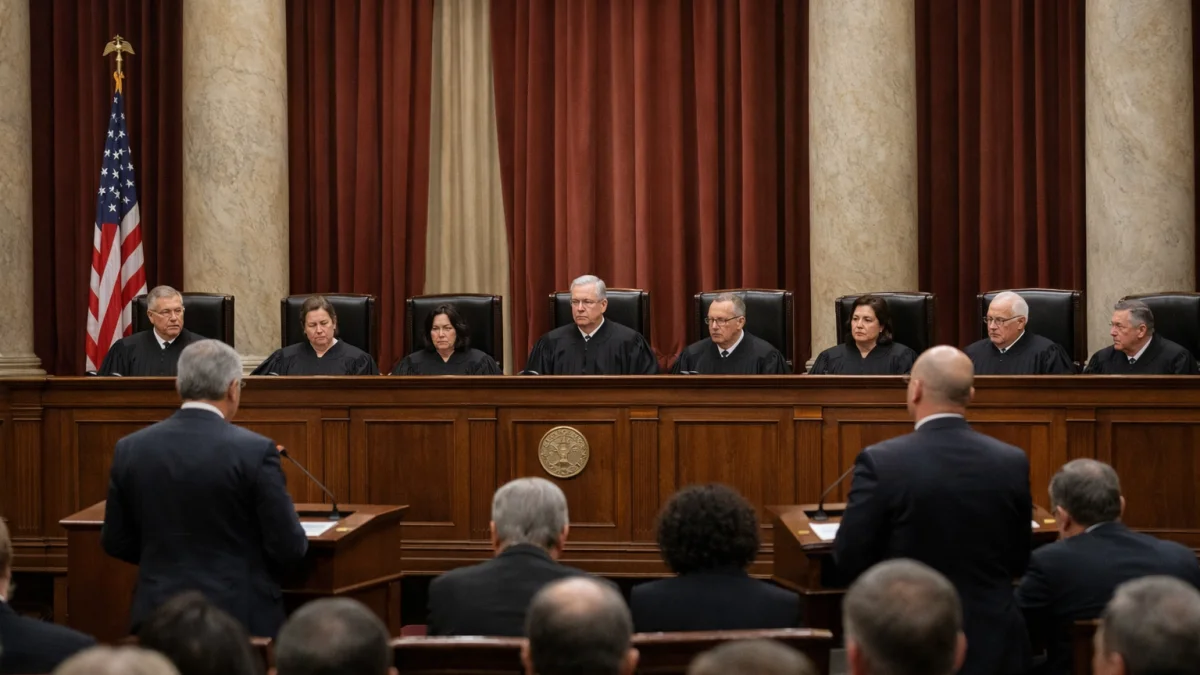
WASHINGTON — The U.S. Supreme Court on Thursday allowed the Trump administration to proceed with ending Temporary Protected Status for nationals of Haiti and Syria, reversing lower court rulings that had blocked the terminations.
In a 6-3 decision, the court ruled that federal law bars judicial review of the Department of Homeland Security's determinations to terminate the TPS designations for the two countries. The ruling came in consolidated cases involving challenges to actions taken by then-DHS Secretary Kristi Noem.
The decision clears the way for the administration to end protections that had allowed roughly 350,000 Haitians and several thousand Syrians to live and work legally in the United States. TPS for these countries had been extended multiple times due to conditions including violence, instability and natural disasters.
Justice Samuel Alito wrote the majority opinion, stating that the statute creating the TPS program “allows ‘no judicial review of any determination’” by the secretary regarding the designations. The court also rejected arguments that the termination for Haiti violated constitutional equal protection guarantees.
Lower courts in Washington, D.C., and New York had issued orders blocking the terminations while litigation continued. The Supreme Court paused those rulings.
The Trump administration had announced the terminations in 2025, with DHS citing improved conditions in some respects for Syria and determinations that continued protections for Haiti were contrary to the national interest.
Attorneys for TPS holders and immigrant advocacy groups criticized the decision. “This ruling strips legal status from hundreds of thousands of people who have built lives here while their home countries remain unsafe,” one attorney representing Haitian plaintiffs said.
Administration officials welcomed the outcome. A DHS spokesperson said the department would move forward with implementing the terminations in accordance with the ruling and existing procedures.
The ruling follows similar Supreme Court actions allowing the administration to end TPS for other countries, including Venezuela. It does not affect TPS designations for other nations still in place.
Immigration attorneys indicated that affected individuals may have limited options, including seeking other forms of relief or leaving the country. Details on implementation timelines and any transition periods remained unclear as of Thursday evening.
The case is Mullin v. Doe and Trump v. Miot.