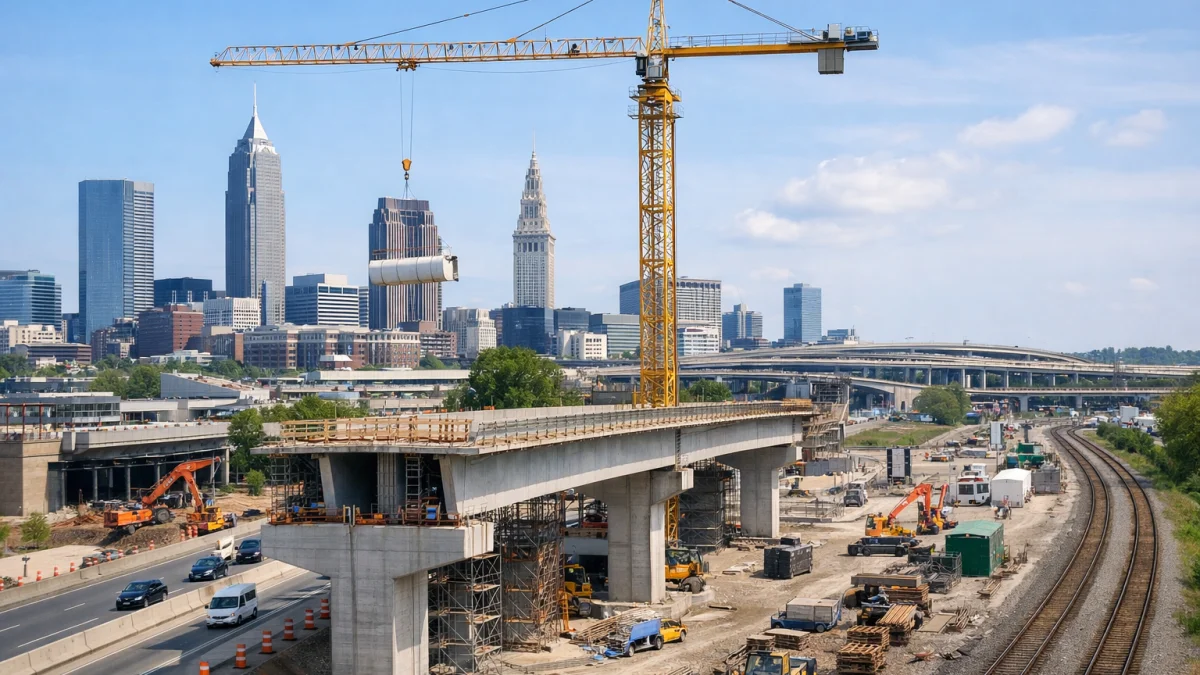


WASHINGTON — Infrastructure projects funded largely by the Bipartisan Infrastructure Law are advancing in several major U.S. metropolitan areas, with construction underway on transit expansions, bridge repairs and airport upgrades as federal and local officials report steady progress in 2026.
The Infrastructure Investment and Jobs Act, enacted in 2021, has supported more than 60,000 projects nationwide, including significant work in cities such as New York, Los Angeles, Chicago and others. Officials said key initiatives include subway extensions, high-speed rail segments and roadway improvements.


In New York, the Second Avenue Subway Phase 2 project continues northward expansion in East Harlem, one of several major transit efforts in the region. Los Angeles is progressing on the Metro D Line Extension, with Section 1 targeted for opening in late 2026 ahead of the Olympics. San Diego International Airport is undergoing a multi-billion dollar terminal redevelopment, described as the city's largest construction project.
California High-Speed Rail, the largest public infrastructure project in the country, is advancing segments connecting major cities in the state. In the Midwest, projects in metropolitan areas like Kansas City include substantial data center and airport-related developments.
The U.S. Department of Transportation has awarded billions in grants through programs including the Better Utilizing Investments to Leverage Development (BUILD) grants and others focused on safety, bridges and transit. Recent awards have supported local and regional projects across urban areas.
“These investments are rebuilding America’s infrastructure backbone,” a U.S. Department of Transportation official said in a statement regarding ongoing implementation of the law.
State and local transportation departments are coordinating with federal agencies on project delivery. Challenges such as supply chain issues and labor availability have been noted in some areas, though officials report overall momentum.
Additional funding continues through formula grants and competitive programs for public transportation, with the IIJA authorizing significant resources through fiscal year 2026. Projects also address resilience, including improvements to withstand extreme weather.
As of mid-2026, construction timelines vary by location, with some projects scheduled for completion in the coming years. Details on the exact completion percentages for all initiatives in key metropolitan areas remain subject to ongoing reporting by responsible agencies. Officials said monitoring and updates will continue as work progresses.