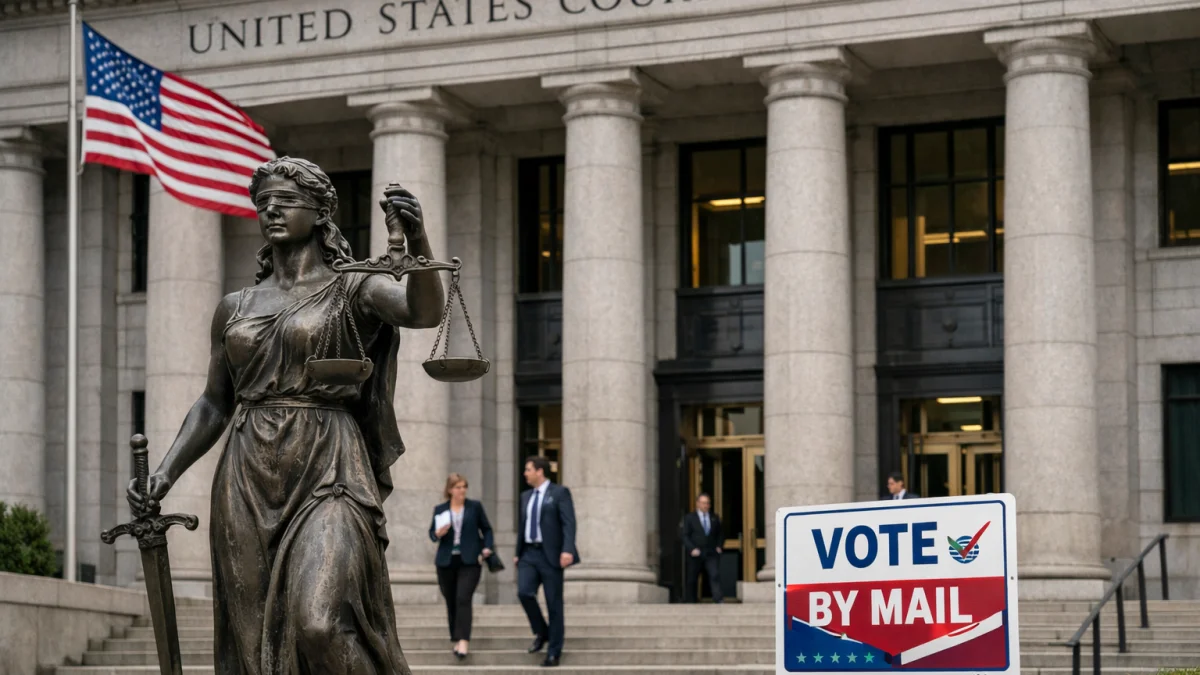


BOSTON — A federal judge has narrowed lawsuits challenging President Donald Trump’s executive order aimed at tightening rules for mail-in voting, ruling that Democratic-led states and voting rights groups may pursue claims related to the measure’s potential impact on upcoming elections but not broader challenges tied to possible future implementation.
In a decision issued on June 18, U.S. District Judge Indira Talwani said the plaintiffs could continue seeking judicial review of provisions that could affect primary and midterm elections scheduled before November, while limiting aspects of the cases that depend on actions federal agencies have not yet taken. According to the ruling, uncertainty surrounding future implementation made some claims premature.


The lawsuits were filed by a coalition of Democratic-led states and voting rights organizations challenging Trump’s March executive order, which directs federal agencies to take steps related to voter eligibility verification and mail-ballot administration. Plaintiffs argue that the order exceeds presidential authority and intrudes on powers that the U.S. Constitution reserves to states and Congress.
Talwani wrote that postponing review of provisions with potential effects on imminent elections could impose hardship on the plaintiffs. “Postponing judicial review is impracticable and may inflict significant hardship on Plaintiffs,” she said in the ruling. At the same time, she noted that significant uncertainties remain regarding how federal agencies, including the Department of Homeland Security and the U.S. Postal Service, may ultimately implement the order.
The decision followed earlier litigation in Washington, where U.S. District Judge Carl Nichols declined in May to immediately block the executive order. Nichols said the challenge at that stage was premature because agencies had not yet implemented many of the measures outlined in the order, though he left open the possibility of future legal challenges as implementation progressed.
The Trump administration has defended the executive order as an effort to strengthen election administration and voter eligibility verification. Opponents contend that the measure could create barriers to voting and improperly expand federal involvement in election management. Details of how some provisions would operate in practice remain unclear.
The litigation comes amid broader disputes over election policy ahead of the November midterm elections. Separate legal challenges have also targeted provisions involving proof-of-citizenship requirements and mail-ballot procedures, with some courts issuing rulings that block portions of the administration’s election-related initiatives.
As of June 25, Talwani’s ruling allows the narrowed lawsuits to proceed, and further court hearings are expected as federal agencies continue developing policies connected to the executive order.