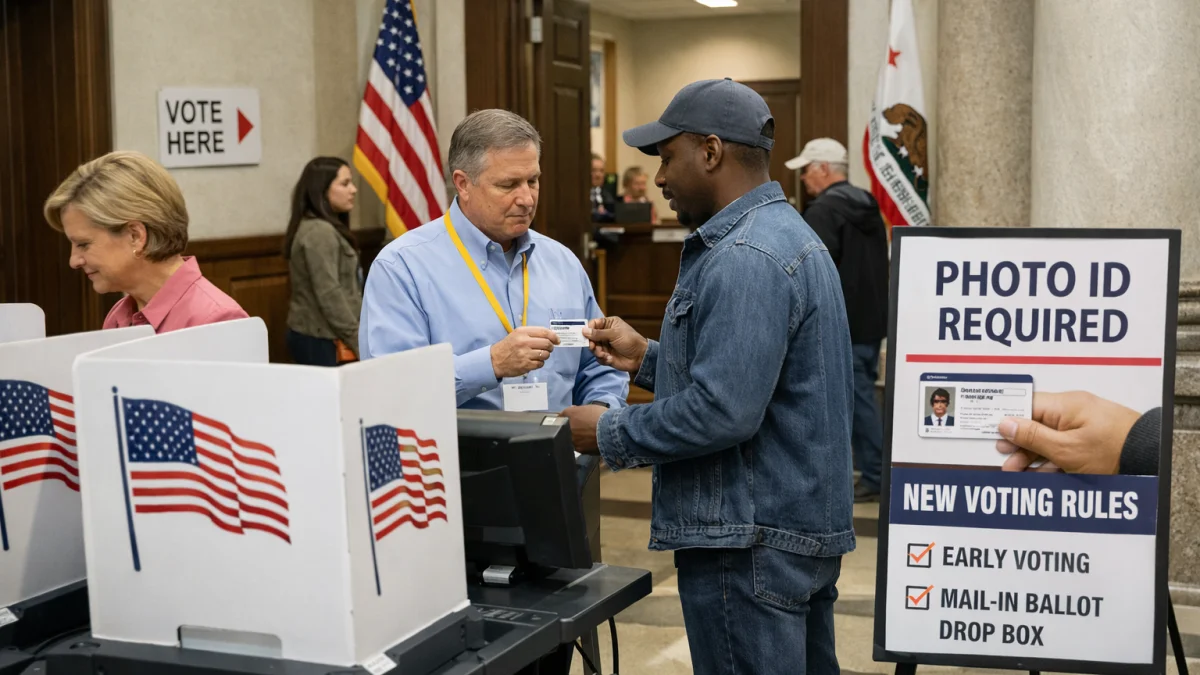


WASHINGTON — New election laws affecting voter registration, identification requirements and ballot procedures are taking effect in multiple U.S. states ahead of the November 2026 midterm elections, prompting state election officials to update voting guidance and conduct public outreach campaigns.
State legislatures across the country have enacted a mix of restrictive and expansive voting measures during the current election cycle. According to a May review by the Brennan Center for Justice and the Democracy Policy Lab at the University of California, Berkeley, at least nine states enacted 12 restrictive voting laws between January and May, while at least six states enacted 16 laws expanding voting access. Most of those measures are scheduled to be in effect for the 2026 midterm elections.


Several of the new laws focus on voter registration requirements. South Dakota and Utah have adopted measures requiring documentary proof of citizenship, such as a passport or birth certificate, for voter registration, according to the Brennan Center. Other states, including Florida, Kentucky and Mississippi, have enacted narrower documentation requirements affecting some voters.
Election officials in affected states have begun notifying voters of the changes and updating election procedures before primary and general election contests later this year. State agencies have also revised voter education materials to reflect new identification standards, registration procedures and ballot-handling rules, officials said.
At the same time, several states have approved measures intended to expand voting access. Virginia enacted laws extending early-voting opportunities and strengthening protections for voters, while New Jersey authorized additional days of early voting for certain local elections. Washington and Maryland approved measures designed to bolster voting-rights protections, according to legislative summaries reviewed by the Brennan Center.
“These laws restrict access to voting in several ways, including adding requirements to show documents like a passport or a birth certificate when registering to vote,” the Brennan Center said in its May roundup of state legislation.
Supporters of stricter voting requirements have argued that the measures strengthen election administration and voter-roll accuracy. Voting-rights organizations and some Democratic officials have raised concerns that additional documentation requirements could make registration more difficult for eligible voters.
The changes are unfolding as election officials also monitor several pending court cases that could affect voting procedures in some states, including disputes involving mail-ballot deadlines and election administration rules. Election administrators have said they are preparing contingency plans while awaiting judicial decisions.
As of Thursday, state election offices continued implementing newly enacted laws and updating voter information ahead of remaining primary elections and the November midterms. Officials in several states said outreach efforts will continue throughout the summer and fall to inform voters of any new requirements before ballots are cast.