

NEW YORK — Oil prices plunged about 9% on Friday after Iran announced the reopening of the Strait of Hormuz to commercial shipping, easing concerns over disruptions to global energy supplies through the vital waterway.
Iranian Foreign Minister Seyed Abbas Araghchi said in a social media post that “the passage for all commercial vessels through Strait of Hormuz is declared completely open for the remaining period of ceasefire”. The announcement followed a 10-day ceasefire between Israel and Lebanon that took effect Thursday.


Brent crude, the international benchmark, settled at $90.38 a barrel, down 9.1% on the day, while West Texas Intermediate fell 11.5% to $83.85 a barrel, according to market data. The declines erased much of the geopolitical risk premium that had built up since the conflict began in late February.
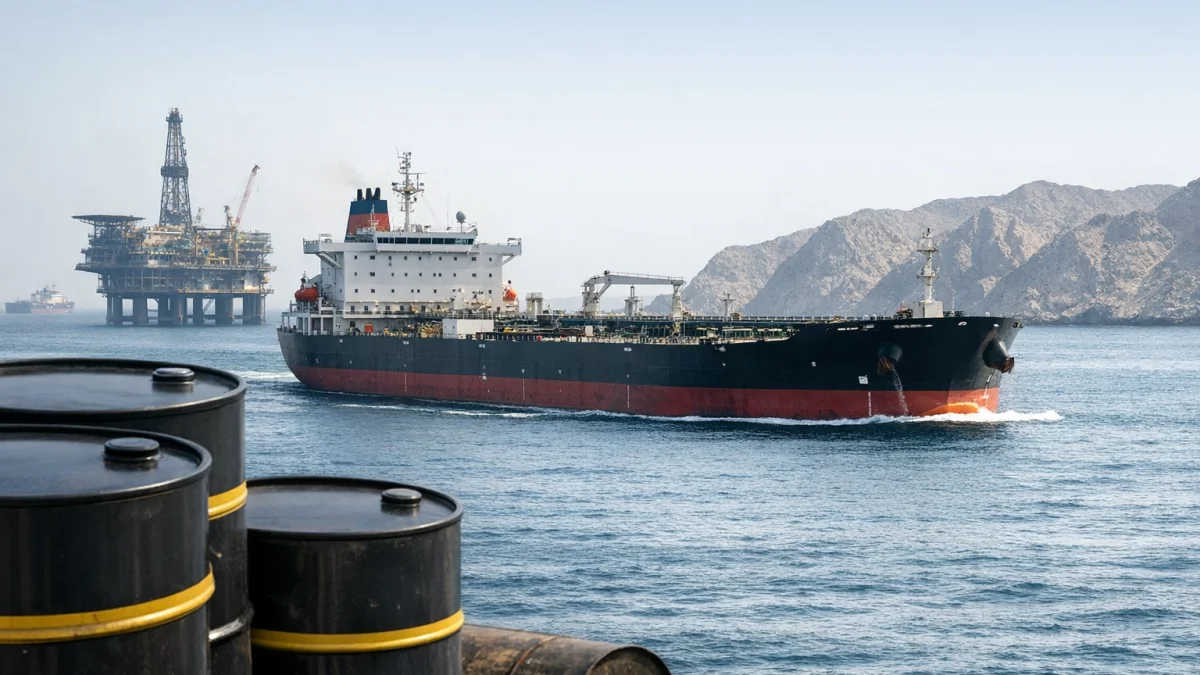
The Strait of Hormuz, through which about 20% of the world’s oil supply normally passes, had been effectively closed by Iran following the start of U.S.-Israeli military operations on Feb. 28. The disruption sent oil prices to nearly $120 a barrel at the peak of the crisis.
“This news is having an immediate impact on markets,” Kathleen Brooks, research director at XTB, said.
However, shipping industry officials cautioned that restoring normal traffic would take time. Nils Haupt, a spokesman for German transportation company Hapag-Lloyd, said vessels still need detailed instructions on navigation routes and safety procedures. “One thousand ships cannot just go now to the entrance of the strait, that will be chaos,” Haupt said.
U.S. President Donald Trump said on social media that the Strait of Hormuz is “completely open and ready for business,” but added that the U.S. naval blockade against Iran will “remain in full force and effect as it pertains to Iran, only, until such time as our transaction with Iran is 100 percent complete”.
Iranian officials said vessels can cross via a coordinated route previously announced by the country’s Ports and Maritime Organization. As of late Friday, marine traffic data showed about 20 vessels began moving toward the strait, though many remained clustered on either side of the waterway.