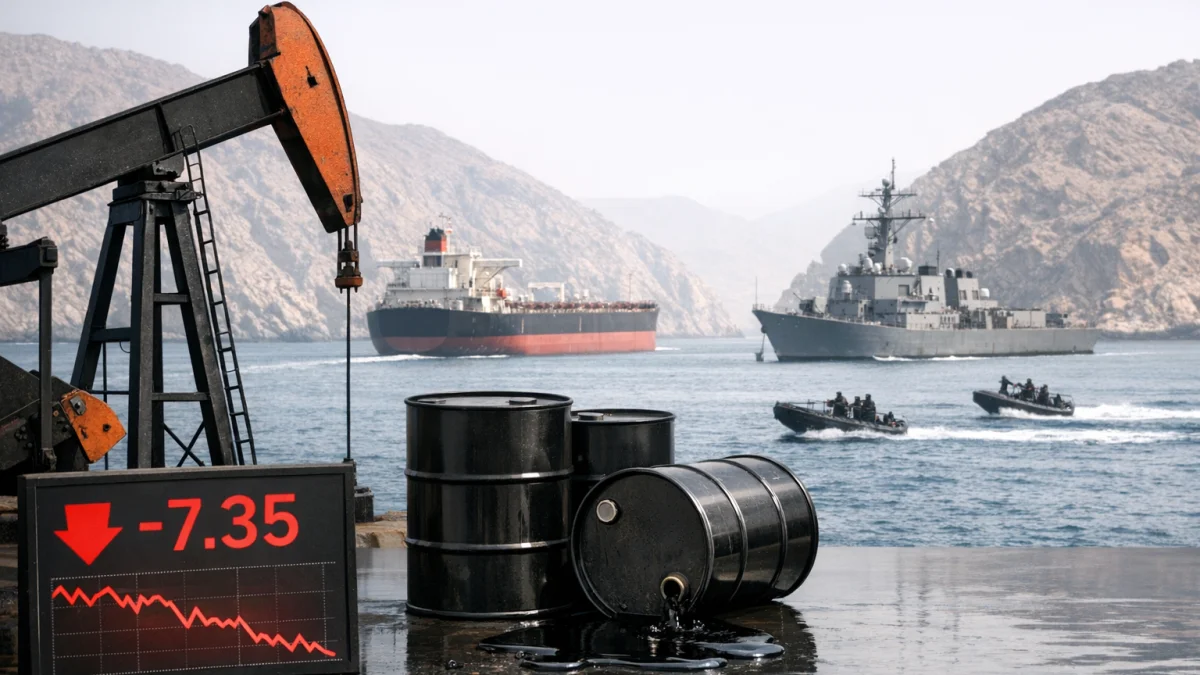


LONDON — Oil prices fell sharply on Friday after Iran announced that the Strait of Hormuz was open to commercial shipping, though the gains were partly reversed on Saturday following Tehran’s decision to reimpose restrictions on the waterway, traders and analysts said.
Brent crude, the international benchmark, dropped more than 9 percent to around $90.38 a barrel on Friday, its lowest level since early March, according to market data. U.S. West Texas Intermediate crude also declined sharply. The fall came after Iran’s foreign minister stated that passage through the strait was “completely open” during a ceasefire related to Lebanon.


The Strait of Hormuz is a critical chokepoint for global energy supplies, with roughly one-fifth of the world’s oil and significant volumes of liquefied natural gas typically transiting the narrow passage.
Iran reversed course on Saturday, reimposing restrictions and reporting that its forces fired on at least two vessels attempting to pass, according to maritime security sources and Iranian statements. The move followed the continued U.S. naval blockade of Iranian ports, which Washington said would remain in place until broader agreements were reached.
“The strait will not remain open with the continuation of the blockade,” Iranian parliamentary speaker Mohammad Bagher Ghalibaf said in a statement.
U.S. President Donald Trump had welcomed the initial reopening announcement but maintained that the American blockade would stay in effect pending further talks, including on Iran’s nuclear program.
Oil markets had reacted strongly to the brief prospect of resumed flows through the strait after months of disruption tied to regional tensions. Earlier in 2026, prices had risen significantly amid supply concerns.
Details of trading levels on Saturday remained mixed as the reclosure news emerged, with some recovery in prices reported in early Asian trading on Sunday. Exact figures varied by exchange and timing.
The International Maritime Organization and shipping associations said they were seeking clarification on the situation and assessing risks to navigation.
As of early Sunday, shipping traffic in the area was reported to be limited, with vessels receiving warnings from Iranian forces. No immediate statement on oil price movements was available from major producers or the Organization of the Petroleum Exporting Countries.
The U.S. Energy Information Administration and other monitors had previously noted significant supply disruptions through the strait earlier in the year.