

Escalating military confrontation in the Middle East is prompting governments, international health agencies and humanitarian organizations to expand public health preparedness as growing displacement, damage to civilian infrastructure and disruptions to supply chains increase the risk of a broader humanitarian crisis. The latest escalation in hostilities has added pressure to health systems already strained by months of conflict, with the World Health Organization (WHO) warning that the consequences extend well beyond immediate casualties.
The significance of current preparations lies not only in responding to trauma injuries but also in preventing secondary public health emergencies that frequently accompany armed conflict. Experience from previous crises in the region and elsewhere shows that large-scale displacement, interruptions to routine medical services and damaged water, sanitation and transport infrastructure can rapidly increase the risk of communicable disease outbreaks, untreated chronic illnesses and maternal and child health complications. Health preparedness has therefore become a central component of humanitarian planning rather than a follow-up measure once fighting subsides.


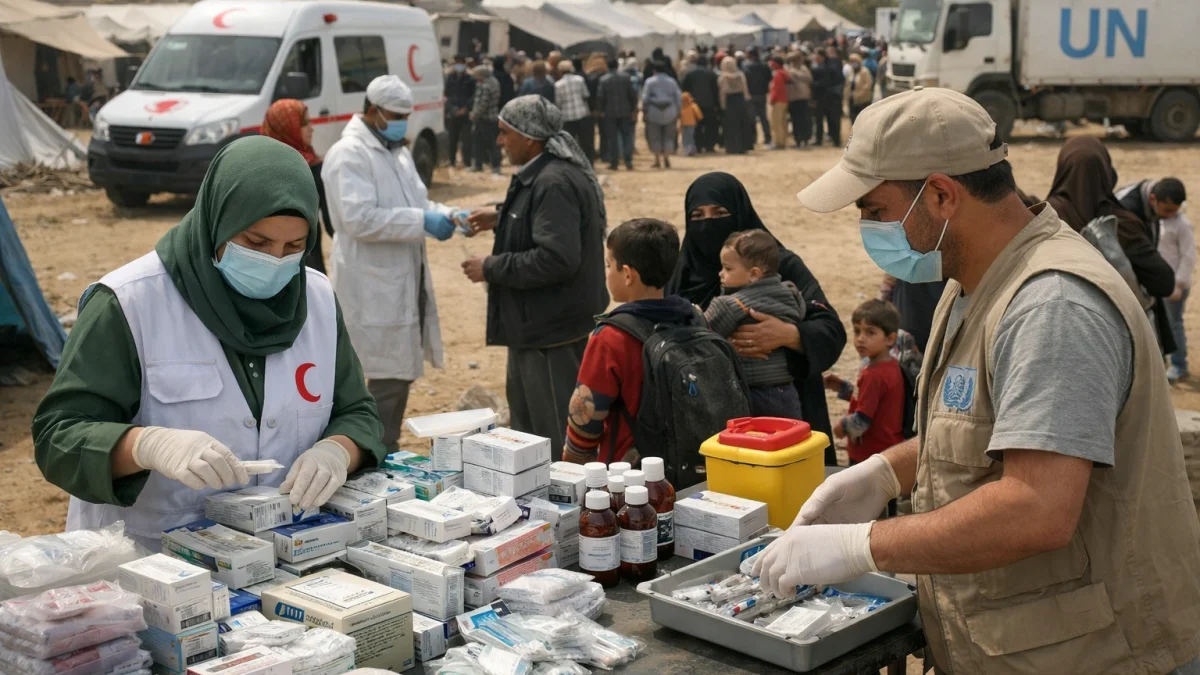
WHO says the conflict has disrupted access to health care across several affected countries, with attacks on health facilities, population movements and interruptions to essential services reducing the ability of health systems to respond. The agency reports that people requiring dialysis, insulin, cancer treatment and other life-sustaining care are among those most vulnerable when transport routes and hospitals become inaccessible. It has also warned that disruptions to regional airspace and maritime routes are delaying the delivery of medicines and humanitarian supplies beyond the immediate conflict zone.
Displacement represents one of the most immediate public health concerns. According to WHO, hundreds of thousands of people have been forced from their homes during successive phases of the conflict, many relocating to collective shelters or informal accommodation where overcrowding and limited sanitation increase the likelihood of respiratory infections, diarrhoeal disease and other communicable illnesses. Children, older adults, pregnant women and people with chronic medical conditions face elevated risks when routine preventive and primary care services are interrupted.
Public health agencies are therefore emphasizing preparedness measures before disease outbreaks occur. WHO says it is working with national ministries of health and humanitarian partners to strengthen disease surveillance, pre-position trauma supplies and essential medicines, maintain vaccination services where possible and support continuity of critical health care. The organization has also expanded readiness for potential chemical, biological, radiological and nuclear incidents, reflecting broader concerns that conflict involving strategic infrastructure could create additional health hazards beyond conventional warfare.
Supply-chain resilience has become another priority. WHO has reported that insecurity, airspace restrictions and disruptions affecting transport routes have delayed the movement of emergency medical supplies through its logistics hub in Dubai, affecting assistance intended for multiple countries. These logistical constraints illustrate how regional conflict can hinder humanitarian operations far beyond active combat areas, slowing delivery of medicines, laboratory materials and emergency equipment required for unrelated health emergencies.
Health experts note that conflict-related mortality is often driven increasingly by indirect causes as crises become prolonged. While trauma care remains essential during active fighting, interruptions to vaccination programmes, maternal services, chronic disease management and mental health care can produce lasting health consequences. Similar patterns have been documented in previous conflicts across the Middle East, where weakened health systems required years to recover after repeated attacks on medical infrastructure and prolonged displacement of health workers and patients.
The broader regional environment also complicates preparedness efforts. Renewed military operations involving multiple countries have affected commercial aviation, shipping and cross-border humanitarian access. European aviation authorities have reinstated warnings covering parts of Middle Eastern airspace, highlighting the operational challenges facing both commercial transport and humanitarian logistics as security conditions deteriorate.
Funding remains another constraint. WHO has warned that humanitarian health operations across the Eastern Mediterranean continue to face substantial financing shortfalls even as demand for emergency services increases. International agencies argue that maintaining surveillance systems, emergency medical stocks and essential public health programmes before health conditions deteriorate further is generally more effective than responding after disease outbreaks or health system failures emerge.
The current focus of public health planning therefore extends beyond emergency medical treatment to preserving essential health services under increasingly uncertain conditions. Official monitoring continues to concentrate on population displacement, attacks affecting health infrastructure, disease surveillance, continuity of medical supply chains and humanitarian access. While military developments remain fluid, international health agencies say these indicators will determine whether the conflict evolves into a wider regional public health emergency requiring an expanded international response.