

A multistate Salmonella outbreak linked to fresh jalapeño peppers has expanded to 345 illnesses across 27 U.S. states, underscoring how a single contaminated ingredient can move through restaurant supply chains and produce a geographically dispersed outbreak before investigators identify its source. As of Aug. 5, 36 people had been hospitalized and no deaths had been reported, according to U.S. health authorities. Investigators have traced the peppers to crops in Sinaloa, Mexico, and distribution by California-based Coast Citrus Distributors.
The significance of the investigation lies less in the role of jalapeños themselves than in the supply-chain pattern it exposes. Most identified patients had eaten at Mexican-style restaurants during the relevant exposure period, and the implicated peppers were supplied to food-service businesses rather than primarily to consumers through grocery stores. That distinction allowed the contamination to reach customers in multiple states through restaurants while making a single retail recall less straightforward. The Food and Drug Administration is continuing traceback work to determine the full distribution of the peppers.


The outbreak involves Salmonella Javiana, one of several Salmonella serotypes capable of causing gastrointestinal illness. Federal surveillance has historically documented Javiana as an established cause of human salmonellosis in the United States, although it is less prominent than some other serotypes. Earlier CDC surveillance found Javiana among the serotypes responsible for confirmed foodborne outbreaks, illustrating that its appearance in a fresh-produce outbreak is not unprecedented.
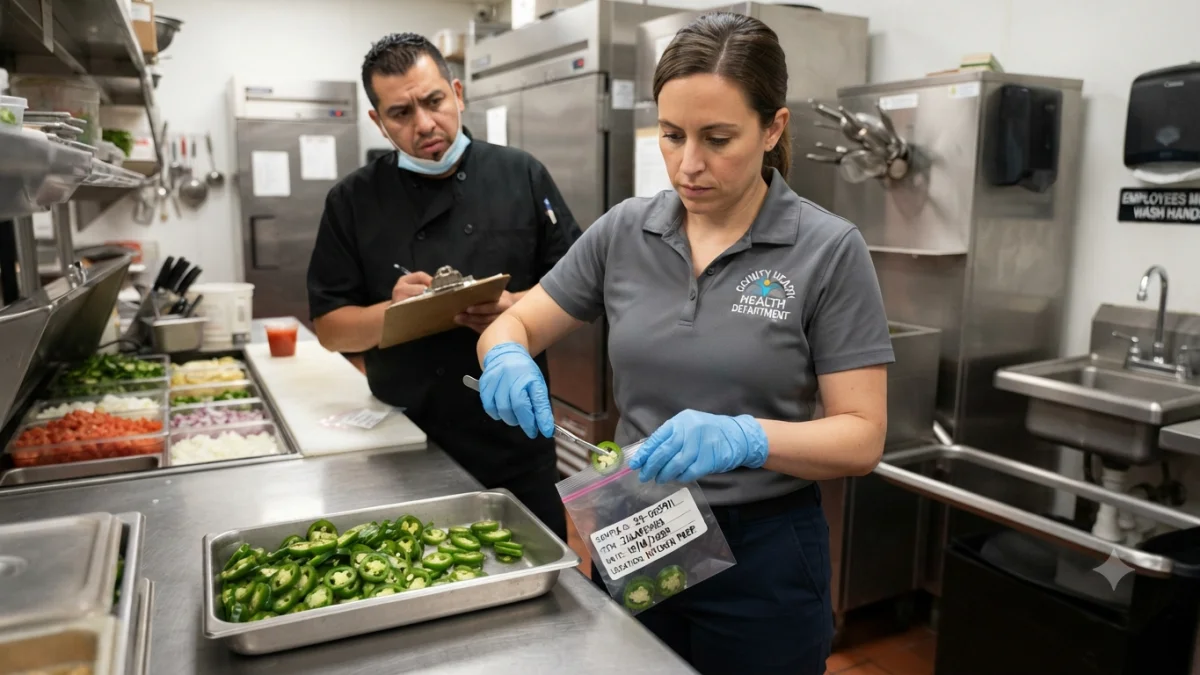
The epidemiological concentration of cases also illustrates why restaurant exposure can accelerate the detection of a common-source outbreak. Minnesota and Colorado have reported the largest numbers of illnesses, while cases have been recorded across a broad group of states. Interviews with patients helped investigators identify common restaurant exposures, while laboratory and traceback information narrowed attention toward a shared ingredient. Such investigations typically depend on combining clinical testing, patient interviews and distribution records rather than on any single piece of evidence.
For restaurant operators, the episode highlights the importance of ingredient traceability even when the implicated food is only one component of a much larger menu. Chipotle removed jalapeños from affected operations and changed suppliers, while QDOBA subsequently removed jalapeños from its restaurants. Federal authorities said the implicated peppers had been removed from those restaurant systems, reducing the ongoing risk associated with those chains. The companies' responses also demonstrate how restaurants can become an important control point: once a common ingredient is identified, suspending its use can interrupt additional exposure while investigators continue tracing its origin.
The episode also shows the limits of outbreak counts as a measure of the true scale of illness. Reported cases represent people who became ill, sought medical attention or otherwise entered the public-health surveillance system and were subsequently identified. Some people with salmonellosis may recover without seeking medical care, while others may not be tested for Salmonella. Conversely, as investigators review additional laboratory and epidemiological information, some reported cases can be reclassified. The current count therefore remains an investigation snapshot rather than a final measure of all illnesses associated with the contaminated product.
The timing of the outbreak is also important. The FDA's foodborne-illness investigation system was already tracking multiple active outbreaks in July and August, including other Salmonella investigations involving different products. Its public outbreak table lists the Salmonella Javiana investigation as active, with traceback underway. That broader investigative workload illustrates why identifying the food vehicle in a multistate outbreak can take time, particularly when contaminated products have already passed through commercial distribution networks.
The immediate public-health question is no longer simply whether jalapeños were associated with the illnesses, but whether all potentially contaminated product has been identified and removed. That requires investigators to establish the precise distribution chain, determine whether additional businesses received the implicated peppers and assess whether newly reported illnesses fit the same laboratory and epidemiological pattern. Coast Citrus has agreed to a recall, while U.S. authorities continue the traceback investigation.
As of Aug. 8, the confirmed picture is therefore a 345-case, 27-state Salmonella Javiana outbreak associated with jalapeños traced to Sinaloa and distributed by Coast Citrus, with 36 hospitalizations and no reported deaths. The principal uncertainties remain the full extent of distribution and whether additional illnesses will be linked to the outbreak. U.S. health agencies are continuing to monitor new cases, laboratory findings, recalls and traceback results as they determine whether the investigation can be narrowed or whether its scope must be expanded.