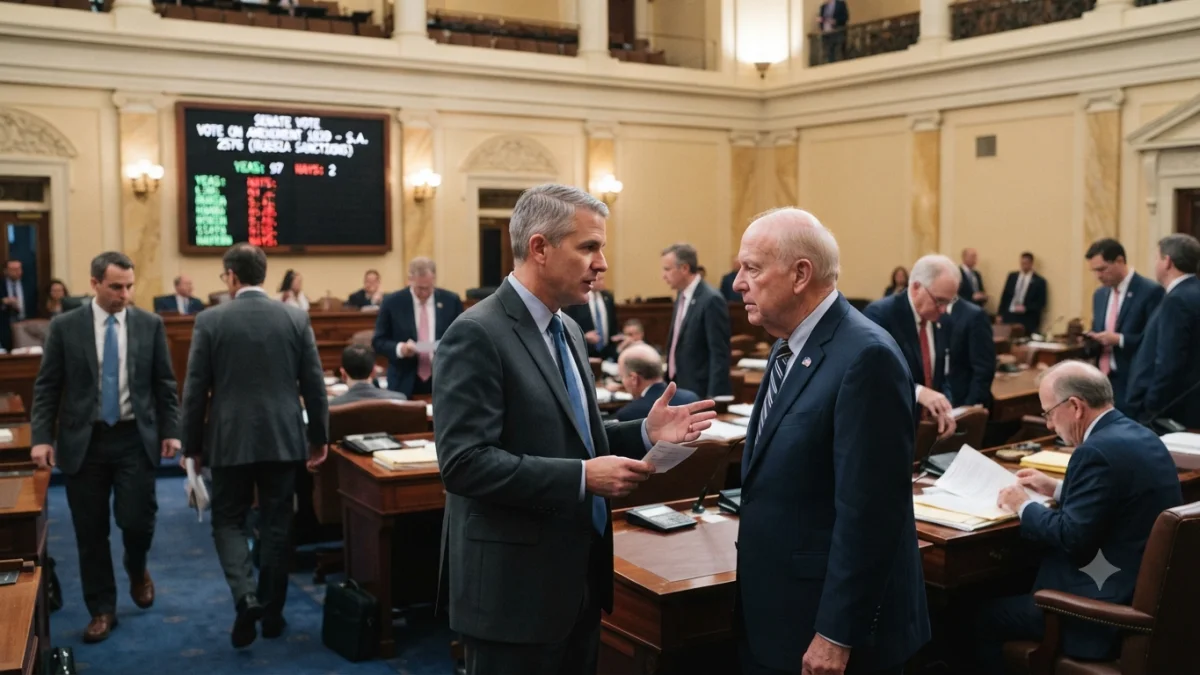


WASHINGTON — The U.S. Senate overwhelmingly passed sweeping legislation on Friday to increase economic pressure on Russia over its war in Ukraine, advancing a long-delayed sanctions package backed by the late Republican Senator Lindsey Graham.
The Senate voted 86-11 to approve the Lindsey O. Graham Sanctioning Russia and Iran Act of 2026, which would impose new sanctions on Russian officials and expand pressure on countries that purchase Russian oil and gas. The measure also contains provisions targeting Iran.


The legislation would give President Donald Trump authority to impose tariffs of up to 100% on countries that are major consumers of Russian energy, including India, Japan and some European Union countries, if the measure becomes law. The tariffs would be limited to the five largest importers of Russian crude oil or gas and five leading countries involved in helping Russia evade energy sanctions.
The bill also targets Russian officials and sectors of the economy, including efforts to curb the country's use of a so-called shadow fleet of vessels to export oil despite Western sanctions. It includes provisions intended to maintain sanctions restricting funding for Iranian energy and weapons programs.
Ukrainian officials welcomed the Senate vote. The Ukrainian embassy in Washington called passage a "timely and significant step that strengthens pressure on Russia."
The measure faces a more uncertain path in the House of Representatives, where some lawmakers have raised concerns about the tariff authority it would give Trump. Democratic Representatives Gregory Meeks and Don Beyer said they had "fundamental concerns" about the provisions, arguing that broad presidential tariff powers could raise costs for U.S. importers and consumers.
Republican Senator Rand Paul was the only Republican to vote against the bill. The Senate rejected an amendment by Paul and Democratic Senator Ron Wyden that would have removed the tariff provisions. Democratic Senator Raphael Warnock said he had obtained a written commitment from U.S. Trade Representative Jamieson Greer intended to place guardrails on the authority.
Graham, a South Carolina Republican and a prominent congressional supporter of Ukraine, died in July after spending months negotiating the sanctions package with the White House. The legislation was subsequently renamed in his honor.
The House is scheduled to return from its summer recess on Aug. 31, when lawmakers are expected to consider the measure. It would require House approval and Trump's signature before becoming law.