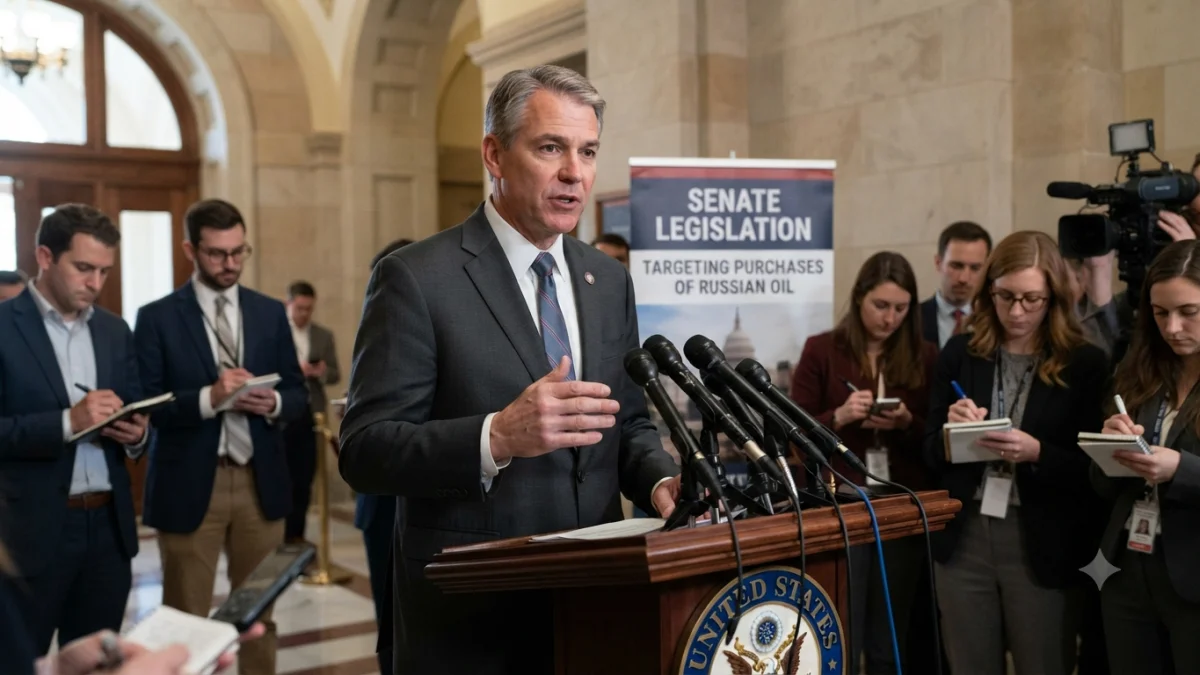


WASHINGTON — The U.S. Senate has passed legislation that would allow President Donald Trump to impose tariffs of up to 100% on imports from countries that continue to buy large amounts of Russian oil and gas, escalating pressure on Moscow's energy revenues as the war in Ukraine continues.
The Senate voted 86-11 on Friday to approve the Lindsey O. Graham Sanctioning Russia and Iran Act of 2026, a bipartisan measure named for the late Republican senator who had led negotiations over the legislation. The bill now moves to the House of Representatives for consideration.


Under the legislation, the president could impose tariffs on goods from the five largest importers of Russian crude oil or natural gas, as well as countries identified as major facilitators of sanctions evasion. The tariff authority is discretionary rather than automatic and is capped at 100%, according to senators involved in negotiating the measure.
The measure also provides for sanctions against Russian officials, oligarchs, financial institutions, energy projects and vessels associated with Moscow's so-called shadow fleet, which Western governments accuse of helping Russia circumvent restrictions on its oil exports.
China and India, among the largest purchasers of Russian energy, are expected to face particular scrutiny if the bill becomes law and the tariff authority is used. The legislation is intended to reduce revenues that Washington says help finance Russia's war in Ukraine.
Supporters have argued that the threat of tariffs would give the United States additional leverage over countries that continue purchasing Russian energy. Senator Tim Kaine, a Democratic member of the Senate Foreign Relations Committee, said when the legislation was introduced in July that it was designed to hold major purchasers of Russian oil and gas accountable for supporting Moscow's war effort.
The legislation was negotiated with the Trump administration after months of discussions and underwent changes that reduced the maximum tariff authority from an earlier proposal of 500% to 100%.
The bill also extends sanctions affecting Iran's energy and weapons sectors. Its passage came after Ukrainian President Volodymyr Zelenskiy urged lawmakers to maintain pressure on Russia and welcomed the Senate action, according to congressional and news reports.
The legislation must still clear the House before it can reach Trump's desk. The Senate vote therefore does not itself impose new tariffs on Russian oil buyers.