

WASHINGTON — U.S. senators on Monday debated the future of the military’s role along the southern border as lawmakers reviewed border security operations, defense priorities and funding for ongoing deployments authorized by the Trump administration.
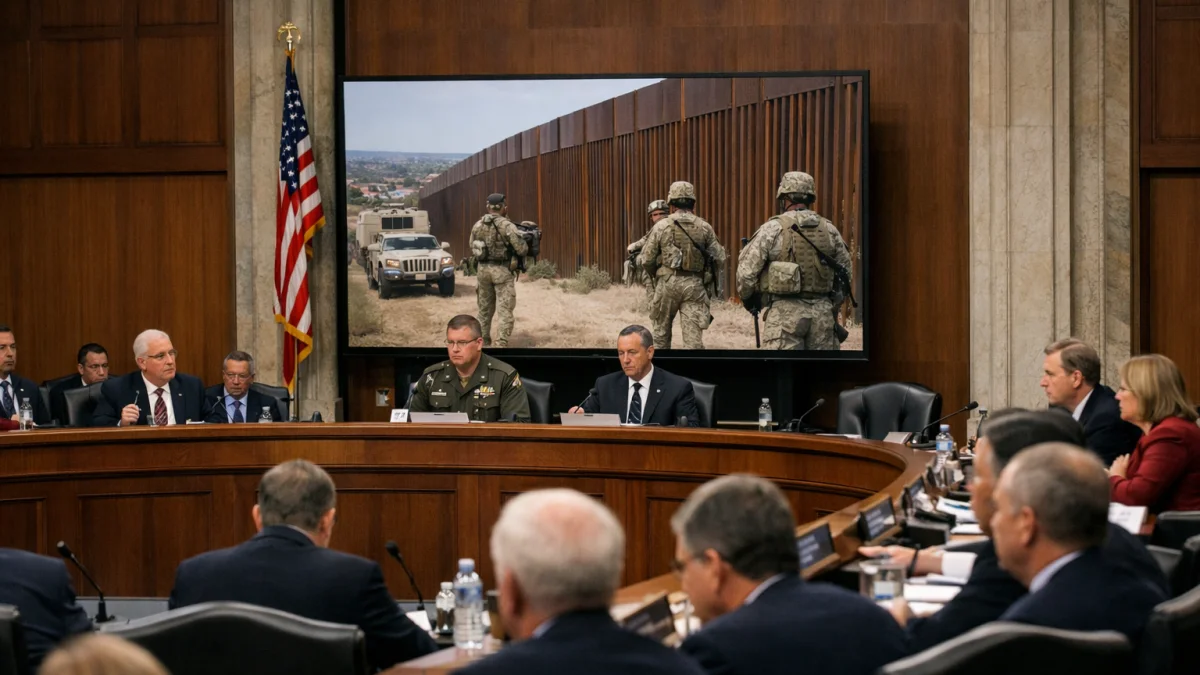
The discussion follows months of expanded military involvement in border operations, including support missions conducted by the U.S. military under the authority of U.S. Northern Command. Members of the Senate Armed Services Committee and Senate Homeland Security committees have examined the effectiveness, cost and legal framework of the deployments during recent hearings and oversight sessions.


At a Senate Armed Services Committee hearing in March, Gen. Gregory Guillot, commander of U.S. Northern Command, testified that Joint Task Force Southern Border had contributed to a significant reduction in unlawful border activity through the use of military capabilities and interagency cooperation. Chairman Roger Wicker said protecting the homeland remained a top federal priority and cited threats posed by transnational criminal organizations operating near the border.
Supporters of maintaining the military presence argued that troops provide surveillance, logistics and engineering capabilities that supplement the work of civilian border agencies. Republican lawmakers have also pointed to recent congressional efforts to increase funding for immigration enforcement and border security operations.
Critics, including several Democratic senators, questioned whether a prolonged military mission is appropriate and raised concerns about costs, oversight and the division of responsibilities between the armed forces and civilian law enforcement agencies. During recent hearings involving Department of Homeland Security officials, lawmakers pressed the administration on broader immigration enforcement policies and resource allocation.
“The federal government’s top priority is protecting the homeland,” Wicker said during the March hearing, while emphasizing the importance of addressing evolving security threats.
The debate comes as Congress continues work on appropriations bills and defense legislation that could influence future border operations. Senate committees have also reviewed readiness requirements and the impact of long-term deployments on military personnel and resources. Military commanders have told lawmakers that border missions rely on specialized capabilities while remaining subject to legal restrictions governing domestic military activity.
Border security has remained a prominent issue in Congress throughout 2026. Recent Senate action included consideration of legislation providing additional funding for immigration enforcement agencies, reflecting continuing divisions over border policy and federal enforcement priorities.
As of Monday, no final legislative decision had been announced regarding the duration or scope of future military deployments at the southern border. Senate committees were expected to continue reviewing the issue as lawmakers advance defense and homeland security measures through the congressional process.