WASHINGTON — The U.S. Supreme Court on Friday issued its ruling in a closely watched case involving President Donald Trump’s executive order seeking to restrict birthright citizenship, upholding the administration’s appeal in part by limiting the ability of lower federal courts to issue nationwide injunctions while leaving the underlying constitutional question unresolved, according to the court’s opinion.
The decision means federal judges who blocked enforcement of the executive order nationwide must reconsider the scope of their injunctions. The justices did not decide whether Trump’s order complies with the Citizenship Clause of the 14th Amendment, an issue that remains the subject of ongoing litigation. The ruling leaves additional legal proceedings ahead before the policy’s constitutionality is settled.
The case stems from an executive order signed by Trump after returning to office that directs federal agencies not to recognize automatic U.S. citizenship for certain children born in the United States to parents who are in the country unlawfully or temporarily. Multiple states, advocacy organizations and affected families challenged the order, arguing it conflicts with the Constitution and longstanding Supreme Court precedent. Lower courts had blocked enforcement while the lawsuits proceeded.
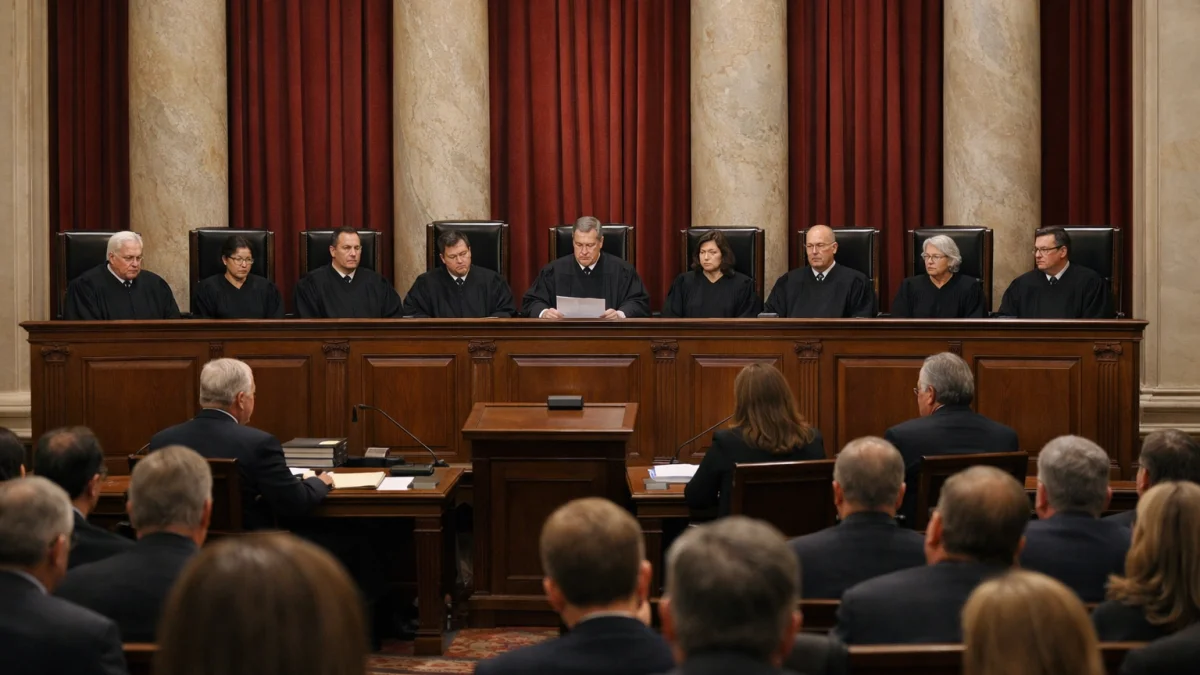
Writing during the earlier proceedings, Chief Justice John Roberts and several other justices questioned aspects of the administration’s interpretation during oral arguments, while other members of the court examined how the policy could be implemented in practice, according to the official argument transcript and court proceedings.
In the court’s ruling, Justice Amy Coney Barrett wrote that, “No one disputes that the Executive has a duty to follow the law. But the Judiciary does not have unbridled authority to enforce this obligation,” explaining the majority’s reasoning for limiting nationwide injunctions.
In dissent, Justice Sonia Sotomayor criticized the majority’s approach, calling the ruling “a travesty for the rule of law,” according to the opinion.
The administration welcomed the decision as a significant procedural victory, while opponents said they would continue challenging the executive order in lower courts. The Supreme Court’s decision does not immediately resolve whether the administration’s proposed restrictions on birthright citizenship are constitutional, and litigation over that central question is expected to continue.