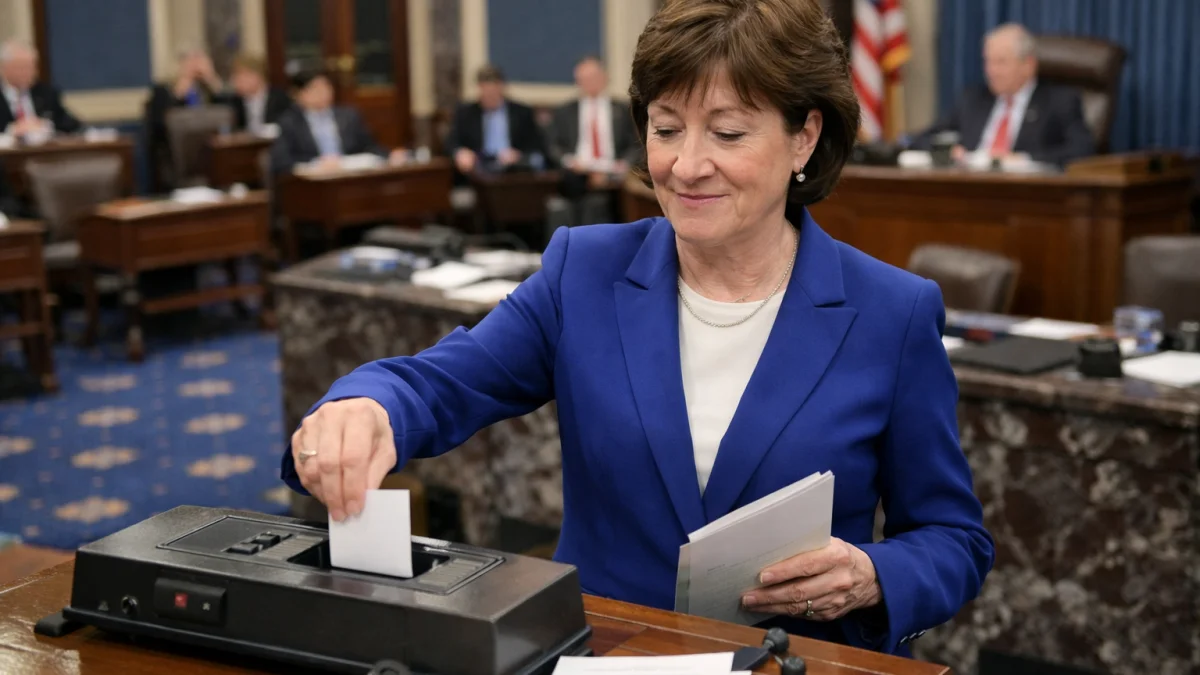


WASHINGTON — U.S. Senator Susan Collins of Maine cast her 10,000th consecutive Senate roll call vote on Thursday night, becoming the first senator in U.S. history to reach the milestone without missing a single vote since taking office in 1997, her office said.
Collins, a Republican, achieved the record during a vote on an amendment to Medicaid legislation. The milestone extends a perfect attendance streak that began with her first vote upon entering the Senate nearly three decades ago.


Senate colleagues from both parties congratulated Collins on the floor. “Senator Collins and I belong to different parties and do not always see eye to eye, but 10,000 consecutive roll call votes is an extraordinary streak by any measure, and I congratulate her on reaching it,” Senate Majority Leader Chuck Schumer said, according to her office.
Collins has participated in every roll call vote since January 1997, a period spanning multiple Congresses and covering thousands of legislative actions on issues ranging from appropriations to nominations and major policy debates. Her office noted that the achievement reflects a commitment to constituent service and Senate duties.
The Maine senator is seeking a sixth term in the 2026 elections. The voting record comes amid her re-election campaign against Democratic challenger Graham Platner. Collins has long been known for her moderate stance and willingness to break with her party on key votes.
Previous senators have maintained notable voting streaks, but none have reached 10,000 consecutive votes, according to Senate records referenced by Collins’ office. The record underscores the demands of Senate service, where members often balance committee work, constituent meetings and travel with floor votes that can be called with little notice.
In a statement, Collins expressed pride in the milestone. “I am incredibly proud to have cast my 10,000th consecutive vote in the U.S. Senate without ever missing a single one,” she said.
The Senate continues its legislative schedule with ongoing debates on appropriations and other priorities. Collins’ achievement was recognized during proceedings but did not interrupt regular business. No immediate further comments on potential challenges to maintaining the streak were issued. Further votes are expected as the chamber advances its calendar in the coming weeks.