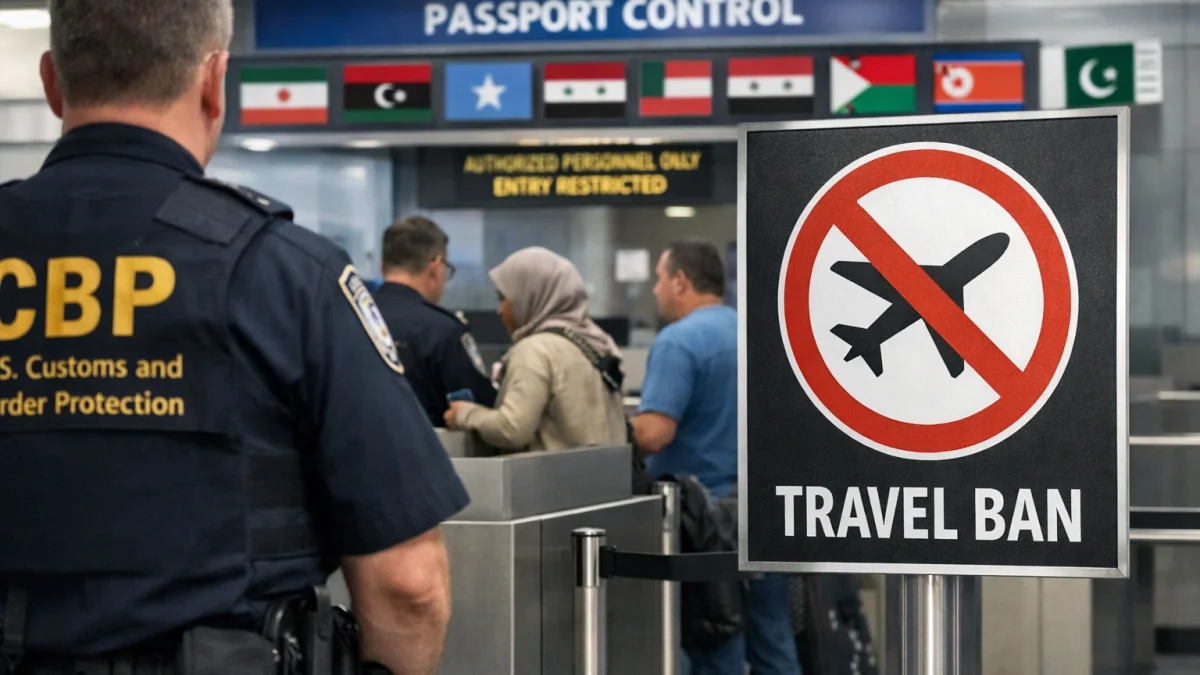


WASHINGTON — The Trump administration began enforcing a new travel ban on nationals from 12 countries on Monday, citing national security and inadequate vetting procedures in those nations, officials said.
The presidential proclamation, signed last week, fully suspends the entry of immigrants and nonimmigrants from Afghanistan, Burma, Chad, Republic of the Congo, Equatorial Guinea, Eritrea, Haiti, Iran, Libya, Somalia, Sudan and Yemen. It took effect at 12:01 a.m. Eastern time, according to the White House.


Department of Homeland Security and State Department officials confirmed implementation at U.S. ports of entry and consular posts abroad. The measure builds on assessments of screening and vetting capabilities in the listed countries, White House officials said.
President Donald Trump stated that the action protects the United States from foreign terrorists and other national security threats. “We will restore the travel ban... and keep the radical Islamic terrorists out of our country,” he said in a statement accompanying the proclamation.
The ban includes limited categorical exceptions and provisions for case-by-case waivers. It does not apply to U.S. citizens, lawful permanent residents or certain other categories already in the United States. Officials said the policy targets countries where the U.S. government has determined that identity management and information sharing pose heightened risks.
Critics, including immigrant advocacy groups, argued the restrictions are overly broad and could separate families or hinder humanitarian efforts. The American Civil Liberties Union and others indicated they were reviewing legal options, while some congressional Democrats called for legislative action to limit such executive measures.
The administration has pointed to similar actions during Trump’s first term, which the Supreme Court ultimately upheld. Officials said the new ban incorporates updated intelligence assessments. Seven additional countries face partial restrictions affecting specific visa categories.
As of Monday, Customs and Border Protection reported initial implementation proceeded without major disruptions at ports of entry. The Department of State advised affected travelers to check for updates on visa processing. Details on the number of individuals immediately impacted remained unclear.
The move is part of broader immigration enforcement priorities outlined by the administration. Further guidance on waivers and exceptions is expected in coming days from relevant agencies. International reactions and any diplomatic fallout were still being assessed.