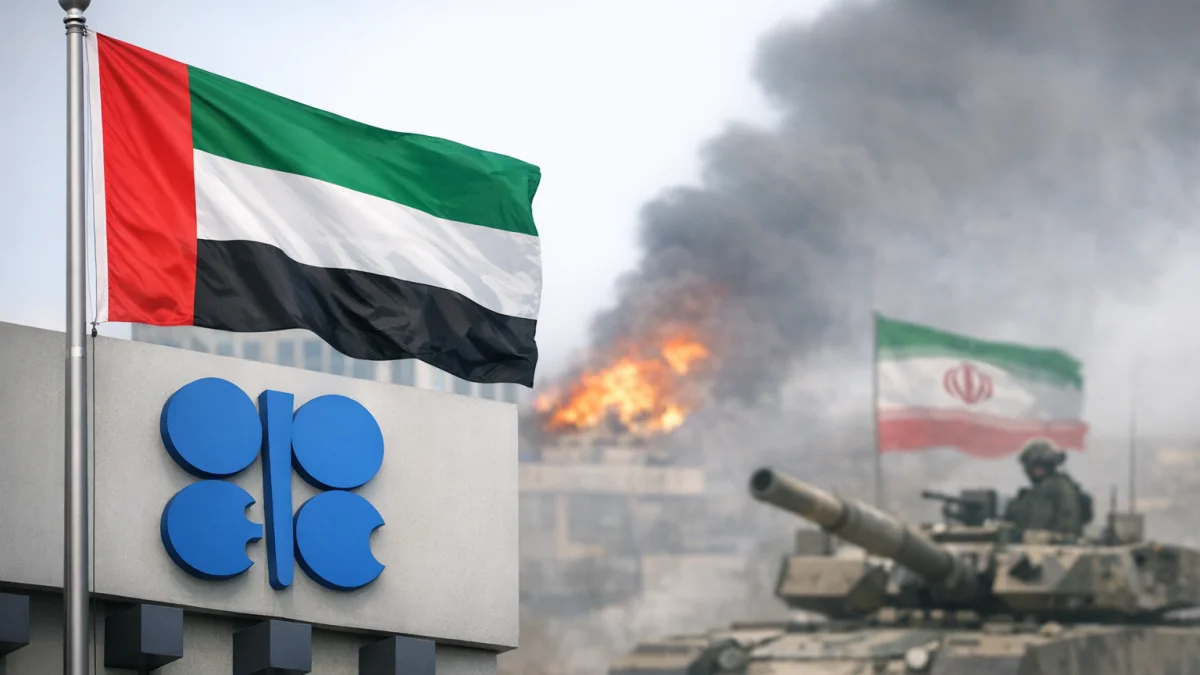


DUBAI — The United Arab Emirates announced on Tuesday that it will exit the Organization of the Petroleum Exporting Countries (OPEC) and the broader OPEC+ alliance, effective May 1, according to a statement carried by the state news agency WAM.
The decision comes amid an ongoing conflict involving Iran that has disrupted oil shipments through the Strait of Hormuz and caused volatility in global energy markets, UAE officials said. The UAE, a founding member of OPEC since 1967 and one of its largest producers, cited a review of its long-term strategic and economic vision and a desire for greater flexibility in production policy.


Energy Minister Suhail Mohamed al-Mazrouei said the move would allow the UAE to prioritize national interests and pursue an independent output policy. “This is a policy decision, it has been done after a careful look at the regional power’s energy strategies,” he told reporters, according to multiple reports. The minister added that the current constraints on exports through the Strait of Hormuz limited the immediate market impact of the withdrawal.
The announcement represents a significant shift for the 12-member OPEC group, which will be left with 11 members after the UAE departs. The UAE had long pushed for higher production quotas within the group. Details on how the exit will affect ongoing OPEC+ production agreements remain unclear.
The timing coincides with strains on Gulf oil exporters caused by the Iran-related conflict, which has included attacks on shipping and energy infrastructure in the region. Gulf producers, including the UAE, have faced difficulties exporting crude through the Strait of Hormuz, a critical chokepoint for global oil supplies.
OPEC had no immediate comment on the UAE’s decision. Saudi Arabia, the de facto leader of the group, has not publicly responded as of Tuesday evening.
The UAE government described the exit as reflecting its evolving energy profile and commitment to investing in domestic production capacity. Officials maintained that the country remains committed to overall market stability.
As of Tuesday, no reaction had been issued by other OPEC members or major non-OPEC producers in the OPEC+ framework. Oil prices rose on Tuesday amid the broader energy disruptions linked to the regional conflict, though the precise contribution of the UAE announcement was not immediately quantified by market analysts.
The UAE will continue to participate in global energy markets as a major producer outside the formal OPEC and OPEC+ structures after May 1. No further details on future production levels were released in the initial statement.
The matter is expected to be discussed in upcoming industry forums, but no specific meetings have been confirmed in response to the announcement.