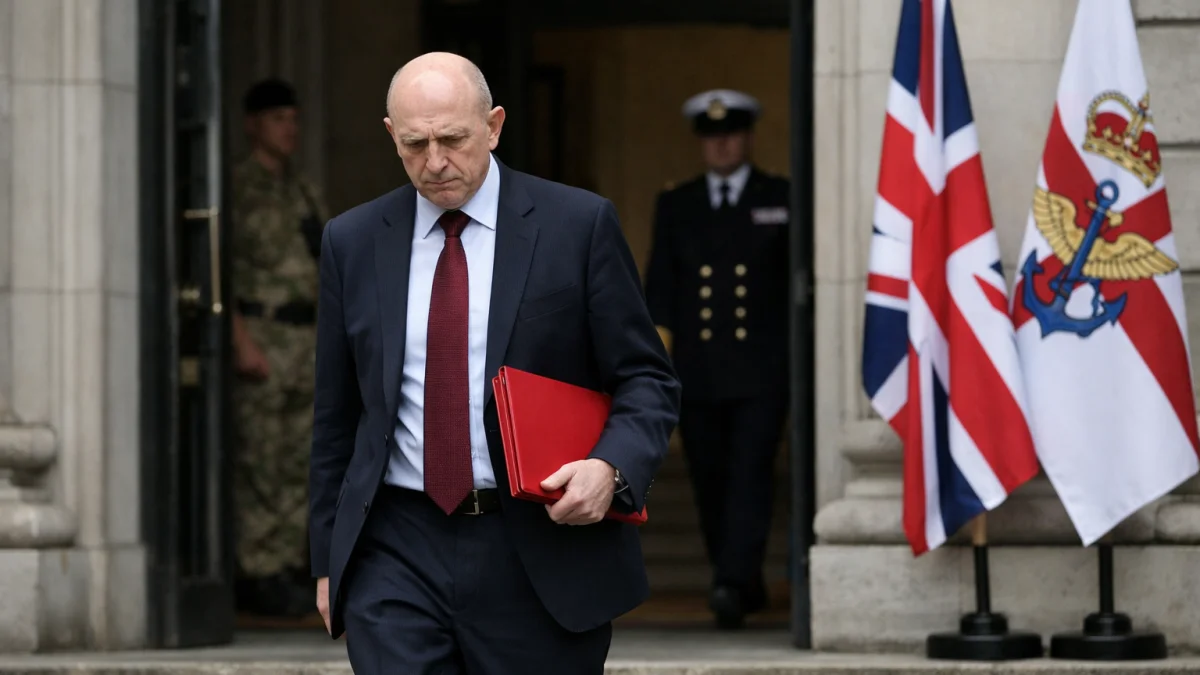


LONDON — UK Defence Secretary John Healey resigned on Thursday, citing disagreements with Prime Minister Keir Starmer’s government over military spending plans, officials and the minister’s resignation letter confirmed.
Healey submitted his resignation in a letter to Starmer, which he posted on the social media platform X. In it, he said the government’s Defence Investment Plan fell well short of what was required for national security at a time of rising threats.


“You have been unable, and the Treasury has been unwilling, to commit the resources that the nation needs to defend the country at this time of rising threats,” Healey wrote. He added that the financial settlement for the plan, which he received in full on Monday afternoon, “falls well short of what is required for defence and the country at this dangerous time.”
The resignation came amid a months-long dispute over the level of defence spending. Healey had argued for higher investment to meet commitments and address security challenges, including operations related to the Strait of Hormuz, NATO activities and other international obligations.
Prime Minister Starmer expressed regret over the departure but defended the government’s approach. He stated that the plan represented a sustainable increase in defence spending and that his administration would “always do what is needed to keep our country safe.”
The Defence Investment Plan, which has been delayed, outlines future spending, including a target of around 2.68% of GDP by 2030 according to reports on the settlement. Healey had pushed for stronger commitments, warning that insufficient funding could impact military readiness.
Opposition figures and some military leaders have called for greater investment in defence, while the government has emphasized fiscal constraints. Details of potential replacements for the defence secretary position remained unclear as of Friday.
Healey’s exit marks the latest in a series of ministerial departures from Starmer’s government in recent weeks. The development comes ahead of a NATO summit next month, where defence spending commitments are expected to be a focus.
As of Friday, No. 10 Downing Street had not announced an immediate successor. Government officials said work on the Defence Investment Plan would continue, with further details to be released in due course. Healey’s letter indicated he submitted his resignation with “great regret and reluctance.”
The situation underscored ongoing debates within the Labour government over balancing defence priorities with other fiscal demands. Further statements from officials were anticipated in the coming days.