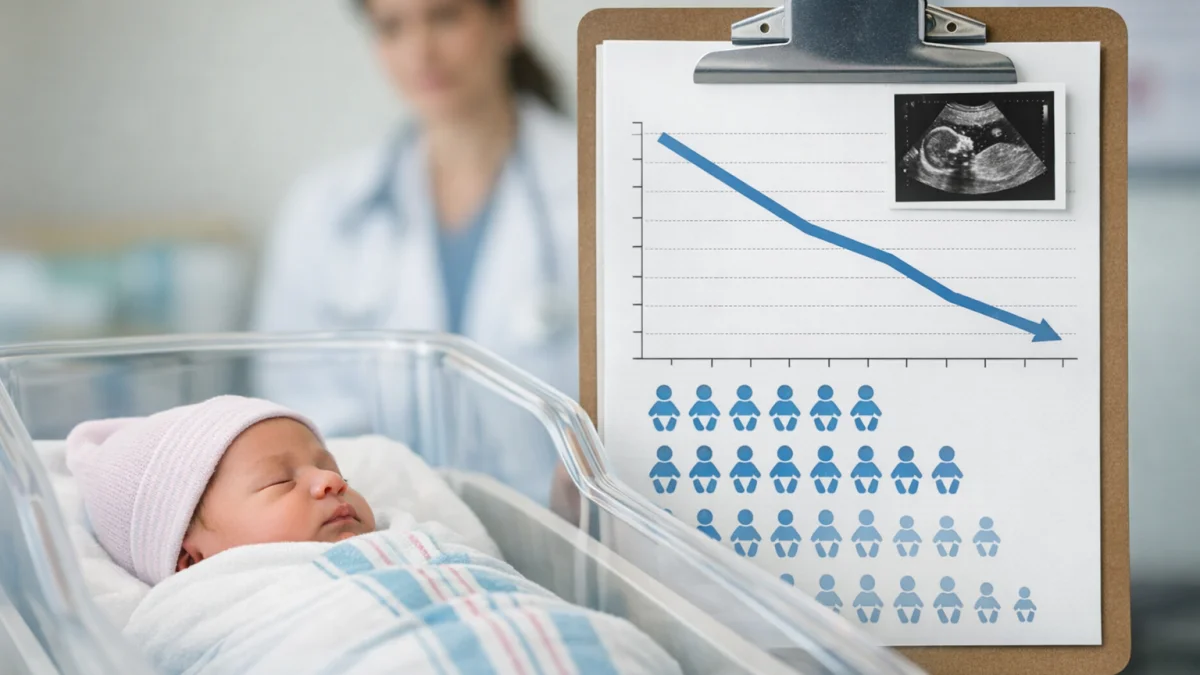


WASHINGTON — The U.S. general fertility rate fell to a record low of 53.1 births per 1,000 women ages 15 to 44 in 2025, a 1 percent decline from the previous year, according to provisional data released by the Centers for Disease Control and Prevention.
The number of births also dropped about 1 percent to roughly 3.6 million, continuing a downward trend that has seen fertility rates fall nearly 23 percent since 2007, the National Center for Health Statistics reported on April 9. The teen birth rate fell an additional 7 percent in 2025, part of a long-term decline of more than 70 percent since the early 1990s.


The data reflect a continued shift toward later childbearing, with lower rates among women in their teens and early 20s. Officials have noted the trend as part of broader demographic changes affecting population growth and related policy areas, including family support and economic planning.
Health and Human Services Secretary Robert F. Kennedy Jr. addressed the figures in remarks on Tuesday, stating that the administration was reviewing factors contributing to the decline and considering measures to support families. “We are closely examining this trend and its implications for the future of our country,” he said.
The provisional figures are based on nearly all birth records for 2025 and are subject to minor revisions when final data are released later this year. The total fertility rate, which estimates lifetime births per woman, has hovered near or below replacement level for years, though exact 2025 figures were not detailed in the preliminary release.
Experts have pointed to economic pressures, delayed marriages and changing social patterns as contributing elements, though the CDC report itself does not attribute causes. The decline has been more pronounced among younger age groups, while birth rates for women in their 30s have shown relative stability or slight increases in recent years.
Administration officials have discussed potential policy responses, including expanded family support initiatives, but specific proposals remain under review. Congressional committees have also held hearings on demographic trends in recent months.
As of Thursday, no new data or policy announcements had been issued following the CDC report. The National Center for Health Statistics said final 2025 birth statistics would be published later in 2026, with additional analysis expected on age-specific and state-level patterns.