

Mar 27, 2026 - The U.S. military has ordered the deployment of approximately 1,000 to 2,000 paratroopers from the Army’s 82nd Airborne Division to the Middle East as the conflict with Iran enters its fourth week.
Pentagon officials confirmed the move on Tuesday, with the soldiers drawn from the division’s Immediate Response Force based at Fort Bragg, North Carolina. The troops, including elements of a brigade combat team and division staff, are expected to arrive in the region in the coming days. Their exact destination within the Middle East has not been publicly disclosed, but officials said the forces would be positioned within striking distance of Iran to expand U.S. military options.


The deployment adds to a broader buildup that already includes thousands of Marines and sailors aboard the USS Boxer amphibious assault ship and accompanying vessels, which began moving toward the Persian Gulf earlier this month. Prior to these reinforcements, approximately 50,000 U.S. troops were stationed across the Middle East.
The escalation comes amid ongoing military exchanges between Iran, Israel and U.S. forces. Iranian missile and drone strikes have targeted sites in Israel and Gulf Arab states in recent days, including an incident that caused a fire at a fuel tank near Kuwait International Airport. U.S. and Israeli operations have continued against Iranian targets, with reports of strikes in areas including Tabriz and Isfahan.
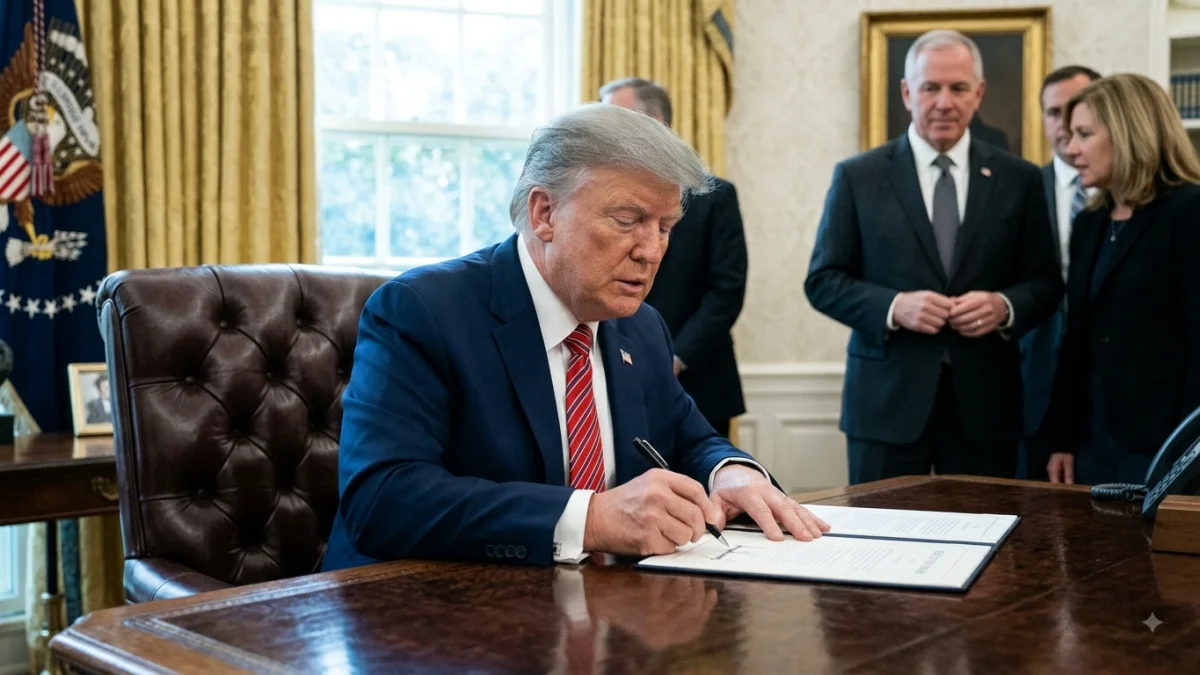
President Donald Trump has described the troop movement as providing additional leverage while his administration pursues diplomatic efforts. On Tuesday, the White House conveyed a 15-point ceasefire proposal to Iran through Pakistani intermediaries. The plan reportedly addressed Iran’s nuclear activities, missile capabilities and security concerns in the Strait of Hormuz.
Iran rejected the proposal on Wednesday, according to Iranian state media and officials. Tehran issued counter-demands that included an immediate end to hostilities, guarantees against future attacks, payment of damages and formal recognition of its sovereignty over the Strait of Hormuz. Iranian Foreign Minister Abbas Araghchi stated that the exchanges did not amount to negotiations and that Iran would only end the conflict on its own terms.
The conflict, which intensified in late February with joint U.S.-Israeli strikes on Iranian targets, has disrupted shipping through the Strait of Hormuz, a vital route for global oil supplies. Disruptions have contributed to volatility in energy markets.
As of Thursday, the paratroopers were preparing for deployment while diplomatic contacts continued through intermediaries. No immediate ground operations into Iran have been authorized, and military activity persisted across the region with no reported ceasefire in effect.