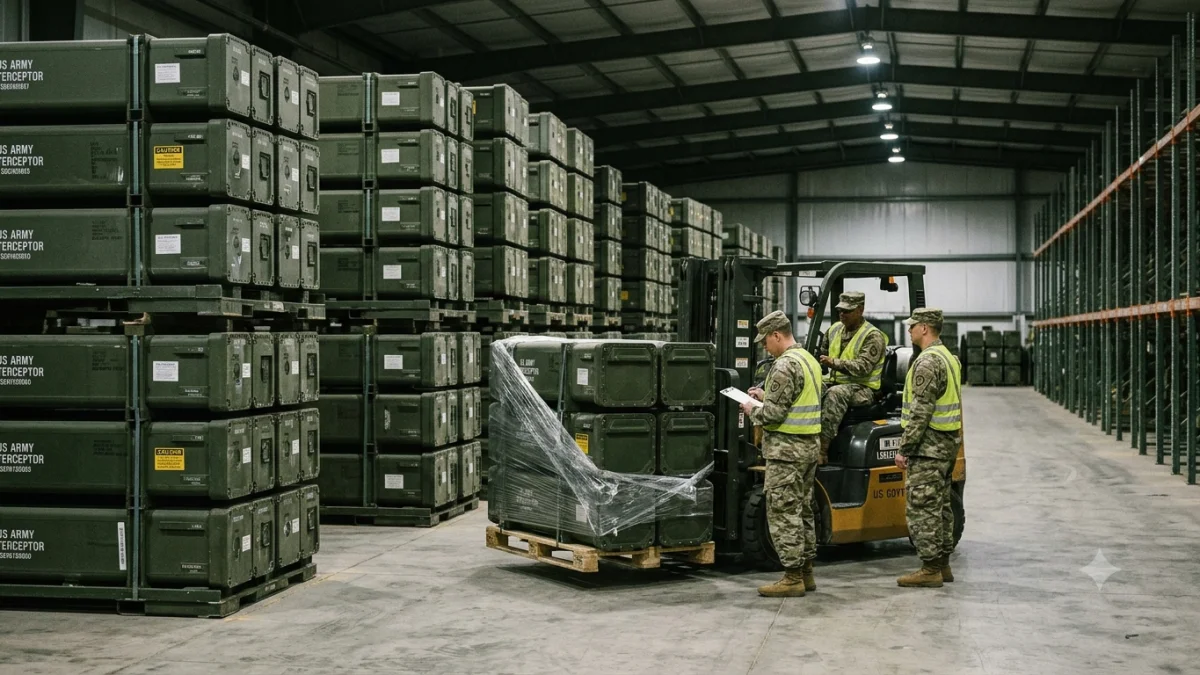


WASHINGTON — The U.S. military has depleted much of its stockpile of advanced missile interceptors during the conflict with Iran, prompting growing concern among senior defense officials about the country's readiness to respond to other potential crises, according to U.S. officials, defense analysts and recent assessments.
Officials familiar with internal Pentagon assessments said inventories of key air-defense interceptors, particularly the Terminal High Altitude Area Defense (THAAD) system, have fallen sharply after months of operations to defend U.S. forces and regional partners against Iranian missile attacks. Multiple officials told Reuters earlier this week that the Army has also expended virtually all of its long-range precision surface-to-surface missiles, underscoring broader strains on U.S. munitions stockpiles.


The Center for Strategic and International Studies (CSIS), a Washington-based think tank, estimated in a recent analysis that U.S. Patriot interceptor inventories have dropped below 1,000 missiles while THAAD stocks have fallen to roughly 250. The organization said renewed fighting could force U.S. commanders to accept greater operational risk by becoming more selective about which incoming threats to intercept.
The Pentagon has not publicly confirmed specific inventory levels, citing operational security, but defense officials have acknowledged that replenishing advanced missile stocks has become a priority. The Defense Department has awarded multibillion-dollar framework agreements to expand production of Patriot PAC-3 and THAAD interceptors, with contracts involving major defense manufacturers intended to strengthen the missile-defense industrial base.
Analysts have cautioned that increasing production will not provide an immediate solution. CSIS estimates that rebuilding inventories of some advanced interceptors could take several years because of manufacturing constraints and the complexity of the systems.
The sustained expenditure of missile interceptors reflects the intensity of operations during the Iran conflict, in which U.S. forces repeatedly defended military installations and regional assets against ballistic missile attacks. Defense specialists say interceptor consumption has outpaced production despite earlier Pentagon efforts to expand manufacturing capacity.
President Donald Trump has maintained that the United States retains sufficient military capabilities to meet its security commitments, while administration officials have emphasized ongoing efforts to replenish critical munitions. Defense analysts, however, say diminished interceptor inventories could complicate U.S. planning should another major contingency arise before production catches up with demand.
Pentagon officials continue to work with defense contractors and Congress on measures aimed at accelerating missile production, while military planners monitor inventory levels as diplomatic efforts related to the Iran conflict continue.