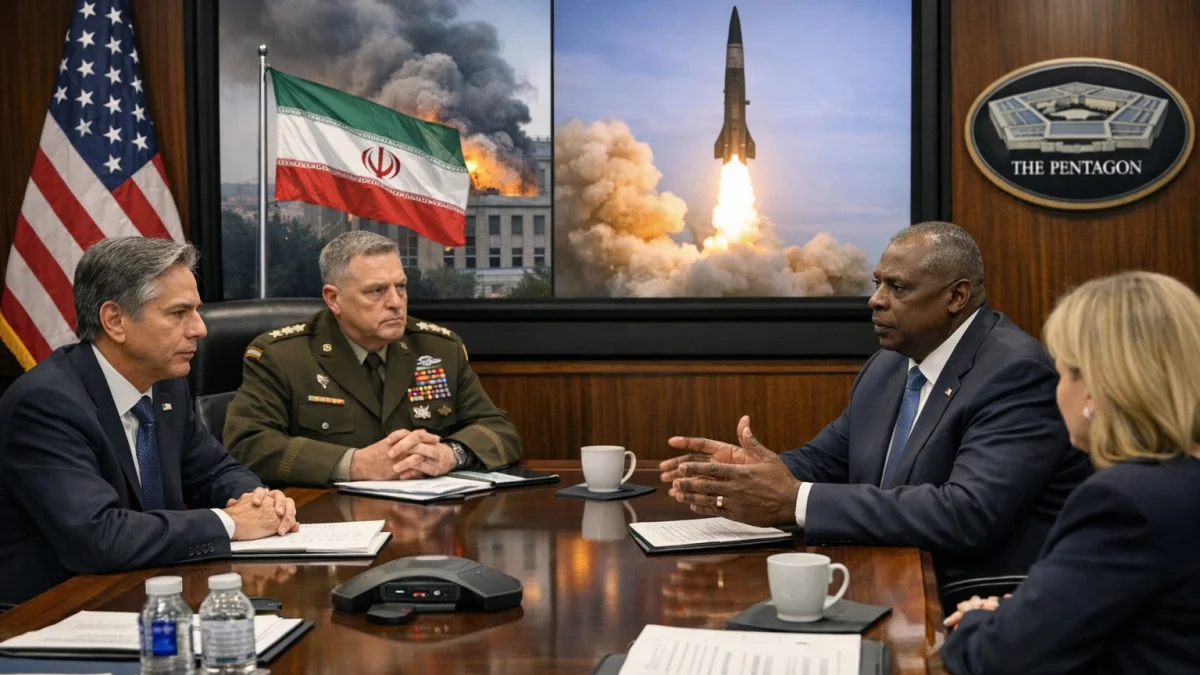


WASHINGTON — Senior U.S. officials held emergency talks on Wednesday as the conflict involving Iran intensified, with diplomatic efforts underway alongside continued military activity, officials familiar with the discussions said.
The meetings, involving top national security and diplomatic officials, come as the confrontation — now in its fifth week — has expanded across parts of the Middle East, raising concerns about regional stability and global energy supplies, according to U.S. officials and media reports.


U.S. Vice President JD Vance has been engaged in back-channel communications with intermediaries, including officials from Pakistan, as recently as Tuesday, a source briefed on the matter told Reuters. The outreach is being conducted under the direction of President Donald Trump and is aimed at exploring conditions for a possible ceasefire, the source said.
Secretary of State Marco Rubio and other senior envoys are also participating in the discussions, officials said, as Washington weighs both diplomatic and military options.
“The United States remains open to a diplomatic resolution, but pressure will continue unless there is meaningful progress,” a source familiar with the talks said, describing the message conveyed to Tehran.
U.S. officials have indicated that any potential ceasefire could be tied to the reopening of the Strait of Hormuz, a critical global shipping route that has been disrupted during the conflict, according to three U.S. officials cited by Axios. The likelihood of an agreement remains uncertain, and discussions are believed to be indirect.
Iranian officials have not publicly confirmed direct negotiations with Washington. Authorities in Tehran have previously signaled that decisions related to the conflict are being handled by senior leadership, while maintaining a cautious stance toward external mediation, according to regional officials and media reports.
The escalation follows weeks of strikes and counterstrikes involving U.S. and allied forces and Iranian targets, as well as retaliatory attacks affecting locations across the Gulf, officials said. The situation has contributed to volatility in global oil markets and disruptions to shipping routes, particularly around the Strait of Hormuz.
New mediators, including Pakistan, Turkey and Egypt, have emerged in recent days, reflecting an expanding diplomatic effort to contain the crisis, according to regional officials.
As of Wednesday, U.S. officials said communication channels with Iran remain open, though details of any potential agreement or timeline for de-escalation remain unclear.