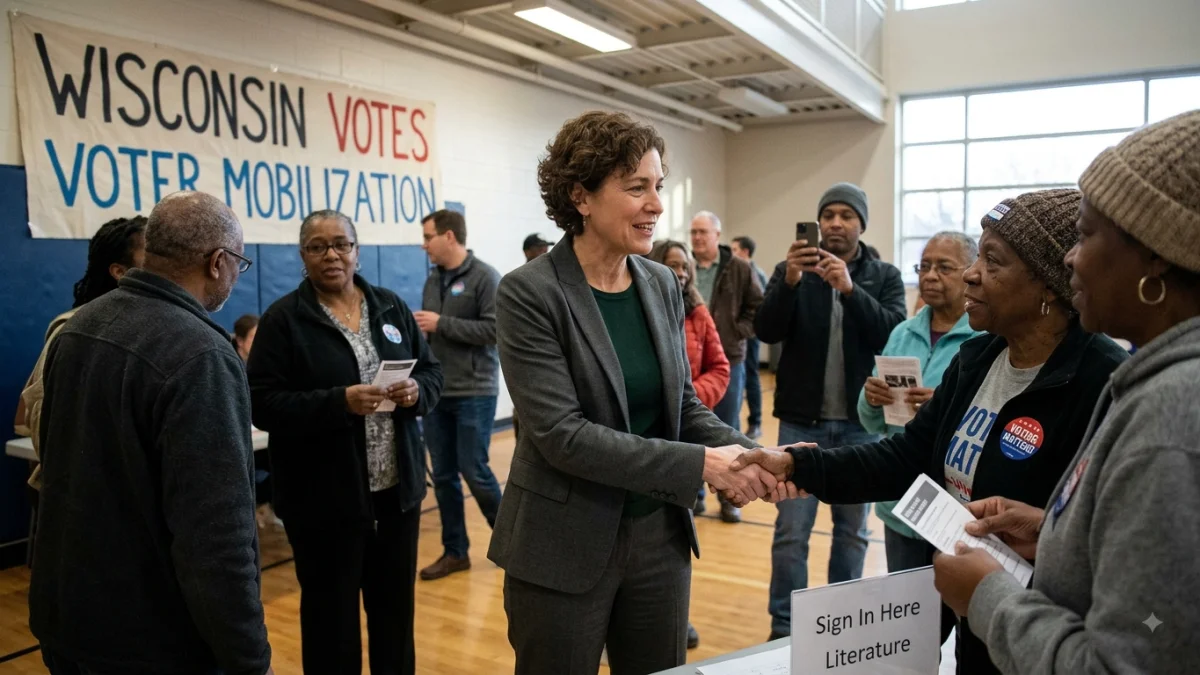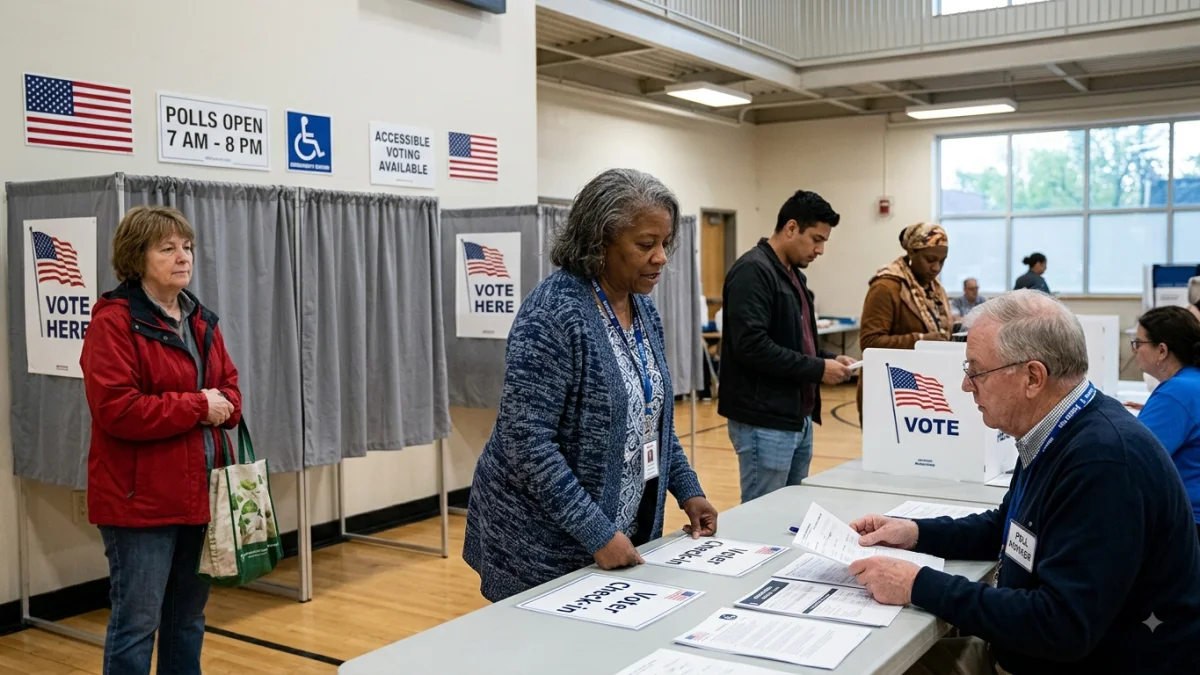


David Crowley’s narrow victory in Wisconsin’s Democratic gubernatorial primary has given the party establishment a win, but it has not resolved the deeper argument over the party’s direction heading into the 2026 midterm elections. Crowley, the Milwaukee County executive, defeated state Rep. Francesca Hong, a democratic socialist, by less than a percentage point, according to results reported after nearly all votes were counted.
The significance of the result lies less in the size of Crowley’s victory than in what it says about the limits of both factions. Hong had led five Marquette University Law School polls before the election and entered the primary as the clearest expression of the progressive wing’s recent momentum. Crowley, by contrast, returned to the race after briefly leaving it and received the late endorsement of Democratic Gov. Tony Evers. His victory demonstrates that establishment support and a candidate emphasizing general-election competitiveness can still prevail, but the extremely narrow margin also shows that progressive voters remain a substantial force inside the party.


That makes Wisconsin different from Michigan, where progressive candidate Abdul El-Sayed recently won the Democratic Senate nomination by roughly a percentage point over Rep. Haley Stevens, a more establishment-backed candidate. Taken together, the contests provide no straightforward national verdict on whether Democratic voters are moving decisively toward the left or toward candidates seen as more moderate. The Wisconsin result instead reinforces the importance of individual candidates, local political conditions and the structure of crowded primaries.
Crowley’s path was itself unusual. He initially left the governor’s race before re-entering after other candidates withdrew, including former Lt. Gov. Mandela Barnes and Lt. Gov. Sara Rodriguez. Evers then backed him, helping consolidate support among Democrats who viewed Crowley as a stronger general-election candidate. Crowley emphasized his record as Milwaukee County executive and his ability to work across party lines, presenting himself as a candidate capable of competing in a closely divided state.
Hong’s performance nevertheless complicates any interpretation of the result as a rejection of progressive politics. She had built significant support around a more confrontational approach to economic inequality, policing and political power, and her campaign reflected a broader movement that has gained ground in several Democratic primaries. Her close finish means that the progressive wing enters the general-election campaign with evidence that it can mobilize a large share of Democratic primary voters even when it does not win the nomination.
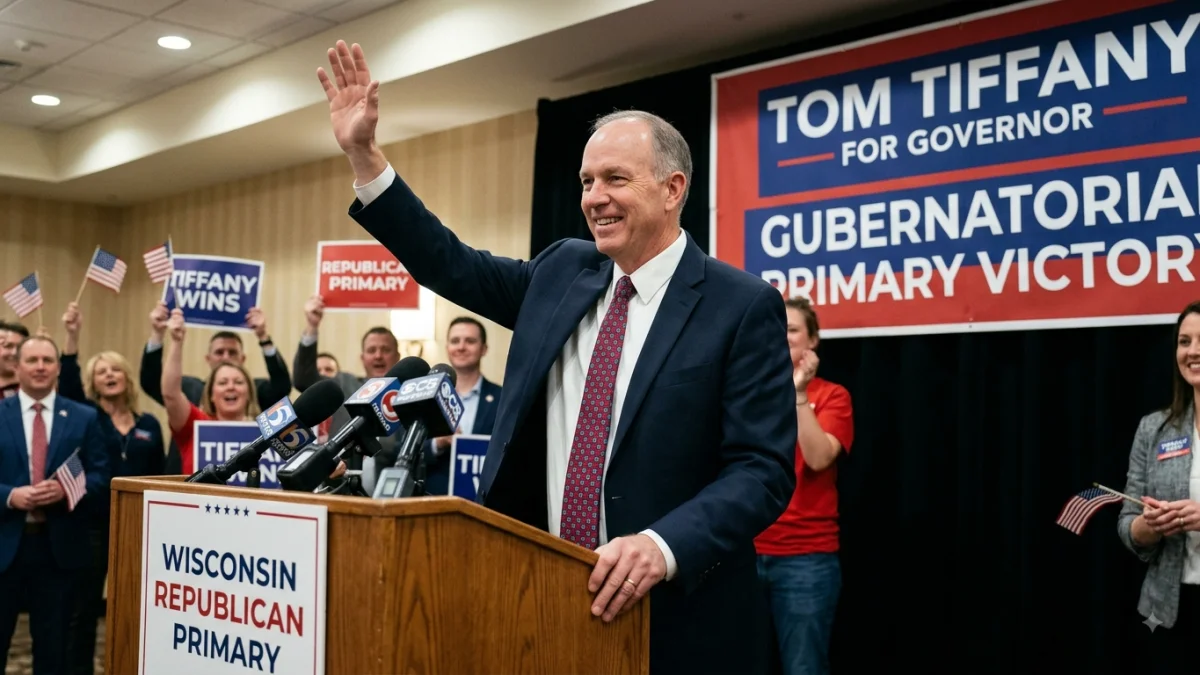
The general election will provide a different test. Crowley will face Republican U.S. Rep. Tom Tiffany, who has been endorsed by President Donald Trump and faced little serious opposition for the Republican nomination. The race is particularly important because Evers is not seeking a third term, making this Wisconsin’s first open-seat gubernatorial contest since 2010.
For Democrats, retaining the governorship is only one part of the 2026 objective. Republicans currently control both chambers of the state Legislature, while Democrats are seeking to regain control of state government. Wisconsin Watch reported that Democrats need to gain two Senate seats to secure a Senate majority and five Assembly seats to control that chamber. The state’s newer legislative maps, adopted after a Wisconsin Supreme Court ruling, have also created a more competitive environment than the maps used for much of the previous decade.
That broader contest limits how much can be inferred from the gubernatorial primary alone. Crowley’s victory may reassure Democrats who prioritize winning competitive statewide elections, but Hong’s near-win demonstrates that calls for a more progressive party remain electorally significant. The primary therefore produced a candidate rather than a definitive ideological settlement.
The confirmed picture as of Aug. 12 is that Crowley is the Democratic nominee and will face Tiffany in November. The remaining question is whether Wisconsin Democrats can translate the coalition behind Crowley into a unified general-election campaign while retaining the progressive voters who nearly propelled Hong to the nomination. The November gubernatorial contest, alongside the legislative races, will provide the more consequential test of whether the party’s competing factions can coexist within an electoral strategy capable of winning a closely divided state.