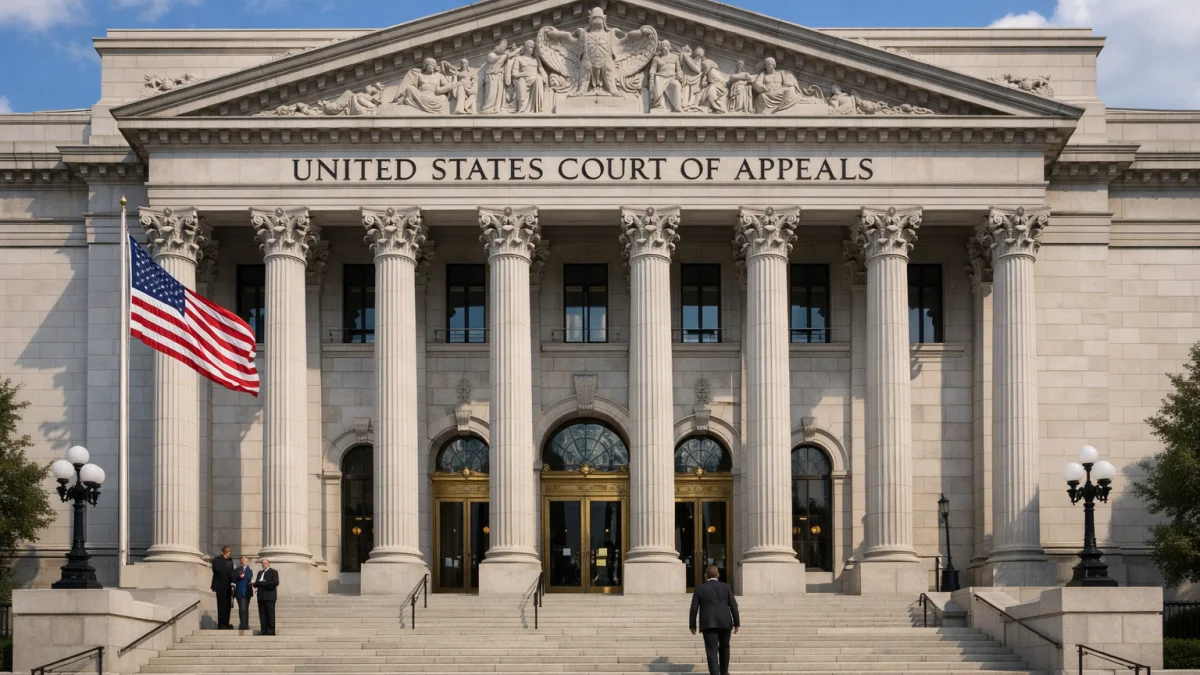


WASHINGTON — A U.S. appeals court on Thursday extended a block on a lower court ruling that had struck down the Trump administration’s 10% global tariff, allowing the duties to remain in place for affected importers while the government’s appeal proceeds.
The U.S. Court of Appeals for the Federal Circuit issued the decision in a case involving three importers that had secured a temporary reprieve from the tariffs imposed under Section 122 of the Trade Act of 1974. The tariffs, enacted in February, apply broadly to imports as the administration seeks to address trade deficits.


The lower court, the U.S. Court of International Trade, had ruled in a 2-1 decision that the administration exceeded its authority in using Section 122 to impose the across-the-board levy. That decision was limited in scope to the specific plaintiffs, which included small businesses and at least one state.
The appeals court’s extension of the stay means the government can continue collecting the tariffs from the three importers during the ongoing legal challenge. Officials have argued that the measure is justified under the statute to respond to persistent U.S. trade imbalances.
“The decision from the Federal Circuit appeals court allows the U.S. to continue collecting tariffs from three importers while the government’s appeal plays out,” according to reporting on the ruling.
The tariffs took effect on Feb. 24 and were originally set to expire on July 24 unless extended by Congress. They represent an effort to use rarely invoked trade authority following earlier court challenges to other tariff actions. Challengers, including Democratic-led states such as Oregon and California as well as businesses, contend that the president’s use of the provision exceeds executive power under current economic conditions.
The case stems from broader disputes over presidential authority to impose tariffs. Earlier this year, the Supreme Court addressed related questions involving the International Emergency Economic Powers Act, ruling that it does not authorize certain tariff actions.
The Federal Circuit’s unsigned opinion stated that the government had made a sufficient showing that it is likely to succeed on the merits, providing a procedural victory for the administration.
Legal experts have noted that the ruling is narrow and does not resolve the underlying merits of the challenge. Further proceedings in the appeals court, and potentially at the Supreme Court, could determine the long-term fate of the tariffs. Details of any potential broader impact on other importers remain unclear.
The administration has defended the tariffs as a necessary tool to protect U.S. economic interests. Opponents argue they burden importers and consumers without proper congressional authorization.
As of Thursday, the tariffs continue to be enforced pending the full resolution of the appeal. No immediate changes to collection practices were announced.