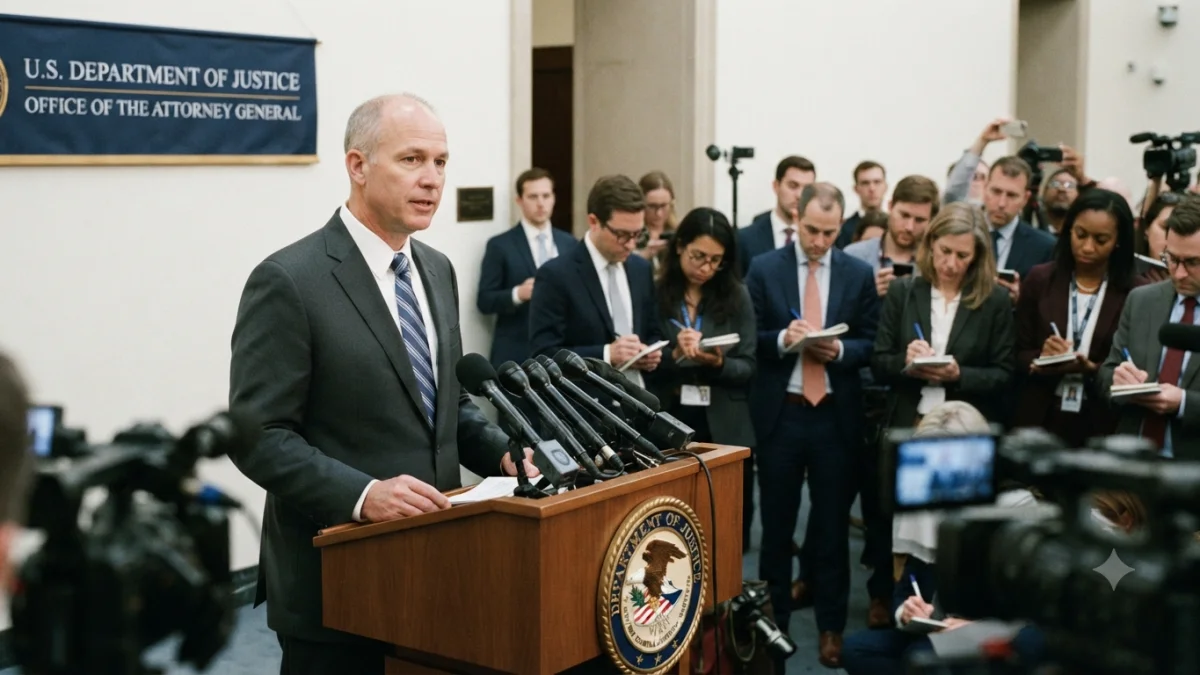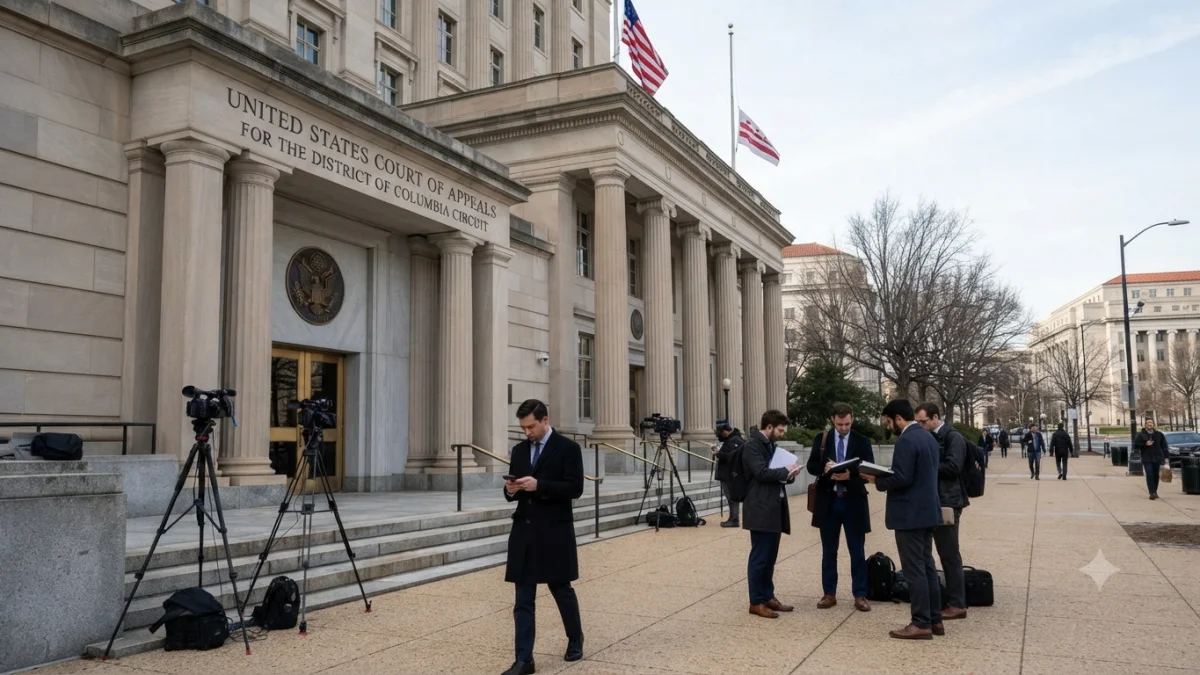


A U.S. appeals court’s decision to halt above-ground construction of President Donald Trump’s proposed White House ballroom has turned a dispute over a building project into a broader test of the constitutional boundaries between the executive and legislative branches.
The 2-1 ruling by the U.S. Court of Appeals for the District of Columbia Circuit on Friday held that Trump cannot proceed with the roughly $400 million, 90,000-square-foot project without congressional authorization. The court upheld a preliminary injunction sought by the National Trust for Historic Preservation, concluding that the president lacked unilateral authority to undertake such a substantial alteration of the White House complex. The court has stayed enforcement of its ruling for two weeks, giving the administration time to seek Supreme Court review.


The immediate consequence is limited but significant: the administration cannot continue the above-ground portion of the ballroom project unless Congress authorizes it. Underground work connected to national security facilities remains treated separately under the lower court’s order. The case therefore does not necessarily determine whether a ballroom can ever be built. Instead, it addresses who has the legal authority to decide whether the project may proceed.
That distinction is central to the separation-of-powers issue. The administration has argued that existing federal statutes give the president sufficient authority to improve the White House and that private donations can finance much of the project. Justice Department lawyer Yaakov Roth told the appeals panel in June that construction had progressed too far to be stopped and argued that courts should not intervene in the project. The administration has also emphasized security infrastructure associated with the development, arguing that stopping construction could create risks for the president and White House personnel.
The appeals court majority rejected the proposition that those considerations allow the executive branch to bypass Congress. Its reasoning focused less on whether a ballroom is desirable and more on institutional authority. The judges wrote that the White House is not presidential property and described each president as a temporary tenant rather than an owner. They said the question of whether such a major addition should be constructed is one for Congress, not unilateral executive action.
That approach builds on the reasoning of U.S. District Judge Richard Leon, who issued the preliminary injunction in March. Leon concluded that the president was the steward rather than the owner of the White House and found that existing statutes did not provide the authority claimed by the administration for the project. He nevertheless allowed construction necessary for White House safety and security to continue, recognizing the administration’s separate national-security concerns.
The legal dispute has therefore evolved as the administration’s construction strategy has advanced. In April, the appeals court temporarily allowed construction to continue while it considered the case and questioned whether the government had adequately demonstrated that halting above-ground work would interfere with security-related construction. By June, the appellate hearing had focused directly on presidential authority, congressional control of federal property and whether courts could halt an executive project after construction had begun.
The administration’s strongest counterargument is that Congress has already provided broad authority through existing laws governing White House improvements and federal property, while the project is largely financed through private contributions. The government has also argued that national-security requirements make the construction unusually difficult to divide into separate components. Those arguments found some support from Judge Neomi Rao, the Trump-appointed member of the panel, who dissented from the majority’s approach. Rao has argued that the government presented credible evidence of security vulnerabilities and that existing law could authorize the project.
The majority’s position, however, places the case within a larger constitutional principle: presidential control of the executive branch does not necessarily confer unrestricted authority over federal property or federal spending. The dispute thus reaches beyond the architectural future of the White House. It raises a recurring question in U.S. government — whether an administration can use existing statutory powers broadly enough to accomplish a major policy objective that Congress has not expressly approved.
The case also illustrates why the timing of judicial review matters. Construction began before the legal dispute was resolved, and the administration argued that stopping the project after substantial work had been completed would create practical and security problems. The preservation group, by contrast, argued that allowing construction to advance could make congressional and judicial review effectively irreversible. The competing positions reflect a longstanding difficulty in public-law litigation: courts must decide not only what the law permits, but whether an injunction can still provide meaningful relief once government action has progressed.
For now, the appeals court’s ruling establishes no permanent prohibition on a White House ballroom. It requires congressional authorization before the administration can continue the disputed above-ground construction. Trump has indicated that he will seek Supreme Court review, while Congress could independently determine whether to authorize the project. The next formally significant developments are therefore the administration’s response during the two-week window, any Supreme Court action and any congressional consideration of authorization. Until one of those occurs, the central legal question remains unresolved at the national level: how far presidential authority extends when an administration seeks to make a major, lasting alteration to property belonging to the federal government.