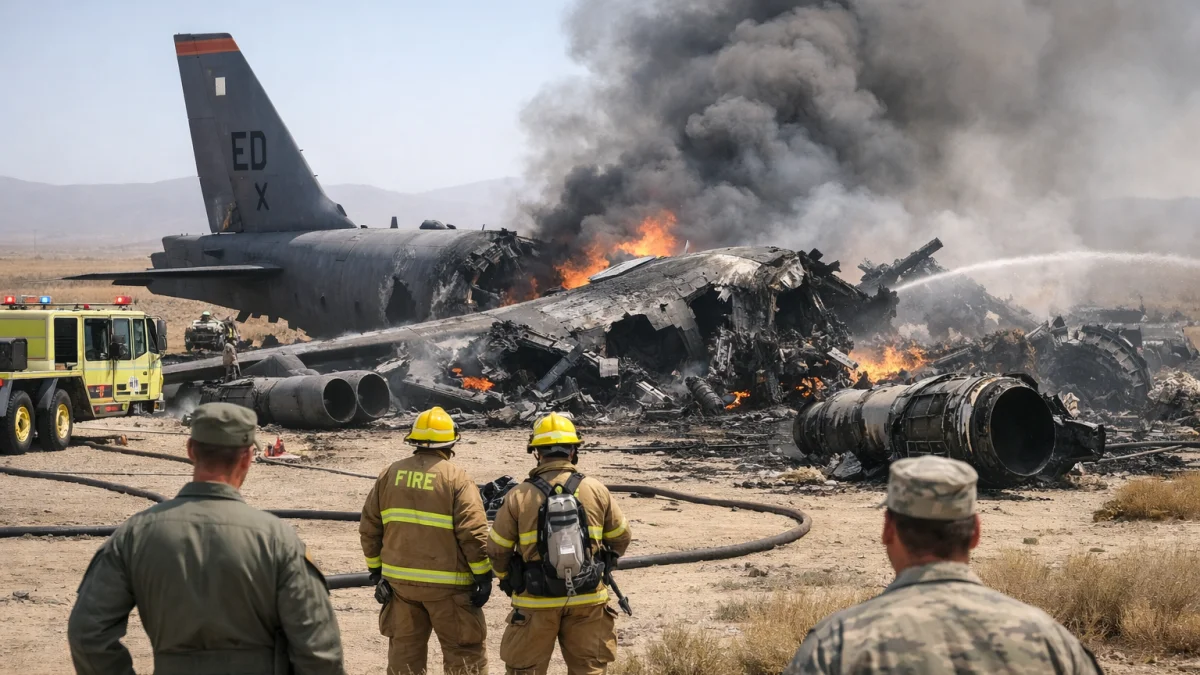


EDWARDS AIR FORCE BASE, Calif. — A U.S. Air Force B-52 Stratofortress bomber crashed shortly after takeoff from Edwards Air Force Base in California on Monday, killing all eight people aboard during what officials described as a routine test mission, military authorities said.
The aircraft went down at approximately 11:20 a.m. local time shortly after departing the Mojave Desert installation, a major center for U.S. military flight testing and aircraft development. Initial statements from the Air Force said the crash appeared unsurvivable, and officials later confirmed that all eight occupants had died. The cause of the accident remains under investigation.


“Today, Edwards Air Force Base experienced a terrible tragedy and we lost eight great Americans,” Col. James Hayes, deputy commander of the 412th Test Wing, told reporters during a briefing following the crash. Hayes said the aircraft was carrying a mixed crew that included military personnel, government employees and civilian contractors.
Boeing confirmed that two of its employees were among those killed. The company said it was cooperating with authorities and providing support to the victims’ families. Officials have not publicly released the identities of all those on board.
According to Air Force officials, the bomber was conducting a test mission related to ongoing modernization efforts for the B-52 fleet. The aircraft was involved in a radar upgrade program designed to extend the operational life of the long-range bomber, which first entered service in the 1950s and remains a key component of the U.S. Air Force’s strategic aviation force.
Video recorded near the base showed a large plume of black smoke rising from the crash site. Emergency crews responded immediately, while authorities closed the airfield and diverted incoming aircraft as recovery operations began. Access restrictions were also imposed across portions of the installation.
The B-52 is one of the oldest aircraft still in active U.S. military service and has participated in operations ranging from the Cold War to more recent missions overseas. The Air Force has been pursuing extensive upgrades, including new radar, engines and avionics, to keep the fleet operational for decades to come.
Military officials said a formal investigation had begun and could take several months to complete. Investigators are examining flight data, wreckage and other evidence to determine what caused the aircraft to crash. As of Wednesday, authorities had not identified a cause, and officials said details surrounding the accident remained under review.