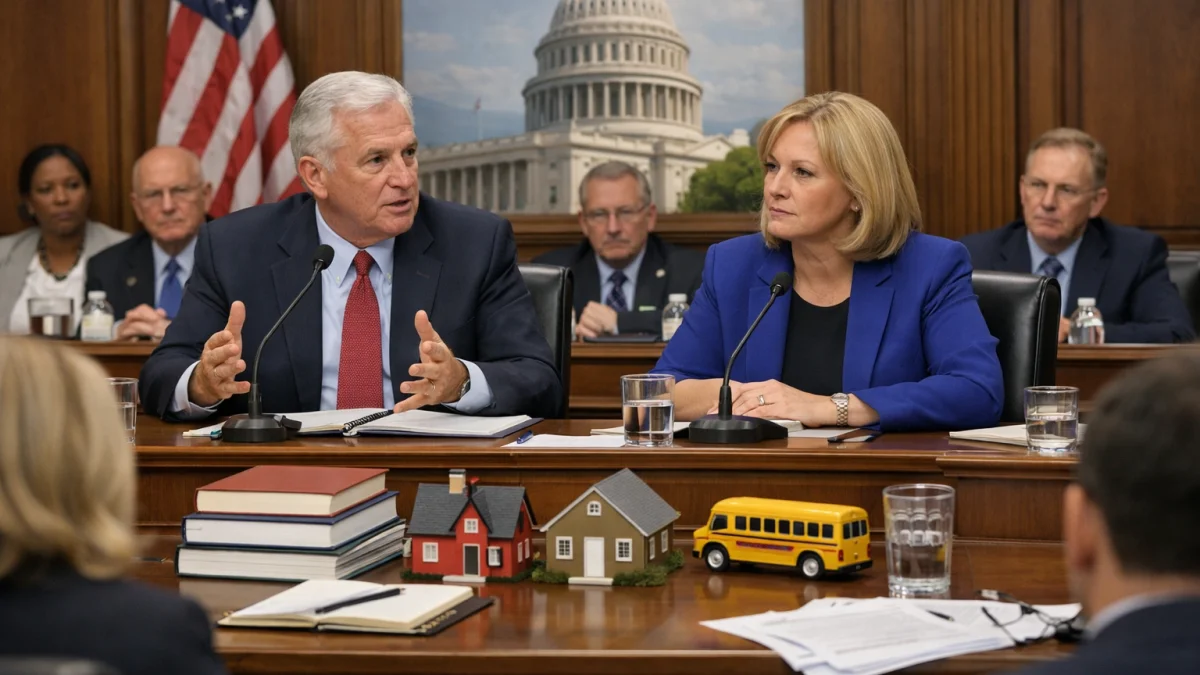


WASHINGTON — A bipartisan effort in the U.S. Congress to advance sweeping housing legislation has also drawn attention to provisions that could affect school funding, prompting education groups and lawmakers to seek clarification as the measure moves through the legislative process.
The legislation, known as the 21st Century ROAD to Housing Act, won broad support in both chambers of Congress this week as lawmakers sought to address housing affordability through regulatory changes, expanded financing tools and measures intended to increase housing supply, according to congressional records and lawmakers involved in the negotiations. Reuters reported that the bill passed with overwhelming bipartisan backing before being sent to President Donald Trump's desk.


While the bill's primary focus is housing policy, some education organizations have raised questions about provisions that could influence funding streams or local government financing connected to schools. Congressional documents describe the legislation as combining numerous housing measures approved by the House and Senate, though details regarding the full effect on education funding remain unclear.
Supporters said the legislation is designed to reduce barriers to housing construction, streamline certain federal reviews and expand access to affordable housing. Senate Banking Committee Chairman Tim Scott and the committee's senior Democrat, Elizabeth Warren, were among the lawmakers who led negotiations on the bipartisan package. Reuters said lawmakers described the measure as one of the most significant federal housing initiatives in decades.
"The American people need more housing, and they need it to be more affordable," Scott said during consideration of the legislation, according to congressional proceedings. Other supporters said the bill reflects months of negotiations between Republicans and Democrats to address rising housing costs.
Some education advocates and local officials said they are reviewing the legislative text to determine whether any provisions could alter funding formulas or affect school-related revenue at the state or local level. Public reporting has not established the scope of any such effects, and details remain unclear.
President Trump canceled a planned signing ceremony earlier this week, saying he wanted Congress to act first on separate voter-identification legislation. Reuters reported that the housing bill nevertheless passed Congress with margins large enough that it could still become law under constitutional procedures if no veto is issued within the required period while Congress remains in session. As of Friday, no further action had been announced.