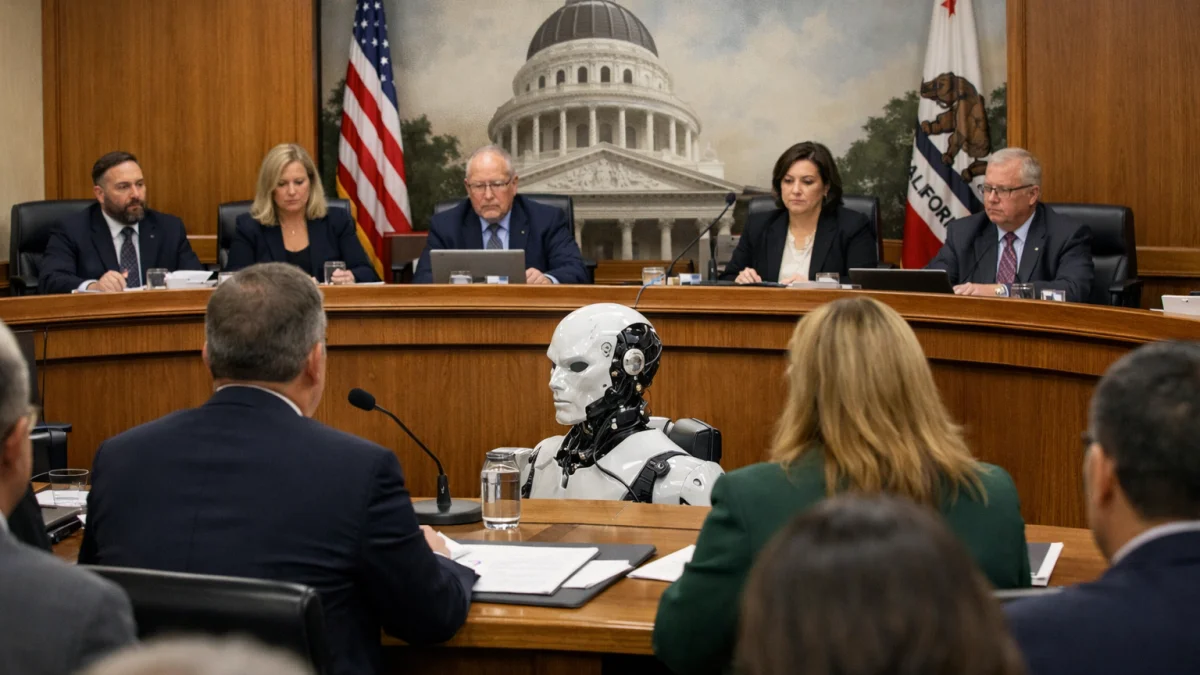


SACRAMENTO — California lawmakers advanced nearly all of approximately 30 artificial intelligence-related bills through their chambers of origin ahead of a key legislative deadline, according to legislative trackers.
The measures cleared second-chamber committees or the originating house prior to the May 29 crossover deadline in the 2025-2026 session, positioning them for further consideration in the opposite chamber. Details on the exact status of individual bills remained fluid as of late May, with lawmakers working toward a scheduled summer adjournment.


The bills address a range of AI issues, including transparency requirements, consumer protections, employment implications, health care applications and safeguards for minors. Some focus on education-related concerns such as student data privacy and the use of AI tools in schools. For instance, legislation has targeted prohibitions on using student data to train AI models and broader protections for data in educational settings.
California has positioned itself as a leading state in AI policy. Earlier actions included the 2025 enactment of measures such as the California AI Transparency Act and frontier model safety provisions. The current package builds on those efforts amid ongoing debates over balancing innovation with risks like data privacy, bias in automated systems and potential harms to children.
Supporters, including privacy advocates and some education groups, argue the bills are needed to protect residents, particularly students and workers, from unintended consequences of rapidly advancing technology. Industry representatives have raised concerns about compliance costs and potential impacts on innovation and economic growth in the state’s tech sector. Specific positions on the latest batch of bills were not uniformly detailed in public reports.
One bill advancing in the process, related to AI in mental health and education contexts, underscores efforts to integrate the technology responsibly. However, comprehensive details on outcomes for all 30 measures were not immediately available.
As of mid-June, the bills that passed the crossover deadline face additional committee reviews, floor votes and potential reconciliation between chambers before any final action by Gov. Gavin Newsom. The legislative session is set to continue into the summer.
"California continues to lead in addressing the challenges and opportunities of AI," a legislative update noted, reflecting the volume of activity. Lawmakers are expected to focus on fiscal and policy implications in the coming weeks.
The developments come as states nationwide introduced more than 1,500 AI-related bills in early 2026, with California accounting for a significant share. No final passage or gubernatorial action on the full set of 30 bills has been reported.