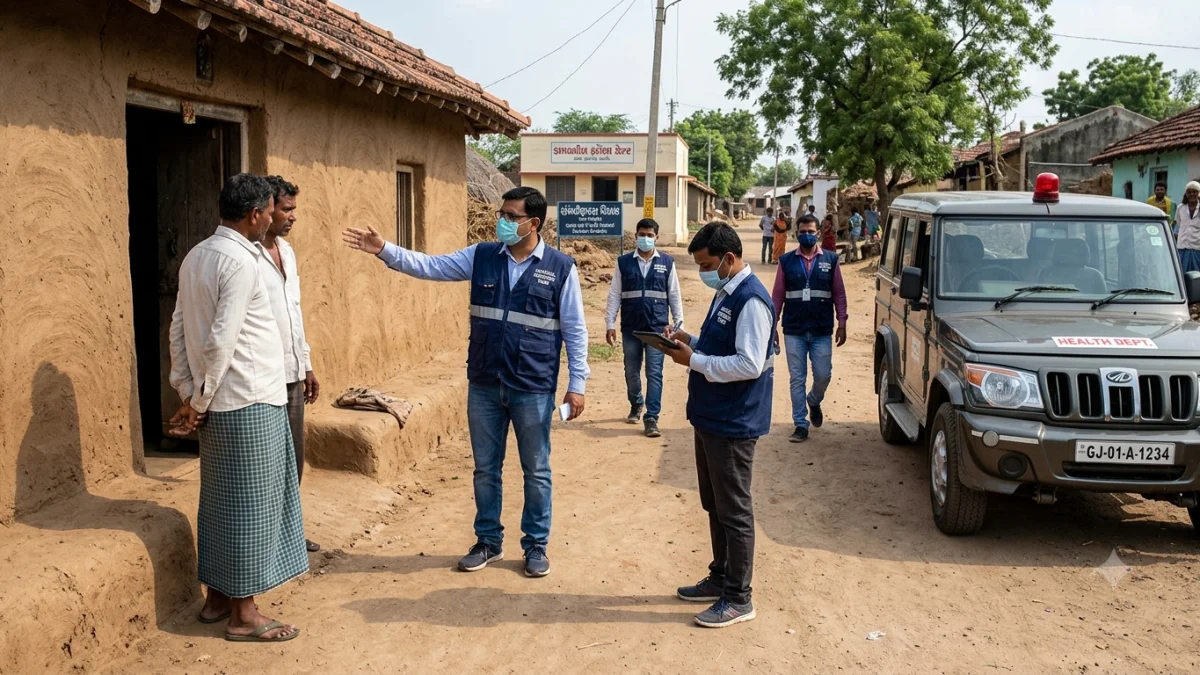


NEW DELHI—India's federal government has deployed a National Joint Outbreak Response Team (NJORT) to support health authorities in Gujarat and neighboring Rajasthan following a rise in Chandipura virus infections that has primarily affected children, the Union Ministry of Health and Family Welfare said.
The ministry said the multidisciplinary team has been tasked with strengthening epidemiological investigations, enhancing disease surveillance, improving laboratory diagnostics and coordinating vector-control measures with state governments as officials seek to contain the outbreak.


According to health authorities, Gujarat has recorded 35 laboratory-confirmed Chandipura virus infections among 184 suspected cases during the current monsoon season. State officials have reported 22 deaths linked to confirmed cases, while additional suspected infections remain under investigation. Most confirmed patients are children younger than 15 years old. Authorities have also identified cases in neighboring Rajasthan.
The Health Ministry said the central response team will work with state surveillance units to identify transmission patterns, strengthen case detection, ensure timely collection and testing of clinical samples, and support public health interventions in affected districts. Officials are also intensifying insect-control activities and public awareness campaigns aimed at reducing exposure to sandflies, the primary vector associated with Chandipura virus transmission.
Chandipura virus is known to cause acute encephalitis syndrome, a severe neurological illness that can progress rapidly, particularly in children. Health authorities say there is no specific antiviral treatment or licensed vaccine, making early diagnosis, supportive medical care and vector control the primary response measures. The virus is not considered to spread through routine person-to-person transmission.
The outbreak has coincided with India's monsoon season, when sandfly activity typically increases in parts of western India. Public health agencies have advised parents and caregivers to seek immediate medical attention for children who develop sudden fever, altered consciousness or seizures, while urging communities to reduce exposure to insect bites through protective clothing, repellents and environmental sanitation.
Indian health authorities have previously responded to Chandipura virus outbreaks, including a major episode in 2024 that prompted the deployment of a similar national outbreak response team. International public health agencies have noted that the disease occurs sporadically in India and has historically affected children during the monsoon months.
The Union Health Ministry said surveillance and field investigations are continuing, with the national response team expected to assist state governments until officials determine that transmission has been brought under control.