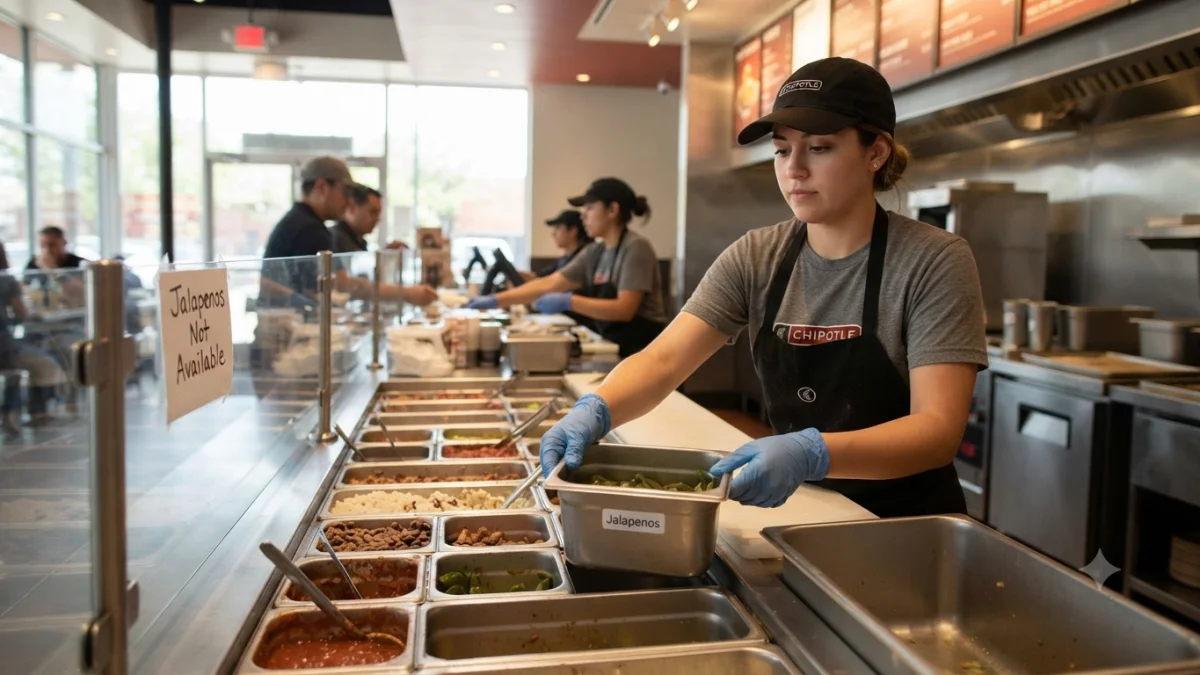


DENVER — Chipotle Mexican Grill and QDOBA have stopped serving affected jalapeño peppers as U.S. health authorities investigate a multistate outbreak of Salmonella Javiana infections linked to peppers imported from Mexico.
The Centers for Disease Control and Prevention said 345 people in 27 states had been infected as of Aug. 4, with 36 hospitalizations and no reported deaths. Illnesses began between June 19 and July 20, according to the agency.


CDC and the U.S. Food and Drug Administration said epidemiological and traceback evidence points to jalapeño peppers from Sinaloa, Mexico, distributed by Coast Citrus Distributors. Investigators are continuing to examine distribution records and other data to determine the full extent of the affected supply.
Among 191 people interviewed by public health officials, 177, or 93%, said they had eaten at a Mexican-style restaurant before becoming ill. The reported meals occurred between June 14 and July 14. Officials identified 27 illness clusters involving Chipotle and QDOBA locations in seven states. Jalapeños were among the ingredients commonly reported by people who became sick, alongside red onion, cilantro and avocado.
The CDC said Chipotle and QDOBA stopped serving the affected jalapeño peppers after being notified of the outbreak. Because the companies removed the implicated product from their restaurants, the CDC and FDA do not consider those establishments to pose an ongoing risk to consumers in connection with the outbreak.
Coast Citrus Distributors has agreed to recall the jalapeños linked to the outbreak. The FDA has advised restaurants, distributors and food-service operators not to sell or serve fresh jalapeños imported from Sinaloa by the distributor. Businesses have also been advised to discard recalled peppers and take steps to clean and sanitize surfaces that may have come into contact with them.
Salmonella infections commonly cause diarrhea, fever and abdominal cramps. Symptoms typically develop within 12 to 72 hours after exposure and generally last four to seven days, according to health authorities. Young children, older adults and people with weakened immune systems face a higher risk of severe illness.
The CDC and FDA, working with state and local health departments, continue to conduct laboratory testing, epidemiological interviews and traceback investigations. Officials have warned that the actual number of infections may be higher because some people recover without seeking medical care or are not tested.