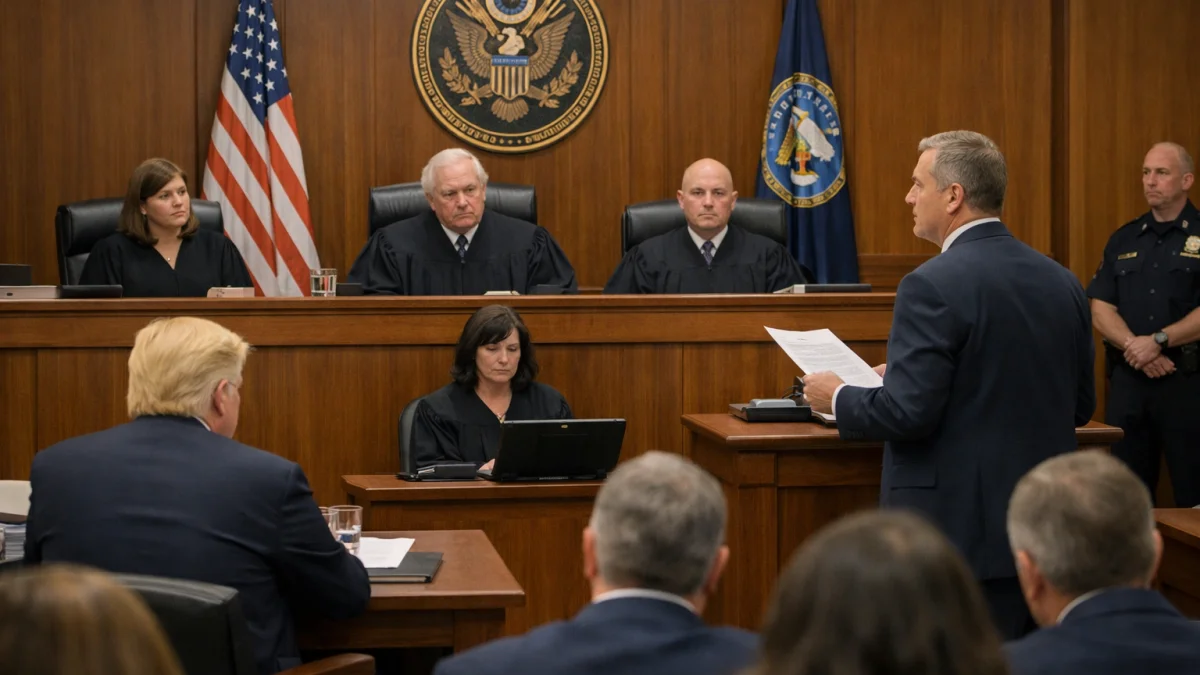


WASHINGTON — A federal appeals court heard arguments on Friday in a legal challenge to the Trump administration’s construction of a $400 million ballroom on the site of the demolished East Wing of the White House.
The U.S. Court of Appeals for the District of Columbia Circuit considered a lawsuit brought by the National Trust for Historic Preservation, which argues that President Donald Trump lacks authority to proceed with the project without explicit congressional approval. A lower court judge had previously ordered construction halted, but the appeals court allowed work to continue pending its decision.


Justice Department attorney Yaakov Roth told the three-judge panel that construction had advanced too far to stop and that courts have no role in weighing the project. The administration has cited national security concerns and argued that Congress implicitly authorized alterations to the White House through prior funding for maintenance.
Lawyers for the preservation group countered that the president has no “free-floating” power to build without appropriations and that proper review processes were not followed. The project involves demolishing the East Wing to create a larger permanent event space, addressing limitations of existing rooms like the East Room, which has a seating capacity of about 200.
The dispute stems from Trump’s push to replace temporary tents used for large events, which he and others described as inadequate. The administration has secured private donations for the project, though details of donor agreements have been subject to separate legal scrutiny.
A spokesperson for the National Trust for Historic Preservation said the ruling could have implications for historic preservation. “No president is legally allowed to tear down portions of the White House without any review whatsoever,” the group has stated in court filings.
The hearing lasted more than two hours, with judges questioning both sides on issues of standing, appropriations and presidential authority. A decision is expected in the coming weeks and could be appealed to the U.S. Supreme Court.
The Trump administration has emphasized the need for enhanced event capabilities at the White House. Details on the current status of construction and any potential modifications remain subject to the court’s forthcoming ruling.
As of Tuesday, both parties awaited the appeals court’s decision while work on the project has continued under the stay. Officials have not provided updated timelines for completion.