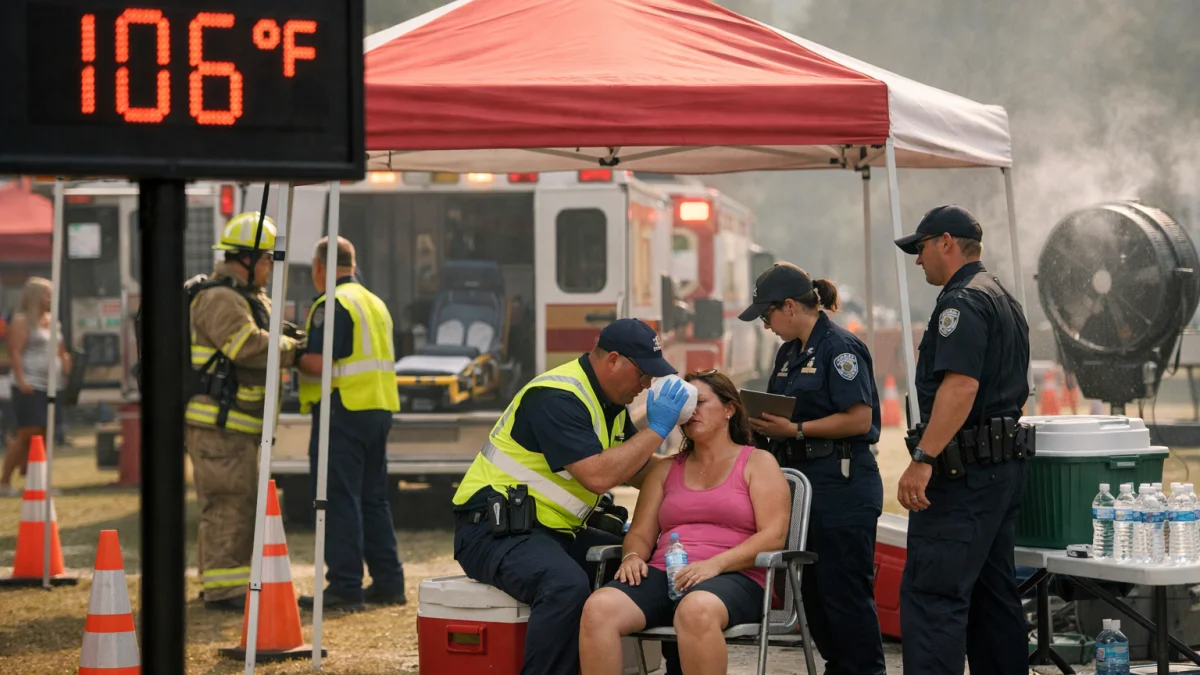


PHOENIX — Weather officials across several U.S. states issued heat advisories and warnings this week as a broad stretch of the country faced unusually high temperatures and humidity, prompting public health alerts and calls for residents to take precautions against heat-related illness.
The National Weather Service (NWS) warned that dangerous heat conditions were expected in parts of the South, Midwest, Northeast and West, with some areas forecast to experience heat index values exceeding 100 degrees Fahrenheit. Advisories and warnings were issued in states including Texas, Oklahoma, Kansas, Arkansas, Mississippi, Tennessee, Illinois, Connecticut, California, Washington and Oregon, according to NWS offices and local forecasts.


In the central United States, forecasters said a combination of high temperatures and humidity would increase the risk of heat exhaustion and heat stroke, particularly for people working outdoors, older adults and those without access to air conditioning. Several advisories warned of heat index values reaching or exceeding levels commonly associated with dangerous conditions.
“Hot temperatures and high humidity may cause heat illnesses,” the National Weather Service said in multiple advisory statements issued during the week. Officials urged residents to stay hydrated, limit strenuous outdoor activity during the hottest hours of the day and check on vulnerable neighbors and family members.
In California, an extreme heat warning was issued for parts of the northern Sacramento Valley and surrounding areas, where temperatures were expected to climb above 100 degrees Fahrenheit. Forecasters said some locations could approach 110 degrees, creating what the NWS described as a major heat risk.
The Pacific Northwest also faced elevated temperatures. The NWS issued heat advisories and watches for portions of Washington and Oregon, warning that prolonged daytime heat and warm overnight temperatures could increase health risks, especially for people without adequate cooling.
The heat coincided with severe weather threats in some regions. Forecasters in parts of the Midwest and central Plains warned that thunderstorms, strong winds and localized flooding could develop alongside the hot and humid conditions.
Public health agencies and emergency management officials said cooling centers and other resources were being made available in some communities. Utility companies in several states also said they were monitoring electricity demand as air-conditioning use increased during the heat wave.
As of Saturday, advisories and warnings remained in effect for parts of multiple states, while federal forecasters indicated that above-normal temperatures could persist in portions of the western and southeastern United States into the coming week.