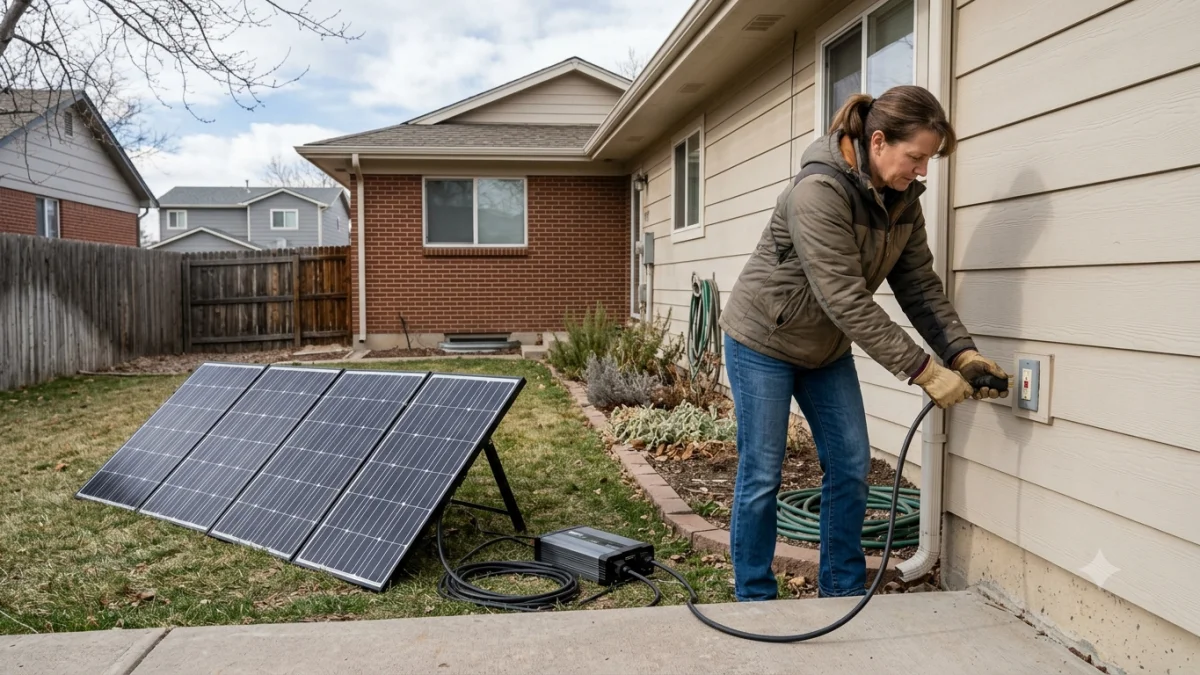


WASHINGTON — Plug-in solar panel systems that connect directly to standard household electrical outlets are now authorized under new laws in 10 U.S. states, marking a significant expansion of a technology that supporters say could make small-scale solar power more accessible to homeowners and renters.
New Jersey became the 10th state to approve dedicated plug-in solar legislation after its legislature passed the Garden State Balcony Solar Act in late June, joining Utah, Colorado, Connecticut, Maine, Maryland, New Hampshire, Vermont and Virginia, according to legislative records and industry trackers. The measure is expected to take effect after being signed into law under the timetable set out in the legislation.


Often referred to as "balcony solar" in Europe, plug-in systems typically consist of one or two photovoltaic panels connected to a microinverter that feeds electricity into a home's existing electrical circuit through a standard outlet. Most state laws cap system capacity at around 1,200 watts, although Colorado permits larger systems under specified conditions.
Supporters say the technology lowers the cost and complexity of adopting solar energy because many systems do not require rooftop installation, extensive wiring or professional electricians. The devices have gained popularity among apartment residents, renters and homeowners unable or unwilling to install conventional rooftop arrays.
Industry groups and clean-energy advocates say certified systems incorporate safety features that automatically stop exporting electricity during power outages, addressing concerns about protecting utility workers and maintaining grid safety. Recent legislation generally requires equipment meeting recognized safety standards while establishing simplified interconnection rules.
Utilities and regulators have approached the technology cautiously, citing the need to ensure compatibility with local electrical codes and distribution networks. As a result, requirements continue to vary by state, and several laws will not become fully effective until later this year or in 2027. Consumers are advised to verify applicable state rules and utility requirements before installing a system.
Legislative momentum has continued beyond the first 10 states. Bills or proposals are under consideration in numerous other states, including California, Massachusetts, New York and Pennsylvania, while additional legislatures have introduced measures aimed at creating legal frameworks for plug-in solar systems.
The expansion follows years of widespread adoption in several European countries, where small plug-in solar systems have become a lower-cost entry point for residential renewable energy. U.S. lawmakers and regulators are continuing to evaluate standards governing equipment certification, consumer protections and utility interconnection as additional states consider similar legislation.