

WASHINGTON — The U.S. Department of Homeland Security is planning to provide local law enforcement agencies with facial recognition technology currently used by federal immigration authorities, according to internal agency documents reported this month, a move that would expand the use of biometric identification tools in immigration enforcement.
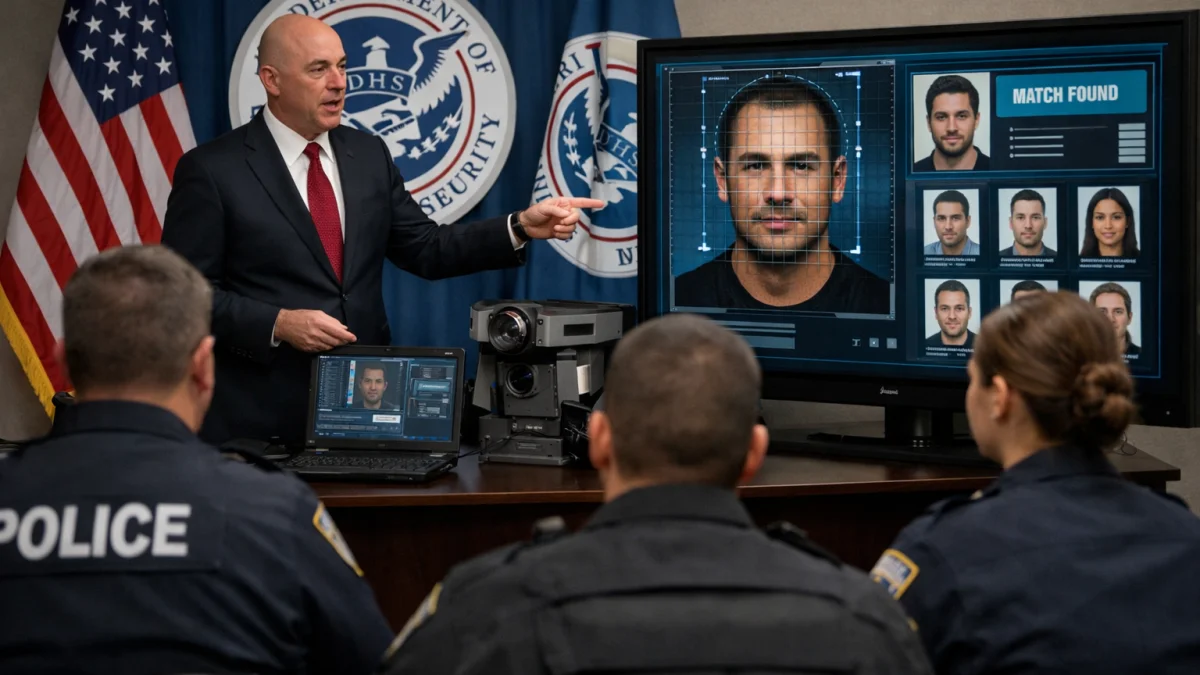
The plan involves a mobile application designed for state and local officers participating in federal immigration enforcement programs. According to documents reviewed by NPR and other media outlets, the technology would allow officers to photograph individuals during encounters and compare those images against federal databases containing hundreds of millions of records. The system would then provide information that could assist officers in determining a person's immigration status.


The existence of the plan was first reported by the news site 404 Media and later confirmed through publicly available Department of Homeland Security documentation. The records indicate that the technology is linked to systems already used by federal agencies including U.S. Immigration and Customs Enforcement (ICE) and U.S. Customs and Border Protection.
According to the documents, the facial recognition capability would be made available to law enforcement agencies that have entered into agreements with ICE to assist with immigration enforcement. One document cited by media reports described access for potentially more than 1,000 participating agencies, although DHS has not publicly announced a nationwide rollout schedule.
Federal officials have argued that biometric technology can improve identification efforts and assist law enforcement operations. Similar facial recognition systems are already used by federal agencies in immigration and border-security activities, according to government records and previous public disclosures.
Civil liberties advocates and privacy organizations have raised concerns about the proposed expansion. Critics told NPR that extending facial recognition capabilities to local police could broaden government surveillance and increase the risk of misidentification. Some privacy advocates have also questioned the scope of federal databases accessible through such systems and the safeguards governing their use.
“Police use the app to scan the faces of people they stop,” NPR reported, citing the DHS document, adding that the images could be checked against a large collection of government records.
The proposal comes as facial recognition technology continues to face scrutiny in the United States and abroad. Supporters say the tools can assist in identifying suspects and enforcing laws, while critics have warned about privacy implications and potential errors.
As of Sunday, DHS had not publicly released additional details regarding implementation timelines, oversight measures, or the number of local agencies expected to receive the technology. Details of any final deployment plan remain unclear.