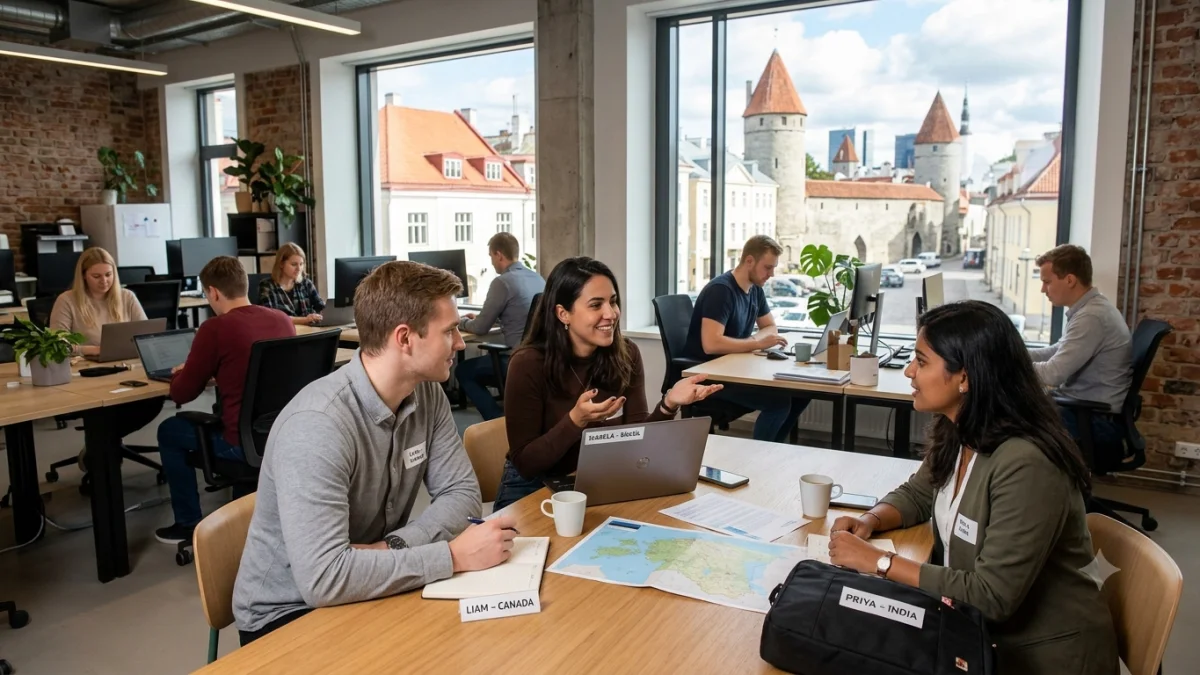


Tallinn's medieval streets and glass-fronted technology offices have long symbolized Estonia's effort to bridge history and digital innovation. Increasingly, they are also where newcomers arrive to test whether a country known for online public services, entrepreneurship and compact urban life can become home.
That appeal has helped place Estonia at the top of a new global ranking of attractive destinations for relocating expatriates, according to a 2026 study highlighted by international media. The recognition adds to the Baltic nation's long-standing reputation as a digital society, but it also raises questions about what makes a country genuinely welcoming once the paperwork is complete and daily life begins.


For many people considering an international move, practical concerns outweigh postcard images. Reliable public services, safety, opportunities for skilled work, and confidence that government systems function efficiently often rank alongside housing costs and quality of life. Estonia has spent more than two decades building its international identity around those strengths through extensive digital government services and policies designed to simplify interactions between residents and the state.
The country's reputation has grown well beyond Europe's technology sector. Estonia's e-government infrastructure allows residents to complete many official procedures online, while its startup ecosystem has attracted entrepreneurs, software developers and remote workers. Those features have become central to its image as global mobility expands and more professionals seek destinations that support flexible work arrangements.
Yet relocation decisions rarely depend on rankings alone.
Online discussions among prospective expatriates illustrate both the enthusiasm and the caution surrounding a move to Estonia. Recent conversations include professionals weighing job offers in Tallinn against opportunities in larger European cities. Contributors point to lower living costs than some Western European technology hubs and praise Estonia's innovation ecosystem, while others note that its labor market is comparatively small and that changing jobs may be more difficult than in larger economies.
Others describe first impressions that extend beyond statistics. One recent newcomer to Tallinn wrote that the city's public transport, cycling infrastructure, parks and air quality stood out during the first week after arrival. Such observations remain individual experiences rather than representative evidence, but they reflect the everyday details that often shape whether relocation feels successful after the initial excitement fades.
Not every assessment is equally positive. Foreign residents and prospective migrants have also raised concerns about housing affordability, food prices and the challenge of building social networks in a country where the local language is spoken by relatively few people worldwide. Those concerns echo broader findings from international surveys showing that practical integration and community connections can matter as much as economic opportunity when people evaluate life abroad.
The broader global competition for internationally mobile workers has intensified in recent years. Governments increasingly view skilled migrants, entrepreneurs and remote workers as contributors to innovation, investment and economic growth. Countries across Europe and beyond have introduced residency pathways, digital nomad programs and policies intended to attract foreign talent while responding to demographic pressures and labor shortages.
Estonia's strategy has developed alongside those trends rather than apart from them. Official tourism and development plans emphasize sustainable growth, digital connectivity and year-round attractiveness, while policymakers continue promoting the country's reputation for efficient public administration and technological innovation.
International rankings themselves vary according to methodology. Some emphasize quality of life, healthcare and affordability, while others focus on economic opportunity, openness or residents' experiences after relocating. Surveys such as InterNations' Expat Insider rely on responses from thousands of expatriates already living abroad, while other indices combine publicly available economic and social indicators. Experts routinely note that no single ranking can capture the diversity of individual priorities, family situations or immigration pathways.
That distinction matters because relocation is ultimately experienced one household at a time. A software engineer seeking a digitally advanced environment may value Estonia differently from a retiree prioritizing climate, or from a family focused on international schools and healthcare. What appears highly attractive on paper may feel different once newcomers confront language barriers, housing markets or the realities of building friendships in a new country.
Even so, Estonia's growing visibility reflects a broader shift in how countries compete for talent. Success increasingly depends not only on wages or tax policy but also on whether newcomers believe they can navigate public institutions, feel secure and establish lasting roots.
For Estonia, topping another international ranking may reinforce the country's carefully cultivated global image. Whether that reputation continues to grow will depend less on headline positions than on the experiences of the people who choose to make one of Europe's smallest countries their new home.