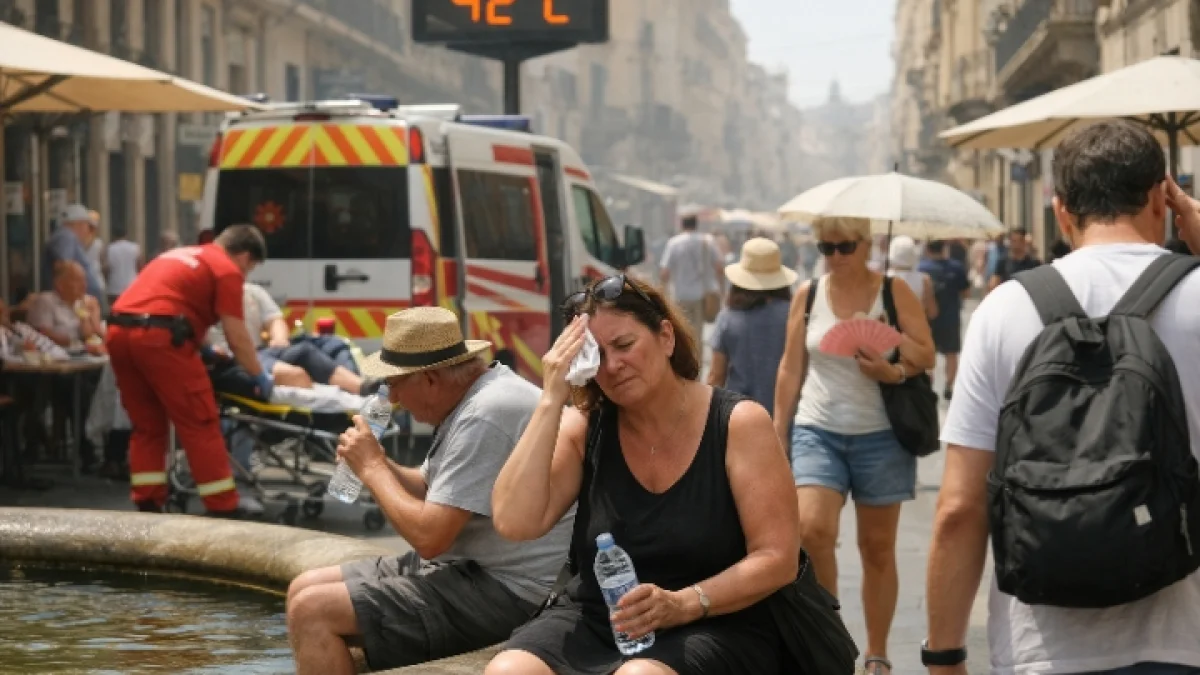


Residents across Europe have spent much of the summer adapting daily routines to an unfamiliar reality: opening windows only after dark, checking on elderly neighbors before afternoon temperatures peak, and seeking refuge in public buildings converted into cooling centers as a record-breaking heat wave has left communities confronting a mounting human toll.
The adjustments have become a defining feature of life across large parts of the continent after extreme temperatures in late June broke national records, strained hospitals and emergency services, and contributed to thousands of excess deaths, according to health authorities and mortality monitoring agencies. While wildfires, drought and severe storms have since dominated headlines in some regions, public health experts say the lasting impact of the heat has continued to unfold in homes, care facilities and hospitals long after temperatures eased.


The scale of the mortality has underscored how extreme heat, often described as a "silent killer," affects communities in ways that are less immediately visible than floods or wildfires. Official data published through EuroMOMO, a mortality monitoring network supported by the European Centre for Disease Prevention and Control and the World Health Organization, showed more than 10,000 excess deaths were recorded across participating European countries during the late-June heat wave, with more than 9,000 of those among people aged 65 and older. Researchers and health officials cautioned that excess mortality measures overall deaths above expected levels and does not assign every case directly to heat, but said the timing strongly pointed to extreme temperatures as the principal driver.
For many families, the statistics have translated into personal loss.
French public health authorities reported that most heat-related fatalities identified during the episode involved older adults, warning that additional deaths in residential care facilities and private homes would likely emerge as reporting was completed. Similar patterns appeared elsewhere, including the Netherlands, where authorities estimated roughly 480 excess deaths during the hottest week, most involving people aged 80 and older and concentrated in regions where temperatures were highest.
Health specialists say these outcomes reflect well-established vulnerabilities. Extreme heat can trigger heat stroke while worsening cardiovascular and respiratory illnesses, particularly among older people and those with chronic medical conditions. Unlike disasters that cause immediate trauma, heat-related illnesses often develop behind closed doors, making them harder to detect until emergency medical care is required.
Lasse Vestergaard, chief physician at Denmark's Statens Serum Institut, which hosts EuroMOMO, told Reuters that such a high level of excess mortality at that time of year was unusual and difficult to explain by anything other than the extreme heat.
Across the continent, local governments have responded by expanding measures that only a generation ago were rarely considered necessary in northern Europe. Municipal authorities opened cooling shelters, extended hours at public swimming facilities, issued repeated public health alerts and encouraged residents to check on isolated neighbors. Hospitals adjusted staffing while emergency responders prepared for increased calls involving dehydration, heat exhaustion and respiratory distress.
The heat also exposed how infrastructure built for milder summers is struggling under more frequent extremes. Roads buckled under prolonged high temperatures, rail services faced disruptions, schools altered schedules or closed temporarily, and power systems came under pressure as electricity demand rose while drought affected some forms of energy production.
Even after temperatures moderated in parts of Western Europe, communities found little opportunity to recover. Dry vegetation left by weeks of exceptional heat fueled wildfires in Spain, France and Greece, while violent thunderstorms that followed claimed additional lives through falling trees, lightning and flash flooding. Scientists and emergency planners have increasingly emphasized that heat waves can trigger cascading hazards rather than isolated emergencies.
Meteorologists and climate scientists have linked the exceptional event to broader warming trends. Researchers said the late-June heat wave would have been virtually impossible without human-caused climate change, which is increasing both the frequency and intensity of extreme heat events. Europe is warming faster than the global average, making adaptation an increasingly urgent public health priority.
The experience has also prompted renewed discussion about how European cities should prepare for hotter summers. Public health experts have urged governments to move beyond treating heat as an occasional weather event and instead plan for it as a recurring health emergency. That includes expanding urban green spaces, improving building insulation and ventilation, strengthening early warning systems, and ensuring vulnerable residents receive targeted assistance before temperatures become dangerous.
The challenge is particularly acute for countries whose housing stock and public infrastructure were designed for temperate climates rather than prolonged periods above 40 degrees Celsius. While air conditioning remains less common than in many other parts of the world, repeated episodes of extreme heat have intensified debate over how communities can adapt without creating additional energy and environmental pressures.
As another period of high temperatures settled over parts of southern Europe in mid-July, residents again adjusted daily schedules, seeking shade during the hottest hours and following health guidance that has become increasingly familiar. For many communities, the routines now reflect not only a response to a single record-breaking summer but a recognition that extreme heat is becoming a recurring feature of European life, with consequences measured not only in temperature records but also in the health and resilience of the people living through them.