

BATON ROUGE, Louisiana — Louisiana health officials are warning residents and visitors about an increase in infections from Vibrio vulnificus, a potentially fatal bacterium found in warm coastal and brackish waters, after the state recorded nine cases and five deaths so far in 2026.
The Louisiana Department of Health said the number of cases is above the average recorded during the comparable period over the past decade, when the state reported about seven infections and one death annually. All nine people infected this year required hospitalization, according to health officials.


Vibrio vulnificus occurs naturally in coastal waters and becomes more prevalent as water temperatures rise, particularly from May through October, according to the U.S. Centers for Disease Control and Prevention. The bacterium can enter the body through cuts or other open wounds exposed to saltwater or brackish water. People can also become infected by eating raw or undercooked shellfish, particularly oysters.
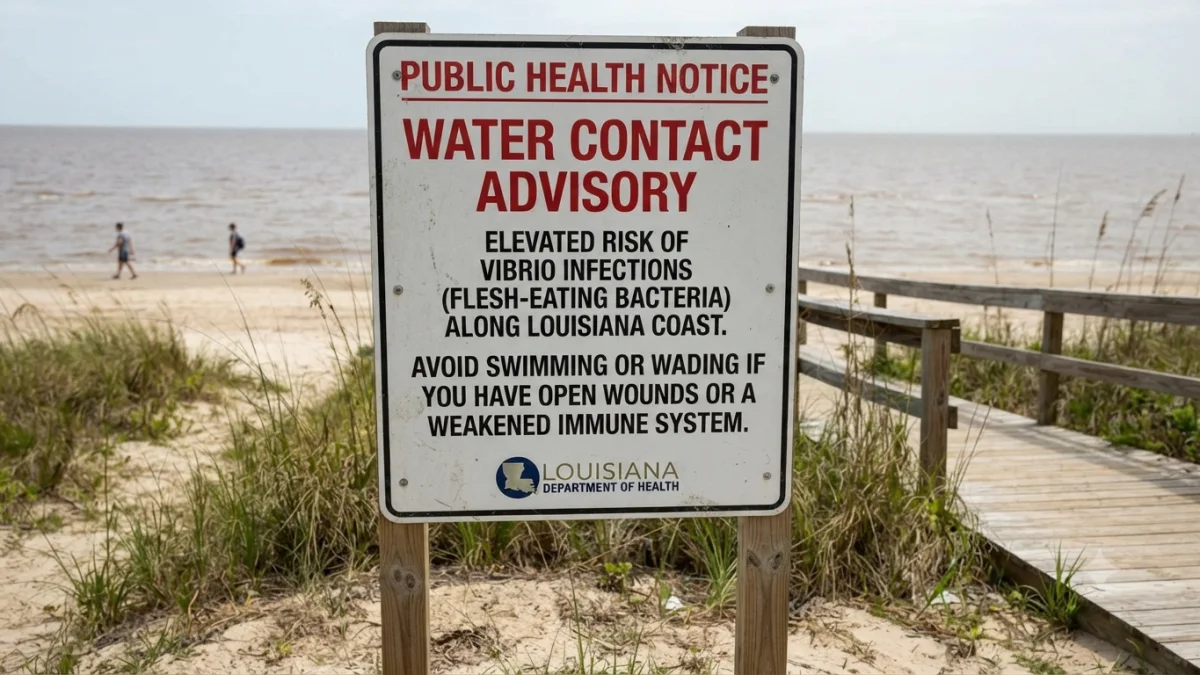
The infection is sometimes described in news reports as “flesh-eating bacteria” because some V. vulnificus infections can cause necrotizing fasciitis, a severe condition in which tissue around a wound dies. The CDC says other bacteria, including group A Streptococcus, are more common causes of necrotizing fasciitis.
V. vulnificus infections can progress rapidly. The CDC says severe cases may cause bloodstream infections, dangerously low blood pressure and blistering skin lesions, and some patients require intensive care or amputation. About one in five people with V. vulnificus infection die, according to the agency.
People with underlying medical conditions, particularly liver disease or conditions that weaken the immune system, face a higher risk of severe illness. Health officials advise people with open wounds to avoid contact with coastal or brackish water and to wash wounds thoroughly with soap and water if exposure occurs. The CDC also recommends avoiding raw or undercooked shellfish.
The Louisiana health department continues to maintain information and safety guidance for Vibrio vulnificus as part of its shellfish program.
Health officials have urged anyone who develops symptoms such as fever, redness, swelling or increasing pain after exposure to coastal water to seek medical care promptly, as severe V. vulnificus infections can worsen quickly.