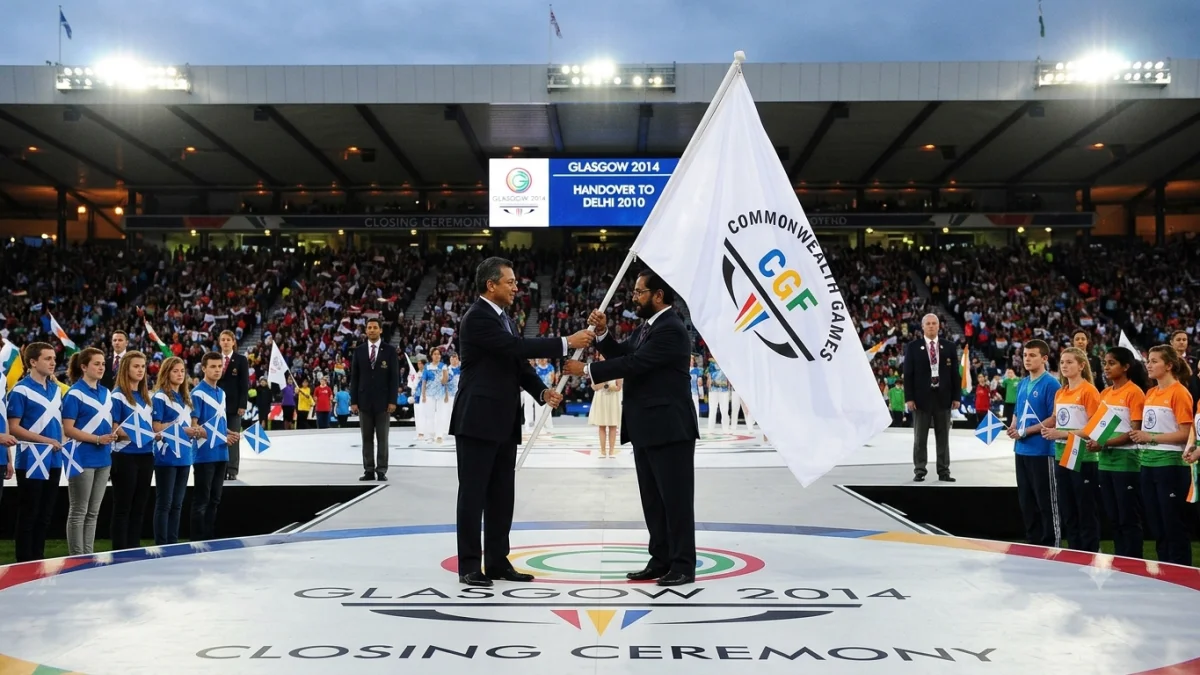


As the final moments of the 2026 Commonwealth Games unfolded inside Glasgow's OVO Hydro, the ceremonial passing of the Commonwealth Games flag marked more than the close of an 11-day sporting festival. It signaled a transfer of responsibility — and expectation — from a Scottish city that stepped in to rescue the event to India, where Ahmedabad is due to host the centenary Commonwealth Games in 2030.
The handover came after one of the most unusual editions in the competition's history. Glasgow accepted hosting duties after Australia's Victoria state withdrew because of escalating costs, and organizers responded by staging a streamlined Games featuring only 10 sports. Even so, more than 434,000 spectators attended across the competition, according to organizers, underscoring that the event continued to attract athletes and supporters despite questions about its long-term future.


Against that backdrop, the closing ceremony carried unusual significance. It was not simply a farewell to Glasgow but an opportunity to reassure Commonwealth nations that the Games retain a future.
India's delegation formally accepted that responsibility as Olympic javelin champion Neeraj Chopra and Indian Olympic Association president P.T. Usha received the Commonwealth Games flag during the ceremony, launching the countdown to Ahmedabad 2030.
The symbolic exchange connected two host cities with sharply different circumstances. Glasgow's organizers emphasized reuse, cost control and flexibility after stepping in on short notice. India now faces the task of delivering a larger centenary edition that Commonwealth Sport leaders say is expected to feature between 15 and 17 sports.
For athletes gathered on the arena floor, the ceremony followed nearly two weeks of competition that produced stories extending beyond medal tables. Rwanda celebrated its first Commonwealth Games medal, while the program again integrated para sport alongside able-bodied competition, developments that Commonwealth Sport officials cited as evidence of the event's continuing evolution.
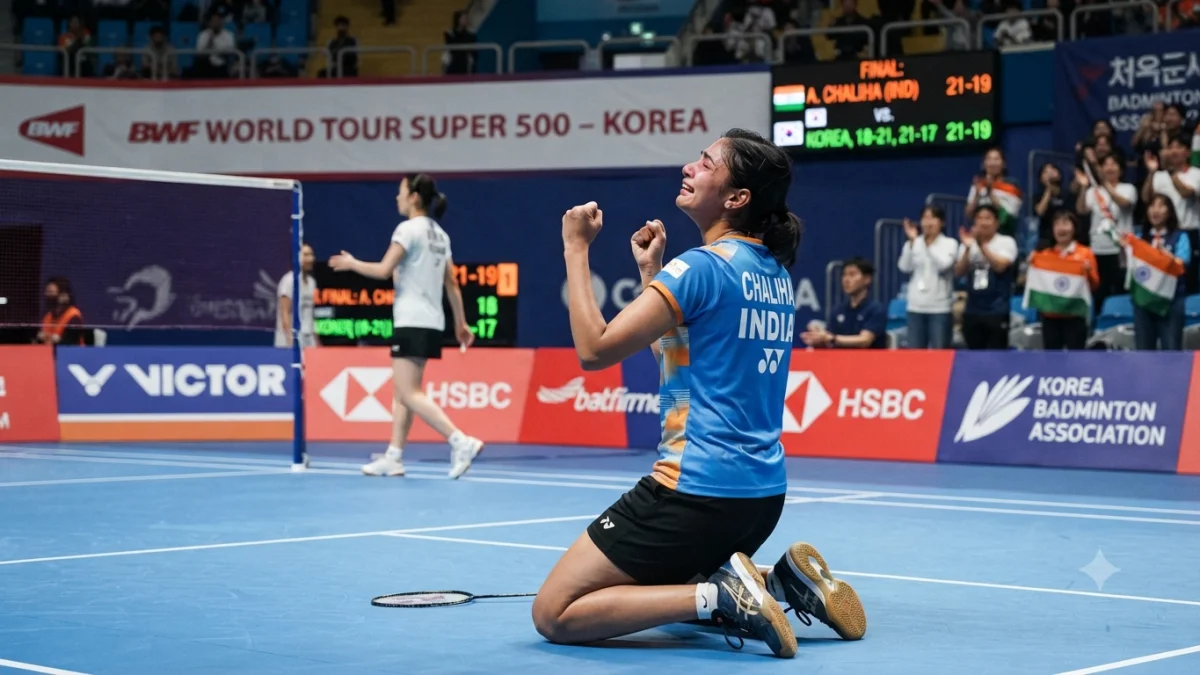
India's own Games reflected the changing shape of the competition. Competing in a reduced sports program that excluded some of its traditional medal-winning disciplines, the country nevertheless finished fourth in the medal standings with 39 medals, according to official results. Gold medal-winning boxer Jaismine Lamboria carried India's flag during the athletes' parade at the closing ceremony, representing a team whose performances helped frame the country's transition from competitor to future host.
The ceremony also introduced audiences to the country that will stage the next edition. India's cultural presentation featured music and performances designed as an early invitation to Ahmedabad, blending contemporary entertainment with traditional artistic elements. Singer Shankar Mahadevan led the musical showcase, while actor Rashmika Mandanna and former Miss World Manushi Chhillar also participated in the handover segment. Performances included collaborations intended to link Scottish and Indian traditions, reflecting the ceremony's emphasis on continuity between hosts rather than competition between them.
For Commonwealth Sport, the transition carries strategic importance that extends well beyond ceremonial symbolism.
The Games have spent several years confronting financial pressures and uncertainty after multiple host withdrawals raised doubts about whether the multi-sport event could continue in its traditional form. Glasgow's low-cost model was presented as one possible solution, demonstrating that existing venues and scaled-back operations could reduce the burden on host cities.
Phil Batty, chief executive of Glasgow 2026, said organizers hoped the model would show that future Games could be adapted to suit different nations while remaining viable. Commonwealth Sport chief executive Katie Sadleir said the organization expected India to deliver "an exciting and dynamic" centenary edition, reflecting confidence that Ahmedabad can expand the event once again.
For India, hosting the 2030 Games also fits into broader sporting ambitions. Officials from Gujarat have linked the event to the country's efforts to establish itself as a global sporting destination while strengthening its preparations for a possible bid to host the 2036 Olympic Games.
Those ambitions now inherit both opportunity and responsibility.
Glasgow demonstrated that the Commonwealth Games could survive by adapting to economic realities. Ahmedabad will be expected to demonstrate that they can grow again without losing the lessons learned from that experience.
As the Commonwealth flag left Scotland in the hands of India's representatives, the ceremony closed one chapter in the event's history while opening another. After a Games shaped by financial restraint, shortened schedules and questions about relevance, the final image was one of continuity: athletes applauding, the flag changing hands, and the promise that the Commonwealth's next gathering will unfold on Indian soil in 2030.