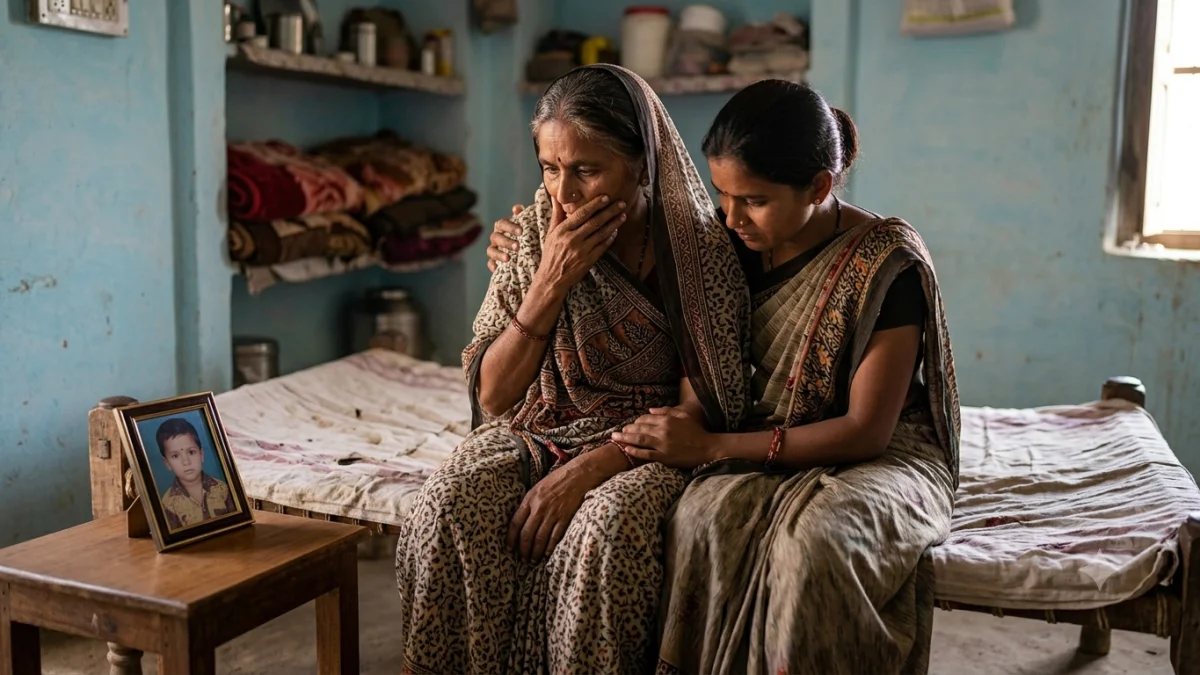


Families across Gujarat are mourning children lost to a renewed outbreak of the Chandipura virus, a rare but fast-moving infection that has again exposed the vulnerability of rural communities during the monsoon season.
In villages across the state's northern and eastern districts, grieving relatives have gathered after children who developed fever and neurological symptoms deteriorated within hours despite being rushed to hospitals. Health officials have intensified surveillance in affected areas, while medical teams continue door-to-door visits in an effort to identify suspected infections before they become critical.


The outbreak has become one of Gujarat's most pressing public health challenges of the monsoon, not only because of the deaths but because Chandipura virus disproportionately affects children and can progress rapidly to acute encephalitis syndrome. Officials say early recognition and immediate hospitalization remain crucial, even as families confront the shock of illnesses that often unfold over a matter of hours.
According to Gujarat Health Minister Praful Pansheriya, the state has reported dozens of confirmed Chandipura virus infections during the current outbreak alongside many more suspected cases under investigation. By early August, authorities said 22 children had died during the monsoon season, while laboratory testing had confirmed 35 infections out of a much larger number of suspected cases. Several deaths were still awaiting final laboratory confirmation.
The outbreak began to draw attention in early July after the deaths of two young children in Panchmahal district. State authorities responded by deploying hundreds of health teams to conduct household surveys, collect blood samples from suspected patients, spray insecticides and educate residents about symptoms and vector control.
As additional cases appeared in Sabarkantha, Kheda and other districts, surveillance expanded further. Officials also strengthened monitoring in areas considered vulnerable based on lessons learned during Gujarat's much larger 2024 outbreak, when the virus claimed dozens of lives and prompted one of India's largest responses to Chandipura infections.
Medical experts say Chandipura virus, first identified in Maharashtra in 1965, is transmitted primarily through sand flies, although other vectors have also been studied. The disease typically affects children under the age of 15 and initially resembles a common viral illness, with fever and flu-like symptoms before rapidly progressing to seizures, brain inflammation and, in severe cases, death. The speed of progression makes early diagnosis especially difficult for families living far from advanced medical facilities.
Health officials have repeatedly urged parents to seek immediate medical attention if children develop high fever, convulsions or altered consciousness. Additional Director of Public Health Dr. Nilam Patel said intensive containment operations had been launched across dozens of villages, including door-to-door surveillance and public awareness campaigns designed to improve early detection.
The response has also focused on reducing contact with sand flies by improving sanitation, spraying insecticides inside homes and filling cracks in mud walls where insects may breed. Authorities have coordinated with local medical associations to ensure suspected patients are transferred quickly to tertiary-care hospitals capable of treating severe neurological illness.
Neighboring Rajasthan has increased health surveillance along its border with Gujarat as a precaution, reflecting concerns that seasonal movement of people and vectors could expand the geographical reach of the outbreak. Officials there say screening and monitoring have been strengthened while coordination with Gujarat continues.
For families who have lost children, however, the public health response comes alongside profound personal grief. Ethical reporting standards have limited the publication of many victims' identities because most were minors, but official accounts consistently describe parents who sought emergency treatment as their children's conditions worsened with alarming speed. Hospitals in affected districts have continued receiving suspected cases while laboratory testing determines whether Chandipura virus is responsible.
Researchers have long warned that Chandipura virus remains a seasonal threat in parts of India, particularly during the monsoon when conditions favor sand fly populations. Although outbreaks are relatively rare compared with many other infectious diseases, their high fatality rate among children has made rapid surveillance and vector control central elements of public health strategy.
As laboratory investigations continue and health workers move from village to village, the outbreak has become a reminder of the continuing challenge posed by neglected vector-borne diseases. For families across Gujarat, each new suspected case is measured not only in official statistics but in the hope that swift diagnosis, treatment and prevention efforts will spare other households from the losses that have marked this year's monsoon.