DUBAI — A reconstruction and investment package linked to the newly signed U.S.-Iran framework agreement has emerged as one of the most significant economic provisions of the accord, with officials and sources familiar with the negotiations describing it as a key incentive for advancing a broader settlement between the two countries.
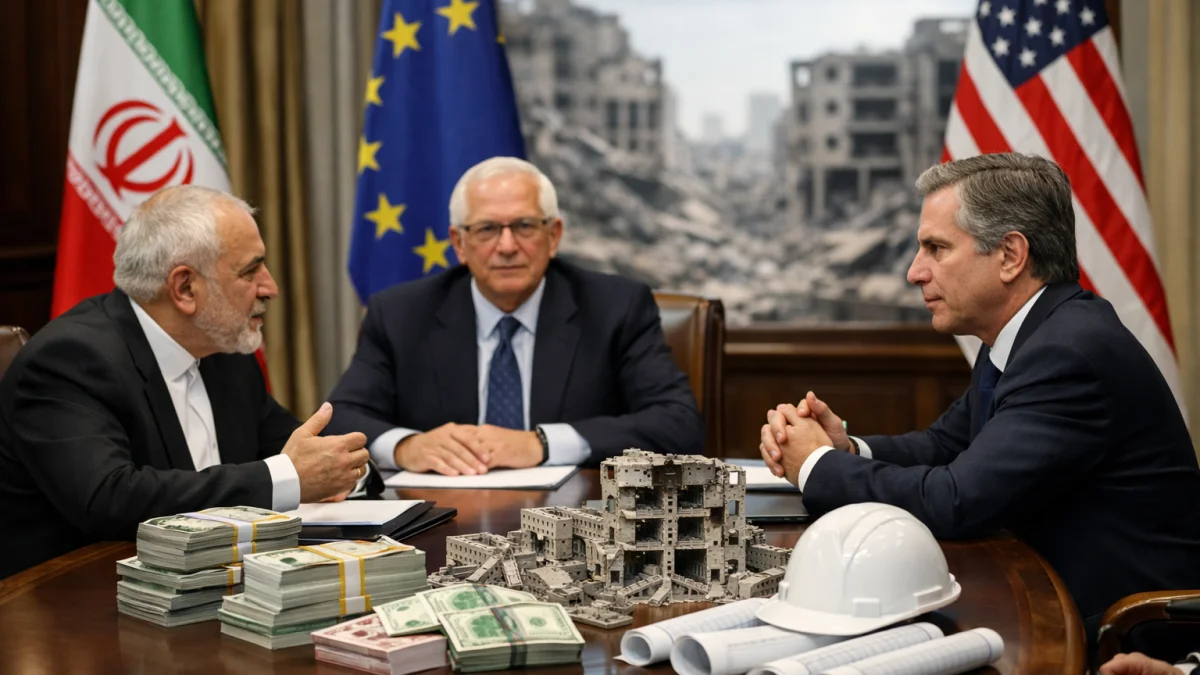
The agreement, signed this week after months of conflict and diplomatic negotiations, includes provisions aimed at supporting Iran’s economic recovery and infrastructure development. According to a source with direct knowledge of the negotiations, the framework outlines a fund valued at approximately $300 billion designed to stimulate investment and reconstruction projects in Iran. More than half of the proposed financing has already been committed, the source told Reuters.
The fund is structured as a private investment vehicle rather than a government-funded reparations program, according to the source. Companies from the United States, Gulf Arab states, Asia, South America and Africa have pledged financing commitments, while no direct government grants are currently planned.
Details released through Iranian state media and officials indicate the broader agreement also addresses sanctions relief, maritime security, nuclear issues and the reopening of the Strait of Hormuz. The framework calls for negotiations toward a final agreement within 60 days, with the possibility of extension by mutual consent.
A senior Iranian official previously told Reuters that the draft agreement included provisions for both sides to develop a reconstruction plan for Iran as part of follow-on negotiations. The official said economic measures were intended to accompany commitments on nuclear activities and regional security issues.
Supporters of the arrangement argue that economic incentives could help sustain the diplomatic process and encourage implementation of the agreement. Critics in the United States, Israel and elsewhere have questioned whether the economic benefits offered to Iran are proportionate to the concessions secured under the framework. Some lawmakers have called for additional scrutiny of the deal before further implementation steps proceed.
The White House on Wednesday transmitted the text of the interim agreement to Congress. The document outlines a ceasefire framework, sanctions-related measures and a process for negotiating a final settlement, though some financial provisions have not yet been fully detailed publicly.
“The fund is designed to give both sides an economic incentive to conclude a final deal,” the source familiar with the negotiations told Reuters.
As of Thursday, U.S. and Iranian officials were preparing for the next phase of negotiations. The reconstruction and investment package is expected to remain a central element of discussions as both sides work toward a permanent agreement, though implementation details and final funding arrangements remain under development.