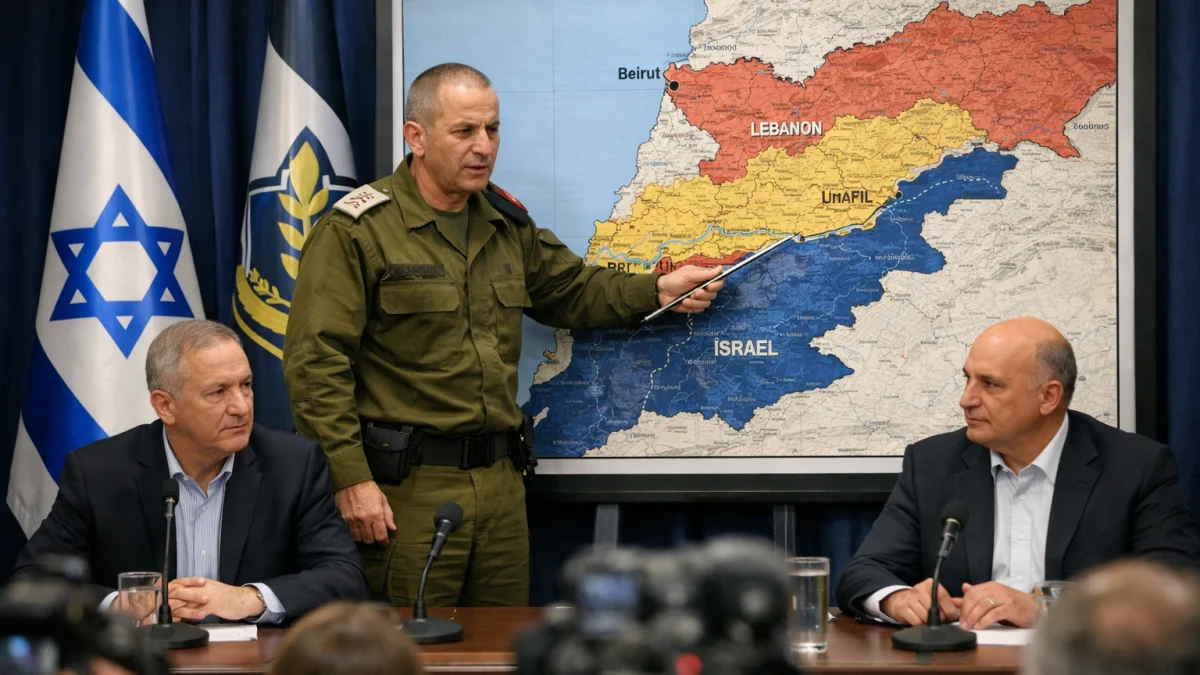


JERUSALEM — Israel’s military published a new map on Thursday showing an expanded zone of control in southern Lebanon, as Israeli officials held talks with the United States over the continued deployment of its troops there, according to the Israel Defense Forces and Reuters reporting.
The map indicates Israeli forces operating several kilometres deeper into Lebanon than previously shown, including areas near the Hezbollah stronghold of Nabatieh north of the Litani River, the IDF said in a statement. It comes weeks after a ceasefire agreement with Hezbollah took effect in April.


Israeli Prime Minister Benjamin Netanyahu has stated that forces will remain in the security buffer zone “for as long as necessary,” according to reports. Officials described the zone as a forward defense line aimed at protecting northern Israeli communities.
The updated map covers a larger area than Israeli ground forces controlled at the time of the April ceasefire, including parts of the Marjayoun District and some territory north of the Litani River, as well as an offshore naval zone, according to the military handout and analysis by Reuters.
The development follows a U.S.-Iran memorandum of understanding aimed at ending hostilities, which includes provisions related to Lebanon’s territorial integrity. Israeli officials have expressed reservations about aspects of the pact and are discussing with Washington the terms of any potential redeployment, U.S. and Israeli sources said.
Lebanese officials and Hezbollah have condemned the Israeli presence as an occupation and called for full withdrawal in line with the ceasefire terms and international resolutions. Details of the ongoing U.S.-Israel discussions remained limited.
The IDF first published a map of its buffer zone in southern Lebanon in April following the ceasefire. The new version reflects adjustments based on current operational positions, the military said.
A senior Israeli official, speaking on condition of anonymity, told Reuters that Israel would not back down on its security positions south of the Litani River.
“As long as threats remain, our forces will maintain the necessary presence to defend Israel,” Netanyahu said in remarks reported by Israeli media.
As of Thursday, the situation in southern Lebanon remained tense, with maritime security notices and monitoring groups tracking developments. Further details on the scope of the expanded zone and outcomes of the U.S. talks were not immediately available.
The Israeli military said it continues to monitor the area closely while engaging in diplomatic efforts.