DAKAR — Public health authorities are intensifying surveillance for possible further spread of an Ebola outbreak in the Democratic Republic of Congo after confirmed infections continued to rise this week, while international health agencies warned that containment efforts remain under pressure from insecurity, funding shortages and the characteristics of the virus strain involved.
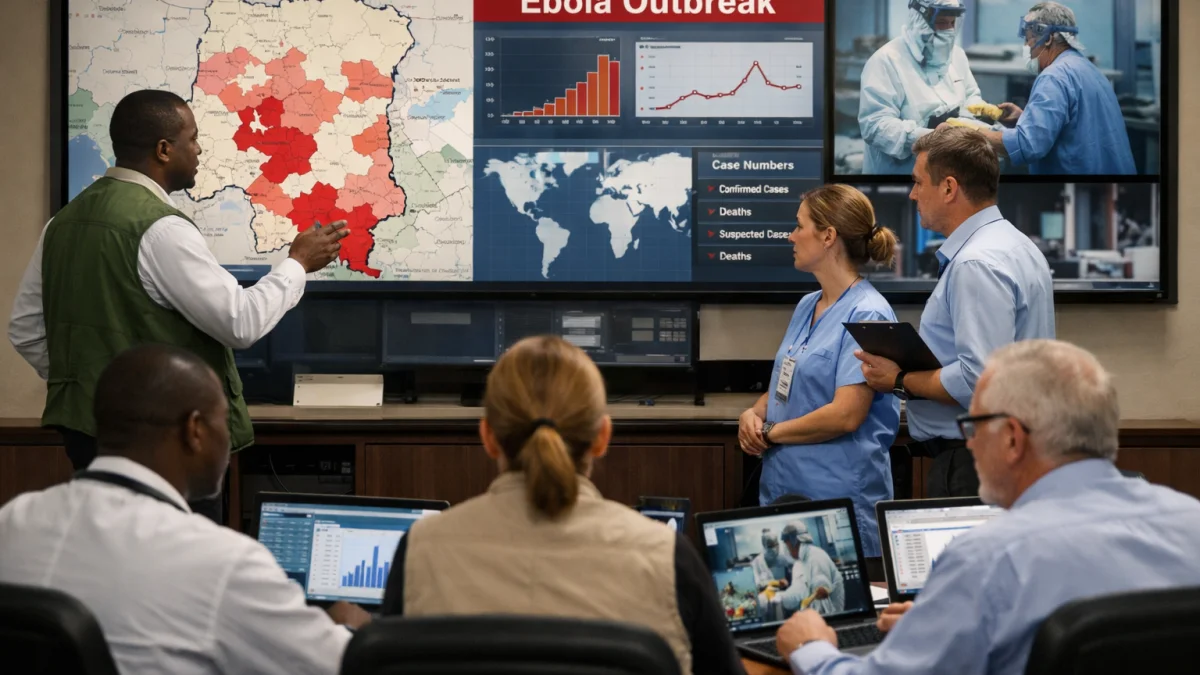
The Congolese government said on Thursday that the number of confirmed Ebola cases had increased to more than 1,150, with more than 300 confirmed deaths. Officials reported dozens of new infections and several additional deaths over the previous 24 hours, saying expanded surveillance and testing had improved case detection but that community transmission continued.
The outbreak, caused by the Bundibugyo strain of the Ebola virus, was declared in May and has become the largest recorded outbreak involving that strain, according to health authorities and the World Health Organization. Cases have been concentrated in eastern Congo, particularly in conflict-affected areas where insecurity and population displacement have complicated contact tracing, treatment and safe burial operations. Additional confirmed infections have also been reported in neighboring Uganda.
The Africa Centres for Disease Control and Prevention said this week that the resources required to respond to the outbreak have risen sharply. Director-General Jean Kaseya said the estimated funding requirement had increased to about $1.4 billion after consultations with Congolese authorities and United Nations agencies.
"If we do not mobilize the resources needed, we risk losing control of this outbreak," Kaseya said, according to the Africa CDC. The agency said only a small share of pledged funding had been disbursed, while humanitarian conditions in eastern Congo continued to hinder response efforts.
Health experts have also cautioned that the Bundibugyo strain presents additional challenges because there are no licensed vaccines or treatments specifically targeting it. Early symptoms often resemble other common illnesses, which can delay diagnosis and isolation. The World Health Organization said proven public health measures, including testing, isolation of patients, contact tracing and infection prevention, remain the primary tools for containing transmission.
Separately, Congolese authorities announced tighter travel measures after France confirmed an imported Ebola case linked to the ongoing outbreak. Officials said travelers returning from affected areas would be required to complete a 21-day quarantine before being permitted to travel abroad, in an effort to reduce the risk of further international spread.
As of Friday, response teams continued surveillance, contact tracing and treatment activities in affected provinces. Health officials said the outbreak remained concentrated in eastern Congo, but warned that monitoring would continue closely because additional cases could emerge as investigations and testing progress. Details on the full extent of transmission remain under assessment.