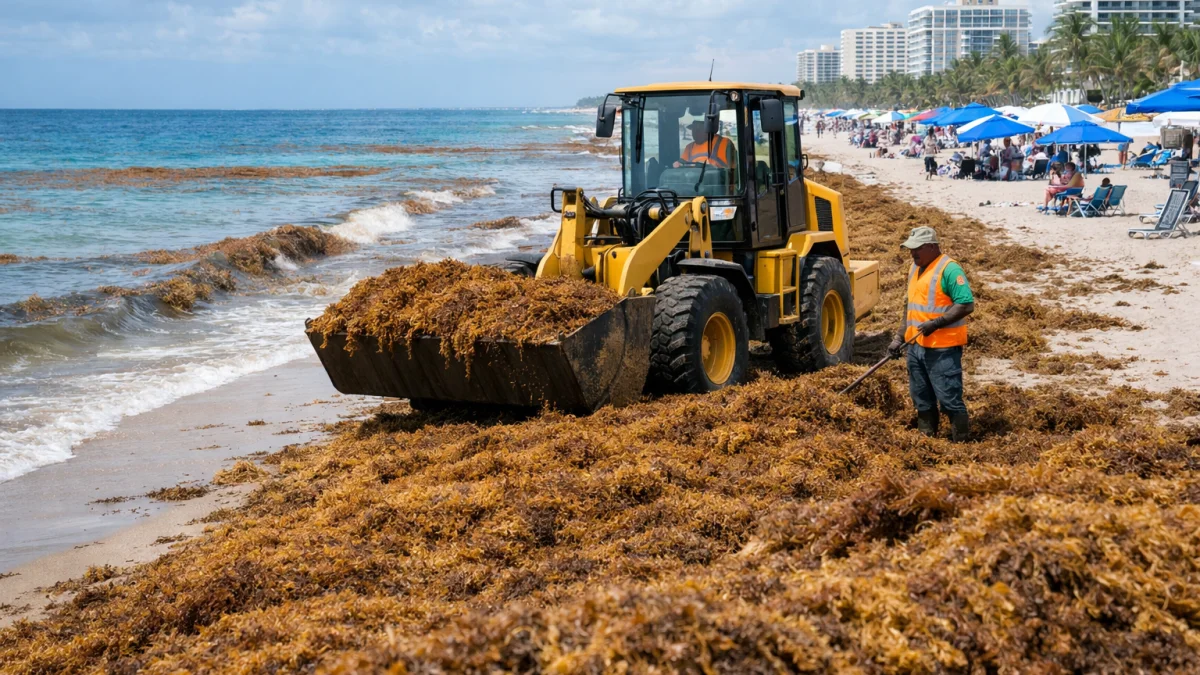
MIAMI — Large accumulations of sargassum seaweed have washed ashore along South Florida beaches in recent weeks, disrupting tourism activity, prompting daily cleanup efforts and generating complaints from visitors and local businesses during one of the region’s busiest travel periods, according to local officials and coastal researchers.
The brown seaweed, which floats across the Atlantic Ocean and Caribbean Sea before reaching coastal areas, has piled up on beaches from Miami-Dade County through Broward County and other parts of Florida’s Atlantic coast. As the seaweed decomposes, it produces a strong odor that has affected beach conditions and discouraged some visitors from entering the water.
In Pompano Beach, local officials said crews have worked daily to manage the influx, but new seaweed continues arriving. Commissioner Audrey Fesik said beach maintenance teams face a constant challenge. “It’s a never-ending task of trying to stay ahead of mounting seaweed,” Fesik said, adding that significant amounts can return within hours after cleanup efforts.
Visitors have also reported changes in beach conditions. Trish Currin, a tourist from Texas interviewed by local media, said the shoreline was markedly different from previous visits. “When we saw what it was like, my husband didn't even want to come to the beach,” she said.
Researchers monitoring ocean conditions have reported unusually large quantities of sargassum across the Atlantic basin this year. According to reports citing scientists at the University of South Florida, May recorded some of the highest levels observed for that month, with additional accumulations expected during the summer season.
Municipal authorities have adopted various management strategies. In Miami Beach, officials said county crews use specialized equipment to redistribute or remove seaweed while avoiding damage to sea turtle nesting areas. Some communities have also transported collected sargassum to composting sites rather than landfills.
Despite the disruption, marine scientists note that sargassum serves ecological functions when offshore, providing habitat for fish, sea turtles and other marine species. Problems arise primarily when large quantities accumulate on beaches and begin decomposing.
Tourism officials have continued to promote beach destinations while advising visitors that conditions can vary from day to day depending on winds, tides and cleanup operations. Businesses along the coast said they remain open, although some have reported concerns about visitor perceptions during the summer travel season.
As of Monday, cleanup operations were continuing across South Florida. Researchers and local governments said they were closely monitoring conditions as additional sargassum arrivals remained possible throughout the summer months.