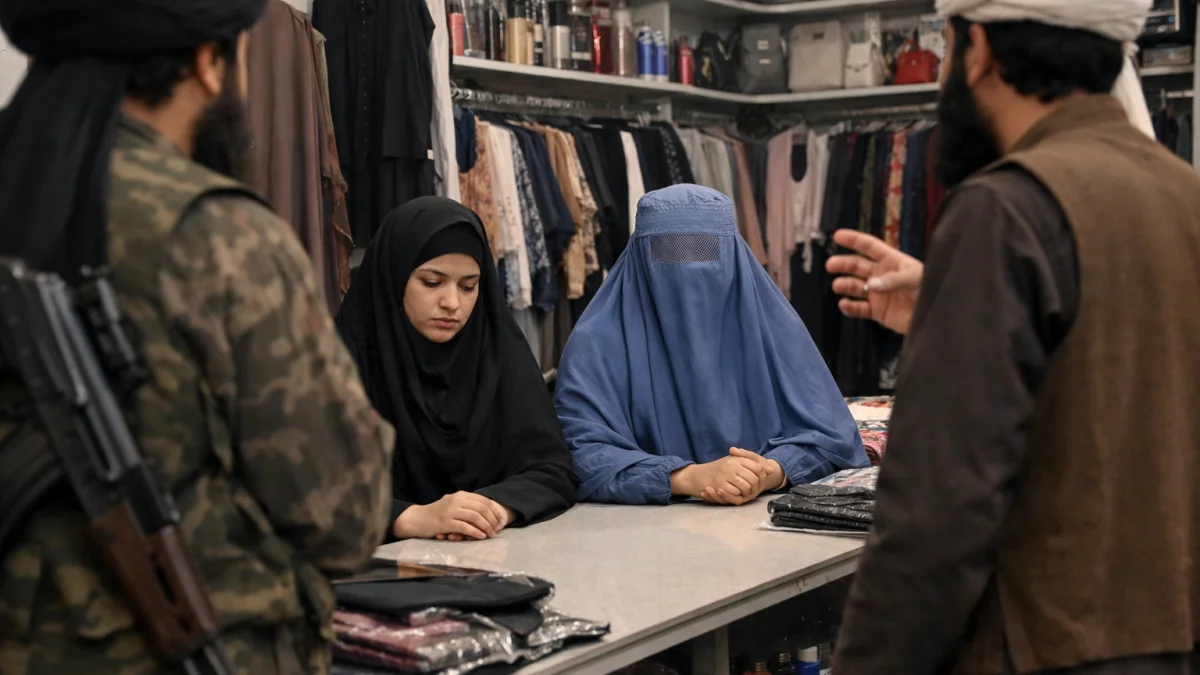
KABUL — Women business owners in Afghanistan continue to face significant challenges under restrictions imposed by the Taliban authorities, according to United Nations agencies, aid organizations and Afghan entrepreneurs, who say limitations on employment, movement and public participation are constraining economic opportunities for women across the country.
The issue has drawn renewed international attention this month as the United Nations Security Council extended the mandate of the U.N. Assistance Mission in Afghanistan (UNAMA) and again urged Taliban authorities to reverse restrictions affecting women and girls. U.N. officials told the Security Council that growing restrictions on women are having long-term social and economic consequences.
Women entrepreneurs have increasingly turned to home-based enterprises, tailoring workshops, handicrafts and online sales to generate income, according to aid agencies operating in Afghanistan. However, U.N. reports and humanitarian organizations say restrictions on women’s employment, education and freedom of movement have reduced access to markets, financing, training and professional networks.
“Despite the restrictions on women and girls and the current conflicts… no matter what, UN Women is staying and delivering in Afghanistan,” Susan Ferguson, the agency’s country representative, said in March. UN Women said it continues to support programs aimed at helping women sustain livelihoods despite operational constraints.
The Taliban, who returned to power in 2021, have repeatedly said their policies are based on their interpretation of Islamic law and Afghan cultural values. Taliban officials have stated that women retain rights within what authorities describe as an Islamic framework. International organizations and human rights groups, however, have argued that the restrictions have sharply reduced women’s participation in public life and the economy.
Recent developments have underscored continuing tensions over women’s rights. The United Nations said at least 30 women were detained in Herat earlier this month for allegedly violating dress requirements imposed by Taliban authorities. U.N. agencies said the arrests contributed to fear among women and girls, while local Taliban officials disputed some accounts of the incident.
U.N. officials have also reported increasing restrictions on women’s movement and employment in several provinces. Georgette Gagnon, acting head of UNAMA, told the Security Council this month that Afghanistan faces a “lost generation of talent and potential” as restrictions continue to affect women and girls.
As of June 22, international organizations continued to call for the reversal of measures affecting women’s education and employment. Taliban authorities have not announced major policy changes regarding women’s participation in business, and details of any future revisions remain unclear.