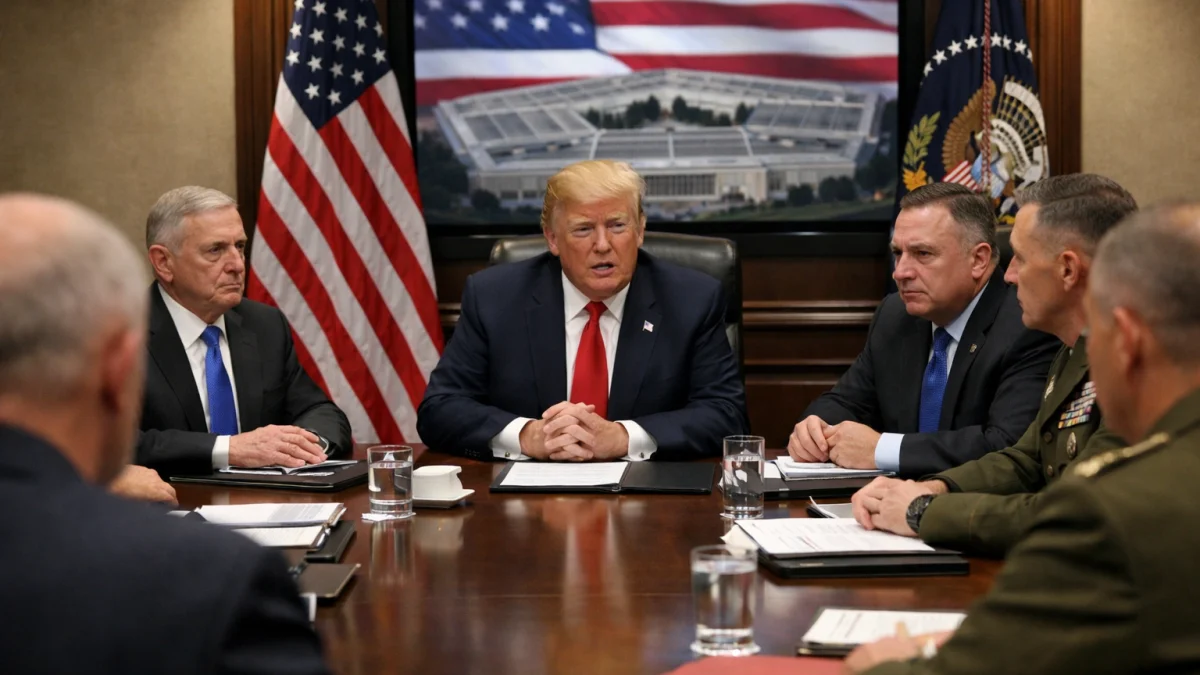
WASHINGTON — The Trump administration is facing internal resistance to elements of its military overhaul agenda as officials debate the scope of defense spending increases, force restructuring plans and the future direction of U.S. military commitments, according to administration officials, lawmakers and media reports published in recent months.
The disagreements have emerged as President Donald Trump and Defense Secretary Pete Hegseth pursue an effort to reshape military priorities, including increased spending on modernization, reviews of overseas deployments and broader changes within the Defense Department. Administration officials have described the plans as necessary to strengthen military readiness and adapt to evolving security challenges.
A report by The Washington Post in February said White House and defense officials struggled over proposals to significantly increase military spending. The report said some administration officials, including budget officials, raised concerns about the potential effect on the federal deficit and questioned how additional funding would be allocated. Officials familiar with the discussions told the newspaper that debates centered on whether funds should support existing weapons stockpiles, emerging technologies or other priorities.
At the same time, Pentagon leaders have begun reviewing U.S. force commitments abroad. Defense Secretary Hegseth said this month that the Pentagon would conduct a review of troop levels in Europe, while officials also informed NATO allies of plans to reduce some military capabilities designated for alliance crisis-response missions, according to officials and diplomats cited in media reports.
The administration has also pursued personnel and organizational changes across the federal government and defense establishment. Earlier this month, Trump signed an executive order affecting civil-service protections for thousands of federal employees, including positions linked to national security agencies, according to Defense One.
Some lawmakers have sought additional oversight of military transformation efforts. The House Armed Services Committee recently advanced provisions that would require the Army to provide regular updates on its modernization and restructuring plans, according to Government Executive.
Administration officials have defended the broader overhaul effort. Pentagon officials have said the goal is to improve military effectiveness and align resources with future threats. “Our interest is using voluntary agreements as a way to bring industry in,” Assistant Secretary of Defense for Industrial Base Policy Michael Cadenazzi said at a public event this month while discussing defense production initiatives.
As of Thursday, the administration continued to advance its defense agenda, while debates over spending levels, force posture and implementation remained under discussion within the government and on Capitol Hill.