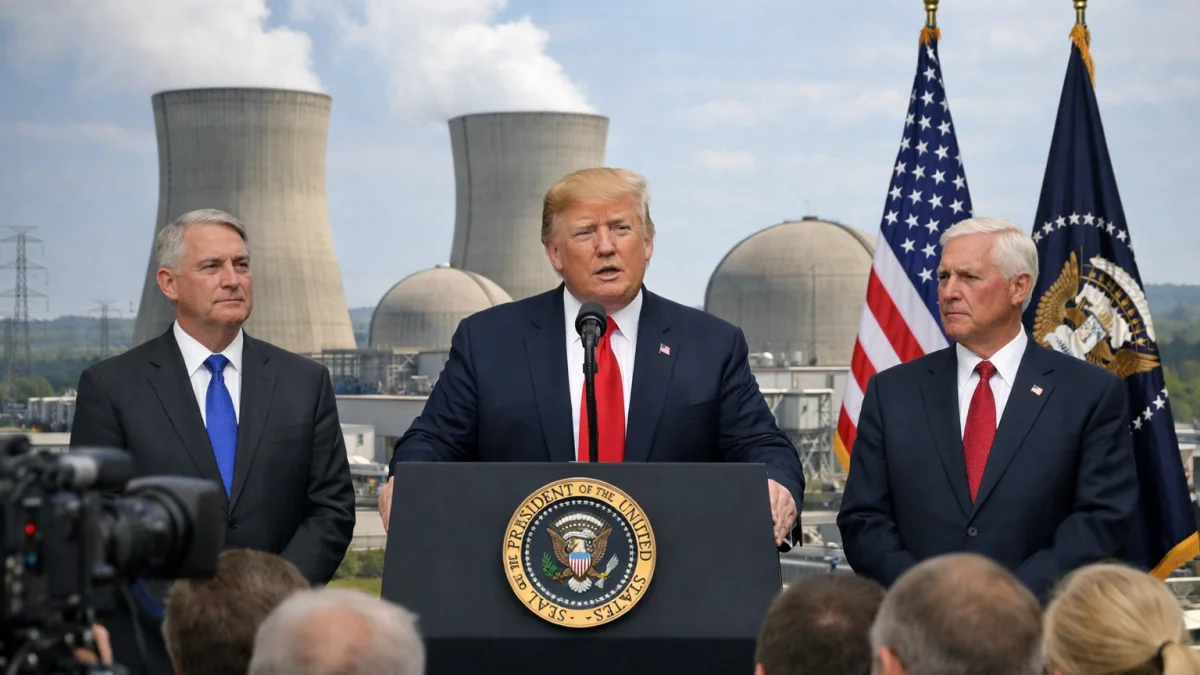


WASHINGTON — The Trump administration announced on Tuesday that it would make available up to $17.5 billion in federal loans to support the development of 10 new large-scale nuclear reactors, part of a broader effort to expand domestic power generation amid rising electricity demand from data centers and other energy-intensive industries. U.S. Energy Secretary Chris Wright announced the initiative, which officials said is intended to accelerate reactor construction and strengthen the nation’s nuclear supply chain.
According to the U.S. Department of Energy, the financing would be provided through conditional loan commitments aimed at helping utilities and energy companies purchase long-lead nuclear components, including major reactor equipment that often requires years to manufacture. Officials said the program could support up to five projects, with each site hosting two reactors based on the Westinghouse AP1000 design.


Wright said the administration hopes to have all 10 reactors under construction by 2030, with operations beginning in the mid-2030s. The department said the financing could shorten development timelines by as much as three years by enabling bulk procurement and earlier supply-chain commitments.
“This is the start,” Wright told reporters during a conference call. “We’re going to move with the players that are ready to stand up and move quickly.”
The Energy Department said seven utilities and energy companies have signed letters of intent identifying potential project sites, although officials declined to disclose the companies involved or the locations under consideration. Five projects are expected to be selected, but the timeline for those decisions remains unclear.
The announcement follows a series of administration initiatives aimed at expanding nuclear power generation. President Donald Trump has previously called for a significant increase in U.S. nuclear capacity and signed executive actions intended to speed reactor development and permitting.
Supporters of the program argue that additional nuclear generation will help meet growing electricity demand, particularly from artificial intelligence and cloud-computing infrastructure. Critics, however, have questioned the cost of large reactor projects and pointed to delays and budget overruns experienced by previous U.S. nuclear construction efforts, including the Vogtle expansion project in Georgia.
The Department of Energy said the loans remain conditional and will require participating projects to satisfy technical, legal, environmental and financial requirements before financing is finalized. Officials said discussions with prospective project partners are continuing.